Tuesday, 9 September 2014
Life Site News-Great Articles This Week
http://www.lifesitenews.com/news/criticism-mounts-against-notre-dames-decision-to-cover-students-abortifacie


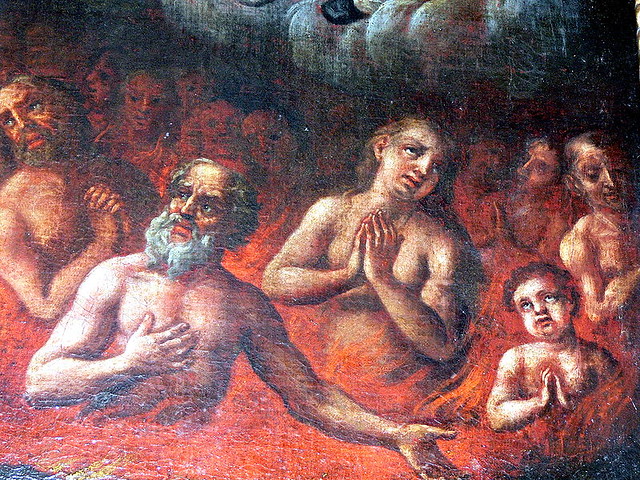
More on Indulgences for the Holy Souls
 | ||||||||
| . |

Do not forget to make prayers for all the dead in your families. I go to cemeteries and pray for the dead when I can. Recently, a friend of mine reminded me that many veterans have no one to pray for them. You may do that.
I also remind people to pray for children over the age of reason, as children can and do sin as well.

One can get into the habit of daily praying for souls in purgatory. For example, unless I am praying a rosary novena for someone or something, I use the fifth decade on my daily rosary for the holy souls in purgatory.
On Proper Love for The Dead

Holy Mother Church has been clear on the correct manner of praying for the dead and not to the dead, unless these dead are saints.
A little preposition makes a huge difference...
Here is a quotation from St. Augustine's Confessions to begin the conversation:
from "Book VI":
When, therefore, my mother had at one time— as was her custom in Africa— brought to the oratories built in the memory of the saints certain cakes, and bread, and wine, and was forbidden by the door-keeper, so soon as she learned that it was the bishop who had forbidden it, she so piously and obediently acceded to it, that I myself marvelled how readily she could bring herself to accuse her own custom, rather than question his prohibition. … because these, so to say, festivals in honour of the dead were very like the superstition of the Gentiles, she most willingly abstained from it. And in lieu of a basket filled with fruits of the earth, she had learned to bring to the oratories of the martyrs a heart full of more purified petitions, and to give all that she could to the poor; that so the communion of the Lord’s body might be rightly celebrated there, where, after the example of His passion, the martyrs had been sacrificed and crowned.
Some modern. secular customs do not follow older Catholic ones.
A reminder:
Waking, which is a European custom, is approved and frequently done in connection with Catholic funeral parlors.
Three days are usually set aside, although in some cultures, it is a week, to pray the rosary daily for the soul in purgatory. Sometimes, if a priest can make the evening rosaries, he might join the family and friends
.
A funeral Requiem Mass with the remains present is the time not for celebrating the person's life, or for eulogies, but for sincere prayers for the dead. Most people who were practicing Catholics would need such prayers to be released from the pains of purgatory.
Later, one can have Memorial Masses for the dead. In earlier years, these were sung and black vestments were used. I remember, as I sang in the choir for these types of liturgies for years.
One can have Masses said, and one can do plenary indulgences for the dead and the rules for obtaining those are at the bottom of this post.
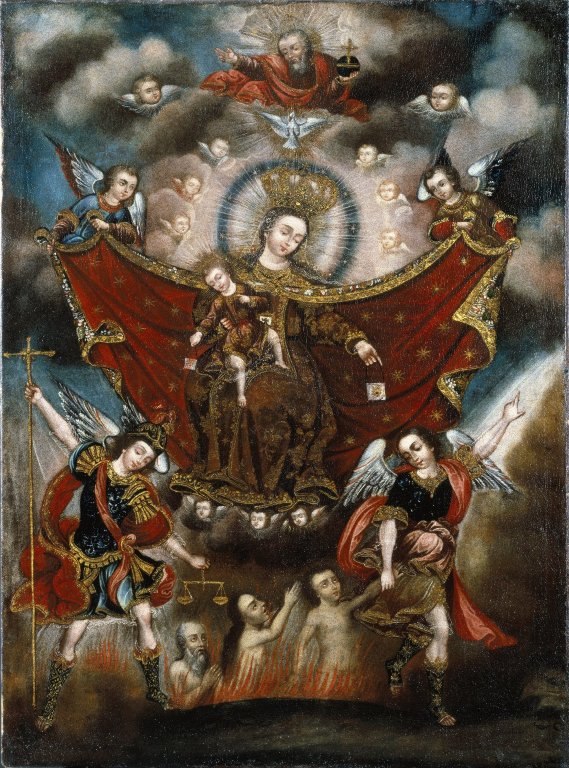
One should visit the grave out of respect, but not over-indulging in grief. Our family would go once a year, using on Memorial Day, or November 2nd, weather permitting. Remember, purgatory is purgation for not dealing with even venial sins and imperfections, for not facing and being purged of one's predominant fault.
Remember, only the Church through apostolic succession can forgive sins in Confession, and only the Church through the Pope can grant plenary and partial indulgences for the dead (in this post, I am not referring to one's ability to gain an indulgence for one's self). Here is the Canon Law on this point. Only practicing Catholics, in other words, those in sanctifying grace, can gain indulgences as well. (I am not, also, referring to the great indulgence of Divine Mercy Sunday). Here, also, is a clarifying statement from St. John Paul II. http://www.vatican.va/holy_father/john_paul_ii/audiences/1999/documents/hf_jp-ii_aud_29091999_en.html
Canon Law--CHAPTER IV.
INDULGENCES
Can. 992 An indulgence is the remission before God
of temporal punishment for sins whose guilt is already forgiven, which a
properly disposed member of the Christian faithful gains under certain and
defined conditions by the assistance of the Church which as minister of
redemption dispenses and applies authoritatively the treasury of the
satisfactions of Christ and the saints.
Can. 993 An indulgence is partial or plenary
insofar as it partially or totally frees from the temporal punishment due to
sins.
Can. 994 Any member of the faithful can gain
partial or plenary indulgences for oneself or apply them to the dead by way of
suffrage.
Can. 995 §1. In addition to the supreme authority
of the Church, only those to whom this power is acknowledged in the law or
granted by the Roman Pontiff can bestow indulgences.
§2. No authority below the Roman Pontiff can entrust
the power of granting indulgences to others unless the Apostolic See has given
this expressly to the person.
Can. 996 §1. To be capable of gaining indulgences,
a person must be baptized, not excommunicated, and in the state of grace at
least at the end of the prescribed works.
§2. To gain indulgences, however, a capable subject
must have at least the general intention of acquiring them and must fulfill the
enjoined works in the established time and the proper method, according to the
tenor of the grant.
Can. 997 As regards the granting and use of
indulgences, the other prescripts contained in the special laws of the Church
must also be observed.
\

\

First, here is the CCC on indulgences in general:
X. INDULGENCES
1471 The doctrine and practice of indulgences in the Church are closely linked to the effects of the sacrament of Penance.
What is an indulgence?
"An indulgence is a remission before God of the temporal punishment due to sins whose guilt has already been forgiven, which the faithful Christian who is duly disposed gains under certain prescribed conditions through the action of the Church which, as the minister of redemption, dispenses and applies with authority the treasury of the satisfactions of Christ and the saints."81
"An indulgence is partial or plenary according as it removes either part or all of the temporal punishment due to sin."82 The faithful can gain indulgences for themselves or apply them to the dead.83
The punishments of sin
1472 To understand this doctrine and practice of the Church, it is necessary to understand that sin has a double consequence. Grave sin deprives us of communion with God and therefore makes us incapable of eternal life, the privation of which is called the "eternal punishment" of sin. On the other hand every sin, even venial, entails an unhealthy attachment to creatures, which must be purified either here on earth, or after death in the state called Purgatory. This purification frees one from what is called the "temporal punishment" of sin. These two punishments must not be conceived of as a kind of vengeance inflicted by God from without, but as following from the very nature of sin. A conversion which proceeds from a fervent charity can attain the complete purification of the sinner in such a way that no punishment would remain.84
1473 The forgiveness of sin and restoration of communion with God entail the remission of the eternal punishment of sin, but temporal punishment of sin remains. While patiently bearing sufferings and trials of all kinds and, when the day comes, serenely facing death, the Christian must strive to accept this temporal punishment of sin as a grace. He should strive by works of mercy and charity, as well as by prayer and the various practices of penance, to put off completely the "old man" and to put on the "new man."85
In the Communion of Saints
1474 The Christian who seeks to purify himself of his sin and to become holy with the help of God's grace is not alone. "The life of each of God's children is joined in Christ and through Christ in a wonderful way to the life of all the other Christian brethren in the supernatural unity of the Mystical Body of Christ, as in a single mystical person."86
1475 In the communion of saints, "a perennial link of charity exists between the faithful who have already reached their heavenly home, those who are expiating their sins in purgatory and those who are still pilgrims on earth. Between them there is, too, an abundant exchange of all good things."87 In this wonderful exchange, the holiness of one profits others, well beyond the harm that the sin of one could cause others. Thus recourse to the communion of saints lets the contrite sinner be more promptly and efficaciously purified of the punishments for sin.
1476 We also call these spiritual goods of the communion of saints the Church's treasury, which is "not the sum total of the material goods which have accumulated during the course of the centuries. On the contrary the 'treasury of the Church' is the infinite value, which can never be exhausted, which Christ's merits have before God. They were offered so that the whole of mankind could be set free from sin and attain communion with the Father. In Christ, the Redeemer himself, the satisfactions and merits of his Redemption exist and find their efficacy."88
1477 "This treasury includes as well the prayers and good works of the Blessed Virgin Mary. They are truly immense, unfathomable, and even pristine in their value before God. In the treasury, too, are the prayers and good works of all the saints, all those who have followed in the footsteps of Christ the Lord and by his grace have made their lives holy and carried out the mission the Father entrusted to them. In this way they attained their own salvation and at the same time cooperated in saving their brothers in the unity of the Mystical Body."89
Obtaining indulgence from God through the Church
1478 An indulgence is obtained through the Church who, by virtue of the power of binding and loosing granted her by Christ Jesus, intervenes in favor of individual Christians and opens for them the treasury of the merits of Christ and the saints to obtain from the Father of mercies the remission of the temporal punishments due for their sins. Thus the Church does not want simply to come to the aid of these Christians, but also to spur them to works of devotion, penance, and charity.90
1479 Since the faithful departed now being purified are also members of the same communion of saints, one way we can help them is to obtain indulgences for them, so that the temporal punishments due for their sins may be remitted.
1498 Through indulgences the faithful can obtain the remission of temporal punishment resulting from sin for themselves and also for the souls in Purgatory.

Rules current for obtaining a plenary indulgence for someone in purgatory (or one's self).
A plenary indulgence can be gained only once a day. In order to obtain it, the faithful Catholic must, in addition to being in the state of sanctifying grace:
—have the interior disposition of complete detachment from sin, even venial sin;
—have sacramentally confessed sins within three weeks (20 days);
—receive the Holy Eucharist on the same day as praying for the soul.
—pray for the intentions of the Supreme Pontiff.
One Our Father, one Hail Mary, and one Glory Be are sufficient, although many Catholics do three.
Monday, 8 September 2014
On Virtue, Again-Heroic Virtue
Some readers are still confused on the life of the virtues. I recommend, again, the posts I have mostly referrencing Garrigou-Lagrange on this subject through the tags.

However, a little review is good. Here is Thomas Aquinas:
Summa Theologica I-II:61:4
The greatest blockages to virtue are sin, mortal and venial, and the persistence of our being influenced by our predominant fault.
One flaw can block a life of the virtues, which is why one must beg for purgation.
Heroic virtue is working under horribly difficult circumstances in order to become perfect. One sees, of course, heroic virtue in the lives of the martyrs, but heroic virtue may also point to quiet lives of constant suffering.
For example, a person who is chronically ill, but accepts God's grace to live in suffering cheerfully and with gratitude is exemplifying heroic virtue.
A man living with a wife who is unsaved, or a woman, like St. Monica, living with a pagan until he died, exhibits heroic virtue in suffering unequal yoking and even derision.
A person unable to pull themselves out of dire poverty but accepts the limitations in grace and peace shows heroic virtue.
Someone who forgives a betrayal from a friend, or from a spouse in a marriage, may show us heroic virtue.

Some holy people in heaven are there because of manifesting heroic virtue, rather than perfection. For example, a person under an oppression may gain heaven through a lifetime of suffering.
Padre Pio showed us many virtues, but he also shows us heroic virtue, as he was persecuted by his own monastery.
So many saints had to endure misunderstandings, or sins, lies, even the envy, of others around them, such as St. Faustina and St. Bernadette.
Heroic virtue means enduring under very difficult circumstances. One person who will be recognized as "blessed" soon is Pope Paul VI. I have maintained for a long time that his holiness, as stated by the Pope Emeritus in December of 2012, is based on heroic virtue.
Paul VI promulgated Humanae Vitae against the advice of many in the Church, indeed, in the Vatican.
As the most significant and prophetic encyclical of our time, this document shows that the Pope endured with heroic virtue. He may have found himself isolated even in his own place for this decision to share God's Will concerning life and procreation.
Some get to heaven purely by martyrdom. Some by actions and consistency of heroic virtue.
As a loyal daughter of the Church, I trust the canonization process and the current Pope to only follow the promptings of the Holy Spirit when expressing opinions from the Chair of Peter.
May many Catholics, who do not reach perfection on earth, merit heaven through heroic virtue. I think we are even now being given the chance.
However, a little review is good. Here is Thomas Aquinas:
Summa Theologica I-II:61:4
Virtue consists in the following, or imitation, of God. Every virtue, like every other thing, has its type [exemplar] in God. Thus the Divine mind itself is the type of prudence; God using all things to minister to His glory is the type of temperance, by which man subjects his lower appetites to reason; justice is typified by God's application of the eternal law to all His works; Divine immutability is the type of fortitude. And, since it is man's nature to live in society, the four cardinal virtues are social [politicae] virtues, inasmuch as by them man rightly ordains his conduct in daily life. Man, however, must raise himself beyond his natural life unto a life Divine: 'Be you therefore perfect, as also your heavenly Father is perfect' (Matthew 5:48). It is, therefore, necessary to posit certain virtues midway between the social virtues, which are human, and the exemplary virtues, which are Divine. These intermediate virtues are of two degrees of perfection: the lesser in the soul still struggling upwards from a life of sin to a likeness with God — these are called purifying virtues [virtutes purgatoriae]; the greater in the souls which have already attained to the Divine likeness — these are called virtues of the purified soul [virtutes jam purgati animi]. In the lesser degree, prudence, moved by the contemplation of things Divine, despises all things earthly and directs all the soul's thought unto God alone; temperance relinquishes, as far as nature allows, the things required for bodily wants; fortitude removes the fear of departing this life and facing the life beyond; justice approves of the aforesaid dispositions. In the higher perfection of souls already purified and firmly united with God, prudence knows nothing but what it beholds in God; temperance ignores earthly desires; fortitude knows nothing of passions; justice is bound to the Divine mind by a perpetual compact to do as it does. This degree of perfection belongs to the blessed in heaven or to a few of the most perfect in this life.
The greatest blockages to virtue are sin, mortal and venial, and the persistence of our being influenced by our predominant fault.
One flaw can block a life of the virtues, which is why one must beg for purgation.
Heroic virtue is working under horribly difficult circumstances in order to become perfect. One sees, of course, heroic virtue in the lives of the martyrs, but heroic virtue may also point to quiet lives of constant suffering.
For example, a person who is chronically ill, but accepts God's grace to live in suffering cheerfully and with gratitude is exemplifying heroic virtue.
A man living with a wife who is unsaved, or a woman, like St. Monica, living with a pagan until he died, exhibits heroic virtue in suffering unequal yoking and even derision.
A person unable to pull themselves out of dire poverty but accepts the limitations in grace and peace shows heroic virtue.
Someone who forgives a betrayal from a friend, or from a spouse in a marriage, may show us heroic virtue.

Some holy people in heaven are there because of manifesting heroic virtue, rather than perfection. For example, a person under an oppression may gain heaven through a lifetime of suffering.
Padre Pio showed us many virtues, but he also shows us heroic virtue, as he was persecuted by his own monastery.
So many saints had to endure misunderstandings, or sins, lies, even the envy, of others around them, such as St. Faustina and St. Bernadette.
Heroic virtue means enduring under very difficult circumstances. One person who will be recognized as "blessed" soon is Pope Paul VI. I have maintained for a long time that his holiness, as stated by the Pope Emeritus in December of 2012, is based on heroic virtue.
Paul VI promulgated Humanae Vitae against the advice of many in the Church, indeed, in the Vatican.
As the most significant and prophetic encyclical of our time, this document shows that the Pope endured with heroic virtue. He may have found himself isolated even in his own place for this decision to share God's Will concerning life and procreation.
Some get to heaven purely by martyrdom. Some by actions and consistency of heroic virtue.
As a loyal daughter of the Church, I trust the canonization process and the current Pope to only follow the promptings of the Holy Spirit when expressing opinions from the Chair of Peter.
May many Catholics, who do not reach perfection on earth, merit heaven through heroic virtue. I think we are even now being given the chance.
An Interesting Blog
http://galliawatch.blogspot.com/2014/08/france-confronted-by-islam-part-7.html
Some people are willing to spread the news not on msm that there is much more violence in France regarding ethnic groups than what is being reported.
This blog has flaws, but is a great sounding board for issues Europe is facing.
Worth a read. Some of the comments are interesting as well.
Some people are willing to spread the news not on msm that there is much more violence in France regarding ethnic groups than what is being reported.
This blog has flaws, but is a great sounding board for issues Europe is facing.
Worth a read. Some of the comments are interesting as well.
Being in schism means not holding the teachings of the Church
http://www.churchmilitant.tv/daily/?today=2014-09-08
Here is something you can do about this: WRITE!
Delegate Bob Marshall
Here is something you can do about this: WRITE!
At 1:37 PM -0400 9/6/14, Bob Marshall wrote:
Friends,
This letter was Faxed today to the Apostolic Delegate who holds Ambassador rank from the Vatican to the United States.
Please share it as you wish.
Delegate Bob Marshall
September 6, 2014
H. E. Most Rev. Archbishop Carlo Vigano
Apostolic Nuncio
3339 Massachusetts Avenue N W
Washington, DC 20008
Your Excellency Archbishop Vigano:
New
York's Cardinal Dolan, appointed as Grand Marshal of the 2015 St.
Patrick's Day Parade praised the decision to allow an openly gay group
to march in the St. Patrick's Day Parade. ''I have no trouble with the
decision at all ... I think the decision is a wise one.''
His
action leaves many Catholics, including elected officials like myself,
puzzled and disheartened when we measure Cardinal Dolan's new policy
with his predecessor, John Cardinal O'Connor.
In
1993, when GLBT groups and government officials demanded that openly
homosexual groups be included in the Parade, Cardinal O'Connor vowed in a
St. Patrick's Day sermon that he "could never even be perceived as
compromising Catholic teaching." "Neither respectability nor political
correctness is worth one comma in the Apostles Creed." (New York Times, 1/20/93)
At that time, the New York Times
also noted that, "The Hibernians and Cardinal O'Connor have said there
is no place for a gay contingent in the parade because it is a Catholic
event and the church teaches that homosexual acts are sinful."
Yet,
Cardinal Dolan claimed, "Neither my predecessors as archbishops of New
York nor I have ever determined who would or would not march in this
parade," adding that "the parade would be a source of unity for all of
us." (NYTimes 9/3/14)
Would
Cardinal Dolan, as Parade Marshal, applaud the inclusion of Irish
abortion clinic owners or Planned Parenthood employees in a Parade
honoring Saint Patrick? On what logical grounds does he applaud openly
GLBT marchers and reject openly pro abortion Catholics, including some
"Catholic" nuns?
Perhaps
organizations which advocate to legalize prostitution and pornography
should also be permitted to march? What about promoters of euthanasia
for the elderly and disabled or advocates of physician assisted suicide?
Where does Cardinal Dolan draw the line?
The
St. Patrick's Day Parade sponsored by the Irish Catholic Ancient Order
of Hibernians under the auspices of and with the blessing of the
Catholic Archdiocese of New York, is not a purely secular event, despite
the fact that secular politicians participate. It honors a Catholic
saint who converted pagans to the Faith and away from immoral behavior.
Promoters
of homosexual behavior take part in many "gay pride" marches and
parades, but these are not events sponsored by the Catholic Church or a
Catholic organization. Therein lies the problem.
Same
sex "marriage" advocates say they feel marginalized by the Church, yet
the Church has been very clear that it is a hospital for sinners, and no
one is sinless. Jesus saves us from being "marginalized" by our sin, so
long as we seek Him and seek to do His will.
Everyone
who rejects God's word, or who ignores or violates the Ten Commandments
(and we all guilty of that) feels "marginalized" at times, but we don't
re-write the Commandments to make us feel less marginalized.
News
reports indicate that NBC which televises the Parade, New York's Mayor,
Guinness Brewery and others were pressuring the Parade sponsors to
include openly GLBT groups. Choosing money over truth is never a good
choice.
This
situation is not about judging individual souls. God loves all his
children, and fortunately He is the only one who can judge men's hearts,
but we live in a world of actions that have individual, social and
legal consequences.
Equality
of persons is not the same as equality of behavior. What message does
Cardinal Dolan's decision give? The U.S. Supreme Court is considering
whether to hear challenges to state laws allowing only one-man, one
woman marriage. Cardinal Dolan's statement and actions here are most
untimely.
I
grew up in Washington DC, worked in Congress for six years, have been
privileged to serve the people of Virginia as a member of the Virginia
General Assembly since 1992, was chief co-sponsor of the 2006 Virginia
Marshall-Newman, voter approved one-man, one woman Marriage Amendment,
and pro life legislation. I have overridden Governors of Virginia on
abortion and GLBT issues, beat the ACLU in federal court on pornography
prohibitions, and in 2008 won a precedent setting law suit overturning a
tax law supported and defended in court by the Governor, Attorney
General and Speaker.
I
know from a lifetime in and around politics that federal judges and
Members of Congress read newspapers. They are influenced by the actions
of moral leaders. They gauge what they can "get away with" by what Catholic prelates "tolerate."
We
do our brothers and sisters no service by pretending that God's
teaching or the "Laws of Nature and Nature's God" are not important
today. No one can change Natural Law or the Word of God, written in the
blood of Our Savior for our wellbeing and redemption.
I
haven't talked to one Catholic who thinks that what Cardinal Dolan did
was prudent or helpful in defending the Faith, marriage or morals.
Converts, especially, are distressed.
Some
contemporary American Catholics falsely think that "tolerance" is
exercised by maintaining indifference towards ideas, opinion or even
error, or holding that all points of view are equal. For a Church
authority to embrace political correctness at such a time will have
consequences which extend far beyond the parade route.
Cardinal
Dolan's actions will make enacting legislation in conformity with the
Natural Law immeasurably harder to defend especially for lay Catholics
or Catholic legislators.
Please pass my letter on to the appropriate Church officials. Thank you. You can contact me at 703-853-4213, delbmarshall@house.virginia.
Sincerely,
I warned you....
persecution will be from some of those in the Church. Your neighbors, your priests, your bishops, your families, and so it always was...
http://www.breitbart.com/Big-Government/2014/09/07/DC-Priest-Punished-for-Calling-for-End-to-Gay-St-Pat-s-Parade-in-New-York-City/
http://www.breitbart.com/Big-Government/2014/09/07/DC-Priest-Punished-for-Calling-for-End-to-Gay-St-Pat-s-Parade-in-New-York-City/
Sunday, 7 September 2014
Yet Another Great Talk from Fr. Ripperger
http://www.sensustraditionis.org/webaudio/Impediments/Horror.mp3
Timely concerning all the news...
Say a decade of the rosary for him after listening, please.
Timely concerning all the news...
Say a decade of the rosary for him after listening, please.
Notice The Upsidedown Cross on Presenter
http://www.freep.com/article/20140906/NEWS05/309060028/Detroit-Satanic-Temple
If you are not for Christ, you are against Him.
People, get holy.
There is no neutral.
Pray for ChurchMilitant--this is no accident of place.
And, read the lame response from the Episcopalian minister.
This has been a hard weekend for Catholics.
If you are not for Christ, you are against Him.
People, get holy.
There is no neutral.
Pray for ChurchMilitant--this is no accident of place.
And, read the lame response from the Episcopalian minister.
This has been a hard weekend for Catholics.
Another Bad Rosary Idea
Catholics may have the bodies of the dead cremated, but these remains must be buried. One cannot have ashes spread over the ocean or a garden or put into a rosary.
And, here is a disgusting and totally wrong thing. Cremation rosaries.
http://www.memorials.com/cremation-rosary.php
From the January 2012 Newsletter of the
In
April 1997, the Congregation for Divine Worship and the Discipline of
the Sacraments granted an indult for the United States to allow the
diocesan bishop to permit the presence of the cremated remains of a body
at a Funeral Mass. Later that year, the Congregation confirmed the
special texts and ritual directives (Prot. n. 1589/96/L for both indult
and texts), which were then published as an appendix to the Order of Christian Funerals.
Frequently the Secretariat of Divine Worship receives requests for
clarification or suggestions for best practices regarding the presence
of cremated remains and funerals and their appropriate final disposition
or committal.
The practice of cremation has grown and become more commonplace in the United States, and it is often presented as a more affordable alternative to traditional burial. What is often overlooked is the Church’s teaching regarding the respect and honor due to the human body. The Order of Christian Funerals’ Appendix on Cremation states: “Although cremation is now permitted by the Church, it does not enjoy the same value as burial of the body. The Church clearly prefers and urges that the body of the deceased be present for the funeral rites, since the presence of the human body better expresses the values which the Church affirms in those rites” (no. 413).
Ideally, if a family chooses cremation, the cremation would take place at some time after the Funeral Mass, so that there can be an opportunity for the Vigil for the Deceased in the presence of the body (during “visitation” or “viewing” at a church or funeral home). This allows for the appropriate reverence for the sacredness of the body at the Funeral Mass: sprinkling with holy water, the placing of the pall, and honoring it with incense. The Rite of Committal then takes place after cremation (see Appendix, nos. 418-421). Funeral homes offer several options in this case. One is the use of “cremation caskets,” which is essentially a rental casket with a cardboard liner that is cremated with the body. Another is a complete casket that is cremated (this casket contains minimal amounts of non-combustible material such as metal handles or latches).
When cremation takes place before the Funeral Mass, and the diocesan bishop permits the presence of cremated remains at the Funeral Mass, the Appendix provides adapted texts for the Sprinkling with Holy Water, the Dismissal for use at the Funeral Mass (or the Funeral Liturgy outside Mass), and the Committal of Cremated Remains. The introduction provides further specific details about how the funeral rites are adapted. In all, the rite notes:
The cremated remains of a body should be treated with the same respect given to the human body from which they come. This includes the use of a worthy vessel to contain the ashes, the manner in which they are carried, and the care and attention to appropriate placement and transport, and the final disposition. The cremated remains should be buried in a grave or entombed in a mausoleum or columbarium. The practice of scattering cremated remains on the sea, from the air, or on the ground, or keeping cremated remains on the home of a relative or friend of the deceased are not the reverent disposition that the Church requires. (no. 417)
For some families, the choice of cremation is based on financial hardship, so this choice often means also that there is no plan for committal or burial of the cremated remains. As a means of providing pastoral support and an acceptable respectful solution to the problem of uninterred cremated remains, one diocese offered on All Souls’ Day in 2011 an opportunity for any family who desired it the interment of cremated remains. The diocese offered a Mass and committal service at one of its Catholic cemeteries and provided, free of charge, a common vault in a mausoleum for the interment of the cremated remains. The names of the deceased interred there were kept on file, though in this case they were not individually inscribed on the vault.
As cremation is chosen more frequently, there will be many who are unaware of the Church’s teaching regarding this practice. It is important for bishops and pastors not only to catechize the faithful, but to collaborate with funeral directors in providing helpful and accurate information to families planning the funeral of loved ones. Offering opportunities to family members for the respectful burial of their loved ones, who were not interred after funeral services and cremation, would give effective witness to the importance of Christian burial and our belief in the resurrection. In all, pastors are encouraged to show pastoral sensitivity, especially to those for whom cremation is the only feasible choice (see Appendix, no. 415).
And, another country, another source, with the general rule at the end:
.-
The
Catholic Church in Italy has issued new guidelines that rule out
scattering the cremated remains of a person or the keeping them in an
urn at home.
“Cremation is considered as concluded when the urn is deposited in the cemetery,” says the appendix to the new edition of Funeral Rites issued by Italian Episcopal Conference.
“The practice of spreading ashes in the wild or keeping them in places other than the cemetery,” it adds, “raises many concerns about its full consistency with the Christian faith, especially when they imply pantheistic or naturalist conceptions.”
.....
"The 1983 Code of Canon Law is slightly more expansive and states that “the Church earnestly recommends the pious custom of burial be retained; but it does not forbid cremation, unless this is chosen for reasons which are contrary to Christian teaching.”
And, here is a disgusting and totally wrong thing. Cremation rosaries.
http://www.memorials.com/cremation-rosary.php
From the January 2012 Newsletter of the
Committee on Divine Worship
© 2012, United States Conference of Catholic Bishops
In
April 1997, the Congregation for Divine Worship and the Discipline of
the Sacraments granted an indult for the United States to allow the
diocesan bishop to permit the presence of the cremated remains of a body
at a Funeral Mass. Later that year, the Congregation confirmed the
special texts and ritual directives (Prot. n. 1589/96/L for both indult
and texts), which were then published as an appendix to the Order of Christian Funerals.
Frequently the Secretariat of Divine Worship receives requests for
clarification or suggestions for best practices regarding the presence
of cremated remains and funerals and their appropriate final disposition
or committal.The practice of cremation has grown and become more commonplace in the United States, and it is often presented as a more affordable alternative to traditional burial. What is often overlooked is the Church’s teaching regarding the respect and honor due to the human body. The Order of Christian Funerals’ Appendix on Cremation states: “Although cremation is now permitted by the Church, it does not enjoy the same value as burial of the body. The Church clearly prefers and urges that the body of the deceased be present for the funeral rites, since the presence of the human body better expresses the values which the Church affirms in those rites” (no. 413).
Ideally, if a family chooses cremation, the cremation would take place at some time after the Funeral Mass, so that there can be an opportunity for the Vigil for the Deceased in the presence of the body (during “visitation” or “viewing” at a church or funeral home). This allows for the appropriate reverence for the sacredness of the body at the Funeral Mass: sprinkling with holy water, the placing of the pall, and honoring it with incense. The Rite of Committal then takes place after cremation (see Appendix, nos. 418-421). Funeral homes offer several options in this case. One is the use of “cremation caskets,” which is essentially a rental casket with a cardboard liner that is cremated with the body. Another is a complete casket that is cremated (this casket contains minimal amounts of non-combustible material such as metal handles or latches).
When cremation takes place before the Funeral Mass, and the diocesan bishop permits the presence of cremated remains at the Funeral Mass, the Appendix provides adapted texts for the Sprinkling with Holy Water, the Dismissal for use at the Funeral Mass (or the Funeral Liturgy outside Mass), and the Committal of Cremated Remains. The introduction provides further specific details about how the funeral rites are adapted. In all, the rite notes:
The cremated remains of a body should be treated with the same respect given to the human body from which they come. This includes the use of a worthy vessel to contain the ashes, the manner in which they are carried, and the care and attention to appropriate placement and transport, and the final disposition. The cremated remains should be buried in a grave or entombed in a mausoleum or columbarium. The practice of scattering cremated remains on the sea, from the air, or on the ground, or keeping cremated remains on the home of a relative or friend of the deceased are not the reverent disposition that the Church requires. (no. 417)
For some families, the choice of cremation is based on financial hardship, so this choice often means also that there is no plan for committal or burial of the cremated remains. As a means of providing pastoral support and an acceptable respectful solution to the problem of uninterred cremated remains, one diocese offered on All Souls’ Day in 2011 an opportunity for any family who desired it the interment of cremated remains. The diocese offered a Mass and committal service at one of its Catholic cemeteries and provided, free of charge, a common vault in a mausoleum for the interment of the cremated remains. The names of the deceased interred there were kept on file, though in this case they were not individually inscribed on the vault.
As cremation is chosen more frequently, there will be many who are unaware of the Church’s teaching regarding this practice. It is important for bishops and pastors not only to catechize the faithful, but to collaborate with funeral directors in providing helpful and accurate information to families planning the funeral of loved ones. Offering opportunities to family members for the respectful burial of their loved ones, who were not interred after funeral services and cremation, would give effective witness to the importance of Christian burial and our belief in the resurrection. In all, pastors are encouraged to show pastoral sensitivity, especially to those for whom cremation is the only feasible choice (see Appendix, no. 415).
And, another country, another source, with the general rule at the end:
“Cremation is considered as concluded when the urn is deposited in the cemetery,” says the appendix to the new edition of Funeral Rites issued by Italian Episcopal Conference.
“The practice of spreading ashes in the wild or keeping them in places other than the cemetery,” it adds, “raises many concerns about its full consistency with the Christian faith, especially when they imply pantheistic or naturalist conceptions.”
.....
"The 1983 Code of Canon Law is slightly more expansive and states that “the Church earnestly recommends the pious custom of burial be retained; but it does not forbid cremation, unless this is chosen for reasons which are contrary to Christian teaching.”
More on the Satanic Rosaries
I saw one in England two years ago. I did not realize at that time how prevalent these were.
The one I saw had the snake coiled around the staff behind Christ and the pentagrams. Knowing my Scripture and knowing that the Brazen Serpent which saved the Israelites from death was a prefigurement of Christ's Crucifixion, I assumed some artist was making the connection.
Numbers 21 and footnote from DR:
[6] Wherefore the Lord sent among the people fiery serpents, which bit them and killed many of them. [7] Upon which they came to Moses, and said: We have sinned, because we have spoken against the Lord and thee: pray that he may take away these serpents from us. And Moses prayed for the people. [8] And the Lord said to him: Make brazen serpent, and set it up for a sign: whosoever being struck shall look on it, shall live. [9] Moses therefore made a brazen serpent, and set it up for a sign: which when they that were bitten looked upon, they were healed. [10] And the children of Israel setting forwards camped in Oboth.
[9] A brazen serpent: This was a figure of Christ crucified, and of the efficacy of a lively faith in him, against the bites of the hellish serpent. John 3. 14.
However, the pentagrams on the edges bothered me. I wish I had paid more attention then.
Do not think these rosaries are "neutral". Remember, there is nothing neutral. And intention does not change satanic doors or satanic influences. One can be a "good" Catholic and stumble into error or danger from the dark side.
This video came from reliable sources through Mundelein Seminary in Chicago. And, apparently, there was a warning about these at at the Marian Cenacle in Limoges, France on 14th March 2005. Also, some of these were being given out free at Međugorje.
If you want more information, just talk to your local exorcist. Too many liberal priests do not believe in satan or his sneaky means to trip us up. One exorcist, not one I know personally, says to throw them away after breaking them up.
Summit Lighthouse Group in the States uses new age rosaries. This is an occultic group active, at least, in the Midwest, where I first heard about it. I know of one Catholic who lost his faith through this "church".
I am against plastic rosaries in general, as one should use something which honors Mary more. Buy one from Tigga Wild.
The one I saw had the snake coiled around the staff behind Christ and the pentagrams. Knowing my Scripture and knowing that the Brazen Serpent which saved the Israelites from death was a prefigurement of Christ's Crucifixion, I assumed some artist was making the connection.
Numbers 21 and footnote from DR:
[6] Wherefore the Lord sent among the people fiery serpents, which bit them and killed many of them. [7] Upon which they came to Moses, and said: We have sinned, because we have spoken against the Lord and thee: pray that he may take away these serpents from us. And Moses prayed for the people. [8] And the Lord said to him: Make brazen serpent, and set it up for a sign: whosoever being struck shall look on it, shall live. [9] Moses therefore made a brazen serpent, and set it up for a sign: which when they that were bitten looked upon, they were healed. [10] And the children of Israel setting forwards camped in Oboth.
[9] A brazen serpent: This was a figure of Christ crucified, and of the efficacy of a lively faith in him, against the bites of the hellish serpent. John 3. 14.
However, the pentagrams on the edges bothered me. I wish I had paid more attention then.
Do not think these rosaries are "neutral". Remember, there is nothing neutral. And intention does not change satanic doors or satanic influences. One can be a "good" Catholic and stumble into error or danger from the dark side.
This video came from reliable sources through Mundelein Seminary in Chicago. And, apparently, there was a warning about these at at the Marian Cenacle in Limoges, France on 14th March 2005. Also, some of these were being given out free at Međugorje.
If you want more information, just talk to your local exorcist. Too many liberal priests do not believe in satan or his sneaky means to trip us up. One exorcist, not one I know personally, says to throw them away after breaking them up.
Summit Lighthouse Group in the States uses new age rosaries. This is an occultic group active, at least, in the Midwest, where I first heard about it. I know of one Catholic who lost his faith through this "church".
I am against plastic rosaries in general, as one should use something which honors Mary more. Buy one from Tigga Wild.
Good, Better, Best

Political correctness is a symptom of secular, liberal thinking. But, it is only a symptom. PC thinking grows out of a mindset which does not recognize authority, which cannot be obedient to any higher Good.
So many times, I hear people say, "Oh, he is a good man, but...." The but becomes a list, of either large or small of sins, many mortal, such as ambition, adultery, fornication, greed.
The use of terms such as "good, better, best" meant something in a society where the people held objective norms of judgment based on Christian principles.
This Christian basis for judgment has been gone in America and in Europe for a long time, perhaps my entire life.
Language reveals beliefs. As I wrote the other day, ideas have consequences. So does language. Hitler knew this when he used terms to hide hideous hatred and subhuman systems of genocide.
Propaganda, first used by the Machiavellian Queen Elizabeth I, misuses language in order to brainwash, purposefully to change the minds and hearts of the people. Propaganda may be used in ordinary conversation, as well as by organizations and nation states.
Goodness rests in God alone. Only God is good. We become more like we are intended to be, sons and daughters of God, adopted by baptism, heirs to heaven, only when we cooperate with grace.
We, as practicing Catholics, need to stop using language in vague and distracting ways.
Who is good? Who is better? Who is best? What is good, better, best?
As you all know from my long perfection series, now close to or over 1,000 posts over the years, we are all called to be saints.
Being a saint means appropriating grace, which is hard work. To be a saint is to be the best we can be, not for the sake of earthly comfort, but in order to give glory to God and to spread the Good News of the Gospel.
I had a shock, (well, not really, as I suspected something), yesterday. I found out that the vast majority of Catholic men who go to Mass every Sunday in a community near where I now live belong to one or another of the common secret societies. This has been happening for generations. Some, most, belong to the Grangers, the Elks, the Masons. Yet, they use language of Christianity and call each other "good". Others call these men "good". They have ignored over 200 years of Church teaching on secret societies.
Almost all, if not all, these men belong to a group which undermines the teaching of the Catholic Church and follows the heresies of eirenism, indifferentism and modernism, all explained in the post added below.
I reposted the entire article, but here is the link.
http://supertradmum-etheldredasplace.blogspot.com/2012/01/cradle-of-modernist-heresies.html
Now I understand why this area suffers from several generations who did not receive proper catechesis or hard, solid truths from the pulpit in that area to which I refer. Now I know why there have been few is any vocations in this area.
Yet, these men claim they are "Catholic". Language becomes twisted.
What is a Catholic? What does it mean to be automatically excommunicated?
What does it mean to be obedient to the Church's teaching on secret societies?
What does it mean to be living in heresy and worse, worshipping the dark side?
Only when religious language really means something, only when people talk from their souls, hearts and renewed minds, can one trust language. The seculars have, like Hitler, ruined language. Those Catholics who have compromised are twisting language.
Good, better, best are words, concepts which only make sense when one is walking with God in the Catholic Church, being a member of the Church Militant, acting like an adopted son or daughter of God.
Pay attention how you speak. Your words reveal your soul and your true beliefs. Pray for those in your families who have no moral framework with which to judge language.
We do.
Wednesday, 1 February 2012
The Cradle of Modernist Heresies
In 1983, Cardinal Josef Ratzinger, who was prefect of the Congregation
for the Doctrine of the Faith, now Pope Benedict XVI, issued a document
under the name of the Declaration on Masonic Associations. The link is on the name.
In that document, the long history of the condemnation of Freemasonry by
the Church, since 1738, was reiterated and clearly defined. The
original condemnation of Clement XII, In eminenti apostolatus specula was upheld.
Since that time, I have had many
Catholics, in the United States and in Europe claim that the Church had
removed the automatic excommunication on a Catholic who joined the
Masons. This is not and has never been so. One has to understand that
the Church's condemnation of Masonry is based not merely on the fact
that it is a secret organization, but that it upholds several Modernist
heresies. Firstly, Cardinal Ratizinger wrote that:
Therefore the
Church’s negative judgment in regard to Masonic association remains
unchanged since their principles have always been considered
irreconcilable with the doctrine of the Church and therefore membership
in them remains forbidden. The faithful who enrol in Masonic
associations are in a state of grave sin and may not receive Holy
Communion.
He went on to state
that no bishop had any right to change this. It is interesting that the
SSPX press, Angelus Press, has one of the best books on the evils and
pitfalls of Masonry. One can find it here. However, I want to concentrate on a few of the Modernist heresies found in Freemasonry.
The first is indifferentism. This heresy proclaims that all religions
are the same and that religion has no place in the public life of a
nation or people.Mirari Vos On Liberalism and Religious Indifferentism written in 1832 by Gregory XVI is a forgotten document of the Church.
Indifferentism
leads to a relativism about religion, stating that all are either the
same, or so subjective as to mean only what a person sincerely believes.
This pluralism leads to another aspect that because all religions are
relative and the same, these beliefs have no role in the public life,
cannot affect politics, or governmental decisions. Of course, as the
Catholic Church is the One, Holy, Catholic and Apostolic Church, this
heresy is condemned as contrary to both Revelation and Tradition.
Indifferentism leads to a denial of the supernatural, as if all beliefs
are equal or subjective, there is no hierarchy, no Revelation from God.
Also denied in this heresy would be dogma, for the same reasons. It is
interesting that in the Catholic Encyclopedia of 1907, itself peppered
with some Modernist heresies, that this statement from Newman is quoted
in the section on indifferentism:
No truth, however sacred, can stand against it (the Catholic Church) in the long run; and hence it is that in the Pagan world, when our Lord came, the last traces of the religious knowledge of former times were all but disappearing from those portions of the world in which the intellect had been active and had a career" (Apologia, chap. v).
The second heresy of many in Masonry is eirenism.This is what I call the forgotten heresy.
The condemnation of eirenism is found in Pope Pius XII's encyclical, Humani Generis. This great work condemns existentialism, historicism (Gramsci watch), immanentism and other isms. The point of eirenism is, in the words of the Pope: setting aside the questions which divide men, they aim not only at joining forces to repel the attacks of atheism, but also at reconciling things opposed to one another in the field of dogma. And as in former times some questioned whether the traditional apologetics That branch of the science of theology which explains the reasons for the Church's existence and doctrine of the Church did not constitute an obstacle rather than a help to the winning of souls for Christ, so today some are presumptuous enough to question seriously whether theology and theological methods, such as with the approval of ecclesiastical authority are found in our schools, should not only be perfected, but also completely reformed, in order to promote the more efficacious propagation throughout the world among men of every culture and religious opinion.
This heresy clearly seeks after a type of syncretism, a religion of unity, wherein divisions vanish and people come together to worship some sort of agreed upon god. I would venture to say that eirenism leads directly to Worship of the State.
This is the atmosphere of religion and philosophy in the United States at this very moment. The State declares that there is no religious right to conscience, thereby setting up its own standards for so-called moral or ethical behavior. To use an example, abortion is ok because a Supreme Court decision determined it was so, and because further legislation supports it. The State has substituted itself for the Church in matters of conscience.
Wake up, American Catholics. So, the heresies sleeping in Masonry have awakened and taken over the mind-set of the nation's leaders. Simple and neat.
What is happening and has happened in Catholic education, wherein schools are rebelling against the Teaching Magisterium (look here in California today, this minute) is a direct result of the concepts of eirenism. Schools and other facilities play down differences for the sake of community unity to the detriment of Catholic Teaching.
It is too late to change this huge momentum, hidden in Masonry by choice, and held in some minds by lethargy and laziness. To take the easiest way out, to placate, to be politically correct is eirenism.
The greatest heresy in Masonry is immanentism, which destroys the Revelation of God as Trinity, replacing Him with a vague, abstract presence found in the world. Pope Pius X condemned this in Pascendi Dominici Gregis.
As Catholics, we do not have much time to read all of these documents, but what is happening today in America, with the attack on the Church from the present administration concerning freedom of religion and freedom on conscience is an attack prophesied by all the documents above. If Church leaders knew their own teaching, they would have seen this coming, or even better, stopped these idealistic heresies from fomenting in the people in the pews. And, as laymen, we only have ourselves to blame if we find ourselves marginalize, persecuted, imprisoned, martyred. See my post below on the stages of persecution and the ideologies which push these heresies. The one I have left for this posting is Freemasonry, which seems to hold many of the Modernist heresies and is able to produce these in the market place as goods.

"When asked by a young monk if they were of the greatest generation because they saw and cast out devils, and prayed, fasted, and converted and healed people, the Abba answered. 'No, we are not the greatest generation. We have obvious power. The next generation will see Christ establish His Kingdom among the Nations, and there will be unity for awhile. But, the greatest generation is the one, which under great persecution, will survive. They are the greatest and the last.'"
Especially for Traddies, A Great Talk
http://www.sensustraditionis.org/webaudio/Impediments/Self.mp3
Another decade, please after you listen to this. Another great talk from Father Ripperger!
One of the great points on this talk is immanentism. Here is another source on this sin.
Father John Hardon, in writing on the subject of immanentist apologetics, refers to it as “A method of establishing the credibility of the Christian faith by appealing to the subjective satisfaction that the faith gives to the believer.” Coupled with this emphasis on the subjective, there is a downplaying of the objective criteria of our faith, even to the point of rejecting miracles and prophecies. Purely personal motives for faith, motives that have mainly to do with feelings, are given primary of place. “Religion, therefore, would consist,” Father Bouyer remarks, “entirely in the religious feeling itself.” Reason is marginalized, and the idea of belief, as being essentially the assent of the intellect, loses its currency.
Immanentism may be summed up by saying that it represents a stance of reckless subjectivism with regard to the faith. It cavalierly dismisses, as being of only secondary importance, the objective foundations of religion, as revealed to us by God Himself and as incorporated in the deposit of faith.
In 1907 Pope St. Pius X published his encyclical Pascendi Dominici Gregis, whose purpose was to sound the alarm against Modernism, which the Holy Father had defined as “the synthesis of all heresies.” And he described the Modernists themselves as “the most pernicious of all the adversaries of the Church.”
In his analysis of the phenomenon, St. Pius X identified two major parts of Modernism; one was agnosticism, the other was immanentism. By agnosticism Modernism denies that man is capable of gaining a reasoned knowledge of God. Thus, with a stroke, it effectively does away with natural theology, that philosophic discipline whose principal task is to show that we can arrive at a knowledge of the existence of God through natural reason. Now, that such is possible is actually a matter of faith for Catholics, as was taught by the First Vatican Council.
More here--
http://fssp.com/press/2011/04/immanentism-catholicism-and-religious-experience-by-d-q-mcinerny-ph-d/
This talk is one of Father Ripperger's best.
Another decade, please after you listen to this. Another great talk from Father Ripperger!
One of the great points on this talk is immanentism. Here is another source on this sin.
Father John Hardon, in writing on the subject of immanentist apologetics, refers to it as “A method of establishing the credibility of the Christian faith by appealing to the subjective satisfaction that the faith gives to the believer.” Coupled with this emphasis on the subjective, there is a downplaying of the objective criteria of our faith, even to the point of rejecting miracles and prophecies. Purely personal motives for faith, motives that have mainly to do with feelings, are given primary of place. “Religion, therefore, would consist,” Father Bouyer remarks, “entirely in the religious feeling itself.” Reason is marginalized, and the idea of belief, as being essentially the assent of the intellect, loses its currency.
Immanentism may be summed up by saying that it represents a stance of reckless subjectivism with regard to the faith. It cavalierly dismisses, as being of only secondary importance, the objective foundations of religion, as revealed to us by God Himself and as incorporated in the deposit of faith.
In 1907 Pope St. Pius X published his encyclical Pascendi Dominici Gregis, whose purpose was to sound the alarm against Modernism, which the Holy Father had defined as “the synthesis of all heresies.” And he described the Modernists themselves as “the most pernicious of all the adversaries of the Church.”
In his analysis of the phenomenon, St. Pius X identified two major parts of Modernism; one was agnosticism, the other was immanentism. By agnosticism Modernism denies that man is capable of gaining a reasoned knowledge of God. Thus, with a stroke, it effectively does away with natural theology, that philosophic discipline whose principal task is to show that we can arrive at a knowledge of the existence of God through natural reason. Now, that such is possible is actually a matter of faith for Catholics, as was taught by the First Vatican Council.
More here--
http://fssp.com/press/2011/04/immanentism-catholicism-and-religious-experience-by-d-q-mcinerny-ph-d/
This talk is one of Father Ripperger's best.
More from St. Alphonsus from This Great Site
The Sentence of Particular Judgment from here

Oh! what joy will he experience who, departing out of this life in the
grace of God, will, on being presented before Jesus Christ, behold him
with a benignant countenance, be lovingly received by him, and hear from
him those delightful words: Well
done, thou good and faithful servant: because thou hast been faithful
over a few things, I will place thee over many things : enter thou into
the joy of thy Lord. (Matthew 25:23)
But, O Jesus! if I were now to be summoned to judgment before Thee, how could I hope that Thou wouldst call me a good and faithful servant, when I have hitherto been so bad and faithless towards Thee, changing my promises of fidelity into treasons? But I will be faithful to Thee for the future, and will sooner lose my life a thousand times than forfeit Thy grace. Do Thou give me strength to fulfil this my resolution.
On the other hand, what anguish, O Jesus! will that sinner experience, who, dying in sin, and being presented before Thee, beholds Thy wrathful countenance! The soul that departs this life in God's displeasure will first condemn itself, and will then hear from Jesus Christ that terrible sentence: Depart from me, thou accursed, into everlasting fire. (Matthew 25:41)
How often, O Jesus, have I deserved to hear from Thee the same sentence when I have committed mortal sin! When death overtakes me, Thou wilt then be my judge; but now Thou art my Father and Redeemer, ready to pardon me, if I am sorry for having offended Thee. I am therefore sorry, from the bottom of my heart, for all my offences against Thee; and I am sorry, not so much on account of hell which I have deserved by them, as because by them I have grievously offended Thee, who hast loved me with an infinite love.
The soul goes forth and leaves the body, but it is for some time doubtful whether the person be alive or dead. While the bystanders are doubting, the soul has already entered eternity. The priest, satisfied at length that the man is dead, recites the prayer of the Church: "Come to his assistance, all ye saints of God: meet him, all ye angels of God: receive his soul and present it now before its Lord.'" But of what avail will it be to the soul that has departed an enemy of God, and upon which sentence has already been passed, to call the saints and angels to its assistance?"
O my good angel, ye saints, my holy advocates, St. Michael, St. Joseph, and you my holy protectress Mary! help me now whilst you have it in your power. And Thou, my Redeemer, pardon me now whilst Thou dost exercise mercy. I am sorry for having offended Thee, and I love Thee with my whole heart. Assist me, O Lord! and support me, that I may never offend Thee more. O Mary! take me forever to thy care.
But, O Jesus! if I were now to be summoned to judgment before Thee, how could I hope that Thou wouldst call me a good and faithful servant, when I have hitherto been so bad and faithless towards Thee, changing my promises of fidelity into treasons? But I will be faithful to Thee for the future, and will sooner lose my life a thousand times than forfeit Thy grace. Do Thou give me strength to fulfil this my resolution.
On the other hand, what anguish, O Jesus! will that sinner experience, who, dying in sin, and being presented before Thee, beholds Thy wrathful countenance! The soul that departs this life in God's displeasure will first condemn itself, and will then hear from Jesus Christ that terrible sentence: Depart from me, thou accursed, into everlasting fire. (Matthew 25:41)
How often, O Jesus, have I deserved to hear from Thee the same sentence when I have committed mortal sin! When death overtakes me, Thou wilt then be my judge; but now Thou art my Father and Redeemer, ready to pardon me, if I am sorry for having offended Thee. I am therefore sorry, from the bottom of my heart, for all my offences against Thee; and I am sorry, not so much on account of hell which I have deserved by them, as because by them I have grievously offended Thee, who hast loved me with an infinite love.
The soul goes forth and leaves the body, but it is for some time doubtful whether the person be alive or dead. While the bystanders are doubting, the soul has already entered eternity. The priest, satisfied at length that the man is dead, recites the prayer of the Church: "Come to his assistance, all ye saints of God: meet him, all ye angels of God: receive his soul and present it now before its Lord.'" But of what avail will it be to the soul that has departed an enemy of God, and upon which sentence has already been passed, to call the saints and angels to its assistance?"
O my good angel, ye saints, my holy advocates, St. Michael, St. Joseph, and you my holy protectress Mary! help me now whilst you have it in your power. And Thou, my Redeemer, pardon me now whilst Thou dost exercise mercy. I am sorry for having offended Thee, and I love Thee with my whole heart. Assist me, O Lord! and support me, that I may never offend Thee more. O Mary! take me forever to thy care.
Subscribe to:
Posts (Atom)