Recent Posts

Sunday, 15 March 2015

On Grace Again

This morning, the priest at the Mass I attended said that "all was grace". His long sermon centered on the points that all those things which happen to us or which come into our lives should be seen as gifts from God, true graces, for us to use in our lives in order to become holy.

The problem with his sermon was that he forgot one important definition. That without grace from God, we are not pleasing to God. And, this gift is given to those gratuitously by God. We cannot earn grace nor do our good works merit grace without God taking the initiative and removing sin from our lives through baptism and confession.

The priest was attempting to help people see that the circumstances of our lives were the raw materials of graced moments. But, he fell into Semi-Pelgianism, implying that we can save ourselves by responding to circumstances. Not so.

However, one cannot merely talk about grace without understanding that grace is not circumstance or illness or even material benefits. Graces cannot be equated with material or physical gifts. We use this term in colloquial talk, but grace is much more complicated to understand that this simplistic view.

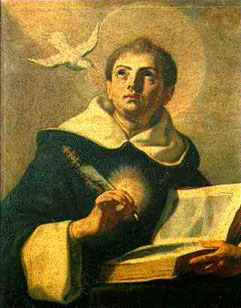
Here is only one section from Garrigou-Lagrange's work Grace in which he reviews and unpacks St. Thomas Aquinas' treatises on grace. I use blue type for commentary.


The remission of guilt is inconceivable without an infusion of grace.” This reply contains two elements: 1. the remission of guilt is in fact produced by an infusion of grace, and 2. it cannot be effected otherwise, even by the absolute power of God.

There is no justification from sin without grace from God.

The first of these is of faith; the second is opposed to Scotus, the Scotists, and Saurez.
Definition of faith by the Council of Trent (Sess. VI, can. 10 and 11; Denz., nos. 820, 821):
“If anyone should say that men are just without the justice of Christ whereby He merited our justification or by that justice itself formally, let him be anathema.” “If anyone should say that men are justified either by the sole imputation of the justice of Christ or by the remission of sins alone, excluding grace and charity which is poured forth into their hearts by the Holy Ghost and abides in them, or even that the grace whereby we are justified is only a favor from God, let him be anathema.

Grace is not merely gift or favor. It is the sharing of the love of God within us. We are not empty vessels after we are baptised.  Christ earned this on the Cross. And the Holy Trinity abides in us. 

This article of the Church’s faith is clearly based on Sacred Scripture: “Of his fullness we all have received, and grace for grace” (John 1:16); “The charity of God is poured forth in our hearts, by the Holy Ghost, who is given to us” (Rom. 5:5); “To every one of us is given grace, according to the measure of the giving of Christ” (Eph. 4:7).

From the day of our baptism and hopefully, unless we commit mortal sin, all of our lives, we live in this sanctifying grace. This grace is a "gift" but it is won by Christ and granted in baptism, not in some circumstantial manner, but in a specific manner, through the sacraments of the Church.

Theological proof. St. Thomas shows the very impossibility of the remission of sin without the infusion of grace, thus admirably founding his argument on God’s love for us.
The remission of sin is effected according as God is pacified in our regard, loving us with special benevolence. But God cannot love the sinner with a special love except by infusing grace whereby the sinner is intrinsically transformed and made pleasing to God. Therefore the remission of sin cannot be effected without an infusion of grace. 

Grace takes away sin through God's love. God does the transformation in us at baptism, as until then, we are not pleasing to Him. Original sin is taken away and God loves us with "a special love".  All the action is on the part of God, not dependent on our reactions to circumstances in our lives. If we are already in grace, these circumstances can help us gain merit.

The major is self-evident, for God cannot remit the offense of the sinner unless He makes peace with him, and God makes peace with us inasmuch as He loves us with a special love. Thus nothing else can be designated wherein our peace with God consists; in other words, God makes peace with us in the matter of our offense on account of His special benevolence toward us.

Peace comes with justification in grace. God alone produces all that is good in us. We cannot do this.

The minor is based on St. Thomas’ principle enunciated in Ia IIae, q. 110, a. I, and Ia, q. 20, a. 2, to the effect that “the love of God does not presuppose goodness in us but produces it”; “the love of God infuses and creates goodness in things,” since He is the author of all good. Nor are we here concerned with the general love whereby God loves and preserves the very nature of the sinner while he is in the state of sin, but rather with the special love whereby He remits or pardons the offense. 

Yes, God loves us while we are still in the state of sin but with a special love He pardons us. We are not pleasing to God until we are free from sin, and then He gives us grace to continue growing in love in Him.

This special love cannot but produce some effect in us, that is, it cannot help but make man pleasing; otherwise God’s created love for us would be no more effective than the love of our friends, who cannot change the interior state of our souls. 

This grace is always efficacious. God begins the good work in us and sees it to completion. Only God can change us, make us perfect. We cannot do this by sheer effort or by merely responding to the circumstances of life. 

Now habitual grace excludes mortal sin absolutely, which is precisely the privation of the life of grace, or the death of the soul. (Cf. ad I.)

Liivng in habitual grace means that one is living in sanctifying grace. If one sins mortally, one now lives outside of grace and one cannot please God.

to be continued....

Putin has emerged--with talk of war

http://apnews.myway.com/article/20150315/eu-russia-crimea-2859701388.html

Vocation Thoughts

I have been thinking of this topic for about a year, but hesistated to write about it, as it may cause some people pain. But, truth is better than hiding the truth, so here goes.

Some comments made by Cardinal Burke lately in England have encouraged me to write this post.

Vocations are down to one of the lowest tides in Church history. In the long life of the Church, there have been high tides and low tides of vocations. The unseen enemies of God have thwarted vocations and stopped men from becoming priests in times of rebellion and persecution.

However, another thing has caused the lack of vocations, a cause I have never heard anyone address, which comes from a two-pronged problem-first, the weakness of faith among Catholic families, and secondly, the dysfunction of families. The problem is the family.

Now, many saints, such as St. Damien of Molokai, were not supported in their vocations by their families. Not all families were like that of Blesseds Zelie and Louis Martin, who helped their girls in the practice of virtue, and obviously encouraged their calls to the religious life.

Years ago, ten in fact, a friend of mine and I discovered some blocks to vocations in America, and not the usual ones of family disapproval, or consumerism, Here are some of the blocks which stop the acceptance of vocations:


  1. Masonry and other membership of secret societies in families, even in past generations.
  2. Occultic activity in families, even in the past, such as witchcraft and satanism.
  3. Dysfuntional parents who cannot take authority over the lives of their children.
  4. Family idoltary, frequently connected to Masonic involvement, where the family comes first, not God, not vocations.
  5. Character defects in children brought about by dysfunctional families, especially narcissim, materialism, egotism, and fears.
  6. The presence of grave sins, such as sexual abuse, including incest, in families.
  7. The lack of catechsis which clearly teaches that the religious life is a higher form of perfect life, ideas no longer taught by parents.
  8. The fear of engaging with other people, of communicating daily with others, born from gross individualism and character defects learned in families.
  9. Fear or even hatred of authority. coming from the culture and seen in families.
  10. Severe learning disabilities, which prevent the necessary study of theology and philosophy, a must for priests, especially in these hard times. 
  11. The lack of noblesse oblige, which means that those who have been given much no longer see that they need to give back to society or the Church. Noblesse oblige is taught by parents.
  12. God not being the center of family life because of the lack of parental discipline. No daily family rosary, for example, because parents refuse to schedule this.
  13. The spoiling of children by parents who think they have to do and have everything
  14. Parents who believe that all Christian denominatons are the same and, therefore, do not value the priesthood.
  15. Catholics not marrying Catholics and, therefore, having no Catholic identity in the home.
All of these problems have been allowed by God in the past several generations, as people have free will. God even allows learning disabilities for the salvation of parents and the person who experiences these, in order to show His greater glory. Saints with learning disablities are known to us now, and God gave some infused knowledge. But, such a cross is not one for the religious or priestly life.

Until families become orthodox, whole, with attributes of holiness and which train children from little on to live a life of the virtues, we shall not have vocations.

All the seminarians I know personally at this time found their vocations in the TLM.

God is allowing a dearth of vocations to punish us all. Tribulation purifies the Church so that people turn to God and repent. The absence of priests is a great trial.


A Reminder to Catholics

Some commentators have indicated that they are considering leaving the Catholic Church and moving over to the Orthodox Church.

I want to remind them of this Canon Law, which applies to all Catholics

1983 edition. I suggest prayer and fasting, as well as asking help from friends in the Church before leaving.

PART II.
PENALTIES FOR INDIVIDUAL DELICTS
TITLE I.
DELICTS AGAINST RELIGION AND THE UNITY OF THE CHURCH (Cann. 1364 - 1369)
Can. 1364 §1. Without prejudice to the prescript of ⇒ can. 194, §1, n. 2, an apostate from the faith, a heretic, or a schismatic incurs a latae sententiae excommunication; in addition, a cleric can be punishedwith the penalties mentioned in ⇒ can. 1336, §1, nn. 1, 2, and 3.
§2. If contumacy of long duration or the gravity of scandal demands it, other penalties can be added, including dismissal from the clerical state.
Can. 1365 A person guilty of prohibited participation in sacred rites (communicatio in sacris) is to be punished with a just penalty.
Can. 1366 Parents or those who take the place of parents who hand offer their children to be baptized or educated in a non Catholic religion are to be punished with a censure or other just penalty.

Yes, possibly

https://freedomfighterreports.com/2015/03/14/breaking-all-russian-embassy-personnel-in-london-have-left-this-is-in-preparation-for-war/

On Trolls

A highly intelligent military friend of mine told me yesterday that he did not understand "trolls". I thought about his comment and came to an astounding conclusion. Trolls reveal the same characteristics of abusers and demons.

Let me explain. Abusers, either sexual or emotional or psychological, desire to make the abused person into a victim, wanting to place negative feelings onto that victim through the abuse. Abusers create false guilt and false turmoil in their victims by making those persons "own" the abusers' sins.

Demons do the same thing. They make a person own their nasty characteristics, creating stress in an attempt to bring down the person, or, as Father Chad Ripperger states in one of his best talks on line, to grind the person down by wearing them out with lies. His talks on spiritual warfare helped me piece together these thoughts. Father points out the abuse relationship of the demons and those trying to live a life of virtue.

Demons lie and harangue one and make one distracted from one's real vices by laying guilt trips about false vices on a person.

Demons and abusers delight in making others more than uncomfortable. They want to inflict pain.

So do trolls. They all share the same vice of  "malice". Malice in normal defintion covers these ideas. I share that below. But, the vice of malice is even more serious.

Garrigou-Lagrange notes that malice is the first sin of the devil, "a sin of ill will, of the intoxication of pride." Strong words. He also notes that the sin of malice is always voluntary, not a sin of ignorance or fraility, thus making it much more serious.

Malice according to Fr. Ripperger in one of his talks on his website, is hatred of God and hatred of humans, because we are made in the image and likeness of God. Therefore, the person who is malicious not only hates God, but hates His human creations.

A serious sin on two accounts...In addition, the intellect and the will are involved in sins of malice, not the passions. Therefore, the higher faculties become polluted as well as the lower.

Garrigou-Lagrange quotes Thomas Aquinas on this point in a footnote: "Spiritual sins are of greater guilt than carnal sins. . . .Spiritual sin denotes more a turning from something. . . . Sins of intemperance are most worthy of reproach. . . because by these sins man is, so to speak, brutalized.

That Internet slang calls people of malice who make nasty comments on purpose, "trolls", indicates that those who invented the word realized the brutalization, the inhumanity of those who are trolls.

Interesting.

Trolls, therefore, commit spiritual rather than carnal sins, turning from God to attack His image and likeness by being full of ill-will and pride. 

Four of the regular trolls who have attacked this blog have attacked other blogs. One recognizes the same wording, the same type of nastiness, and the same quirks of expression. Two are male and two are female. One of the males uses two identities. One of the females uses at least four identities. That they are malicious has been noted by other bloggers who have been on the receiving end of their abuse. And, that is why they comment--in order to abuse and get some type of horrible, evil thrill out of disturbing the bloggers they attack.

Malice aforethought...

I hope these meditations help my soldier friend understand trolls better. They are, simply, abusers. Trolls who are ignored finally give up, but one should pray for trolls on religious blogs, as these people of malice are lost souls. 

I have discerned that some trolls work not only out of sadism, the mark of the abuser, but out of envy. One of my dear blogger friends has been severely hit by envious trolls and has stopped blogging.

That is a goal of a true troll..to stop the real discussion and oppress the blogger. I guess we could say that Satan was the first troll. 


mal·ice
ˈmaləs/
noun
  1. the intention or desire to do evil; ill will.
    "I bear no malice toward anybody"
    synonyms:spite, malevolence, ill will, vindictiveness, vengefulness, revenge,malignity, evil intentions, animus, enmity, rancor; More
    • LAW
      wrongful intention, especially as increasing the guilt of certain offenses.


Americanism Part Two

This heresy reveals itself most subtlely. Most people would not recognize the characteristics of Americanism as it is so common and yet so hard to "pin down" in conversation.

A few points which exemplify an attitude of Americanism may help.

  • Priests who do not read the updates from Rome or follow the suggestions of the Popes regarding liturgy determine their own actions from an attitude that Rome does not understand Americans.
  • Misunderstandings among Americans that Rome is somehow "rich" and that the American Church does not need to support the Church there.
  • The ideal that the Church should be based on democracy and the voice of the people rather than on the hierarchical structure of the past.
  • The idea that Church and State should be completely separate, not a teaching of the Catholic Church, which holds that States should not only listen to the true teachings of Christ through the Church, but that the States should protect the Catholic Church.
  • That Latin is unnecessary and divisive, as not "American".
  • Interdenominational relations are most important and should be encouraged even in conferences and congresses.
  • Almost hatred for passive virtues and an over-emphasis on activity.
  • Most, if not all, the bishops involved in the early days of Americanism were Irish, seeking the domination of Irish Catholics over more conservative and ethnic Catholics, such as the Germans, a problem which came to a head over parishes and Catholic European vs. Catholic American identity.
  • The support of Progressive political ideas instead of conservatism, leading to the overwhelming support of the Irish immigrants for the Democratic Party.
  • An affiliation with the ideals of the French Revolution and the American Revolution rather than an affiliation with "Christendom".
  • The great influence of Americanism in the East Coast spread to Minnesota and Iowa through the appointment of bishops holding Americanist ideas created an attitude of rebellion which surfaced in the conflict over Humanae Vitae.
  • The idea that Catholic schools should adopt curriculum of the public schools rather than classical Catholic education.
  • That the "local" church is more important than the universal Church, a false dichotomy. 
  • More later...

Diocese and Church Updates

http://www.opusdei.org/en-us/article/24-hours-for-the-lord

If you do know if your diocese, or if your parish did this, please let me know. I know of European dioceses and churches which did this, but let me know, please for the edification of all about places in the States. I was told that one really small parish in England joined 24 hour adoration with the open confessional and many others around the world did as well. Nice....


UPDATES: Adoration and Confession reports--please share more, thanks!

Archdiocese of Chicago--24 parishes!!!!!!!!!!!!!!!!!!!!!! 24 hours of confessions were available
Praise God
and more....send in more, please.
Diocese of Calgary, Alberta, Canada
Lincoln, NE Diocese
Dioceses in the Philippines
Ireland, several parishes in County Kildare
Diocese of Sydney, Australia
Diocese of Limerick, Ireland
Several parishes in the State of Washington
Parishes in Colorado, several
Perth, Australia
Diocese of Prince Albert, Canada
Archdiocese of St. Louis, MO.
Archdiocese of Hobart, Tasmania
Archdiocese of Singapore
Diocese of Armagh, Ireland
Seminary in Homebush, Australia
Looks like all the dioceses in Ireland did this
Most parishes in Rome, with young people coming in all night
Holy Trinity Parish, Whitestone, NY
Chur, Germany
Austin, TX Marian Shrine of Our Lady of Schoenstatt
Silsden, West Yorkshire church
Diocese of Southwark, England
Diocese of Portsmouth, England
Diocese of Duluth, MI
Diocese of Montreal, Canada
Archdiocese of Los Angeles, CA
St. Walburga's Shrine, Preston, England
Diocese of Saskatoon, CA delayed until March 28-29


Sanity

http://www.france24.com/en/20150313-iceland-drops-bid-eu-membership/

Serious Coup Coming or The New Baby?

http://mw.ua/WORLD/illarionov-putin-to-be-removed-from-power-in-the-next-few-days-1437_.html

http://nypost.com/2015/03/13/putin-in-switzerland-for-birth-of-his-lovechild/

Whatever happens in Russia affects the US and the EU. I hope it is a baby and not a coup.

Twitter is going crazy...

http://www.france24.com/en/20150314-putin-disapear-rumours-baby-twitter-putinumer/

The Heresy of Americanism

Years ago, when I taught a class which involved looking at all the heresies, called the "isms" class by my students, one of the heresies we studied was that of Americanism.

This heresy was defined and condemned by Pope Leo XIII in Testem Benevolentiae Nostrae, which may be found here among other places.

Part of the heresy is accommodation to the world. Another part is that Rome does not understand America. In 2007, as a run up to the elections and the presidential election of 2008, I did a serious study on this heresy. One of the shocking things I discovered was how many bishops were actually involved, and how many dioceses, even those west of the Mississippi, were infected.

Here is a key paragraph from the encyclical.


The underlying principle of these new opinions is that, in order to more easily attract those who differ from her, the Church should shape her teachings more in accord with the spirit of the age and relax some of her ancient severity and make some concessions to new opinions. Many think that these concessions should be made not only in regard to ways of living, but even in regard to doctrines which belong to the deposit of the faith. They contend that it would be opportune, in order to gain those who differ from us, to omit certain points of her teaching which are of lesser importance, and to tone down the meaning which the Church has always attached to them. It does not need many words, beloved son, to prove the falsity of these ideas if the nature and origin of the doctrine which the Church proposes are recalled to mind. The Vatican Council says concerning this point: "For the doctrine of faith which God has revealed has not been proposed, like a philosophical invention to be perfected by human ingenuity, but has been delivered as a divine deposit to the Spouse of Christ to be faithfully kept and infallibly declared. Hence that meaning of the sacred dogmas is perpetually to be retained which our Holy Mother, the Church, has once declared, nor is that meaning ever to be departed from under the pretense or pretext of a deeper comprehension of them." -Constitutio de Fide Catholica, Chapter iv.

Clearly, the spirit of compromise is behind this heresy, which has take over many dioceses in the States. Another point in the heresy is that active participation in the Church is more important than passive. In other words, works over prayer and contemplation.

This pope reminds us in this encyclical that the call to perfection involves recognizing that there is a more perfect way--the life of the contemplative.  I have referred in the long perfection series that Garriou-Lagrange and others note that this lifestyle is more perfect. Sadly, this has not been taught consistently in the Catholic Church in America.

There have always been some bishops, some cardinals, some priests and religious, who have wanted the Church in America to be different than the one, holy, Catholic, and apostolic Church.

It is not. The glory of the Church is that it is universal, and not a national church like the Anglican one, for example. The Church of England lacks the universality, the oneness, and of course, the apostolic nature of the Catholic Church.

Americanism seeks to accommodate itself to the Protestant denominations by accepting false premises of ecumenism. How often one hears in America that all Christian churches "are the same" as they believe in Christ as God. But the sameness ends with the Trinitarian baptism.

I shall write more on this later...


New Blog Policy

Like Father Z., I am starting a new policy of having commentators have to sign in for comments. Free commenting days are over. Several bloggers have stopped commentators all together because of the growing nastiness of people commenting and trolls.

I hope this does not cause too many readers distress.

For the sake of clarity

This blogger does not post comments which are anti-Francis as to his person. No ad hominems.

Also, if I chose to criticize sound bites, I would be too busy....and not studying Thomas Aquinas or Augustine, which is more important.

God bless all commentators.

Saturday, 14 March 2015

Ashamed of the silence of the USA government...

http://www.ibtimes.co.uk/iraq-isis-blows-10th-century-assyrian-catholic-monastery-near-mosul-1491281

This needs to be read by all--enough of this pretending

http://www.jihadwatch.org/2015/03/uk-anglican-vicar-holds-muslim-prayer-service-in-his-church-asks-congregation-to-praise-the-god-that-we-love-allah

Prayers needed for someone else and a salutary lesson


An acquaintance of mine, a man my age,is in critical condition in the hospital with complications of an operation. It is unlikely that he will live. He is a good Protestant and we have discussed Christ and the times in which we live. He did not expect, when he went in to the hospital, to be facing death.

Please pray the Divine Mercy Chaplet for him. Just use the phrase, "STM's person in hospital" as I do not want to share names.

Now, the salutary lesson is this. This person spent a great deal of time, energy and money chasing prophecies of the end times. He went to conferences and bought books on this subject, spent time on YouTube watching videos of his favorite Protestants who preach.

He did not pursue an interior disposition of quietude or contemplation. Now, in the land of the dying, he will see what is the one thing necessary for life--the pursuit of Christ in our daily lives, in us--and, like Catholics who pursue apparitions, that such knowledge does not save us.

Knowledge of things to come can be prophecies to make our daily prayer life more intense and urgent. But, none of us become holy by knowing the latest prophecy or the latest apparitions. None of us become holy following messages from Mary from unapproved visions, or worse, from condemned visionaries.

I know too many good people, who follow the Ten Commandments, but do not go "higher up and higher in." It we are not orthodox, we have a very small chance of salvation. One starts with the basics, believing in the Trinity, the Eucharist, and so on. Maybe if he had gone into Scripture more deeply instead of pursuing end-time prophecies and puzzles, he would have become a Catholic and received Christ in the Eucharist.

John 6:53New Revised Standard Version Catholic Edition (NRSVCE)

53 So Jesus said to them, “Very truly, I tell you, unless you eat the flesh of the Son of Man and drink his blood, you have no life in you.

God has called us all to become holy, to become perfect, in order to build the Church on earth and to be one with Him. Only the perfect see God which means most good people if they are saved, go to purgatory, a terrible place of punishment, loss, pain, regret and mortification.

Heaven is not assured to all, but to those who love God with their whole heart, soul, mind, body...There are not many ways to God, only one way.


Pray for my Protestant acquaintance.

Follow Up from The Perfection Series-ακηδία


Long ago in the perfection series, and in the posts on St. Bernard, I referred to the sin of accidie. Here is the long definition. It is not what people think it is, simple sloth. It is becoming distracted with useless things so that we are taken away from prayer, meditation and contemplation.

Discussing this with a seminarian today, I was struck with the idea that the noon-day devil is not merely low-blood sugar or high-blood sugar before or after lunch, but a demon who distracts us from times of prayer we even schedule.

St. Philip Neri preached that the afternoon in Rome was "the dangerous part of the day", when youth fell into mortal sins of fornication and even gang fighting. Î±ÎºÎ·Î´Î¯Î± sets in.

Looking at Psalm 90, one has to reckon with the pleasures of falling into sin and fight these. The noon-day devil is not poetry, but a real demon.

Here is the psalm.

Psalm 90 Douay-Rheims 

90 The praise of a canticle for David. He that dwelleth in the aid of the most High, shall abide under the protection of the God of Jacob.
2 He shall say to the Lord: Thou art my protector, and my refuge: my God, in him will I trust.
3 For he hath delivered me from the snare of the hunters: and from the sharp word.
4 He will overshadow thee with his shoulders: and under his wings thou shalt trust.
5 His truth shall compass thee with a shield: thou shalt not be afraid of the terror of the night.
6 Of the arrow that flieth in the day, of the business that walketh about in the dark: of invasion, or of the noonday devil.
7 A thousand shall fall at thy side, and ten thousand at thy right hand: but it shall not come nigh thee.
8 But thou shalt consider with thy eyes: and shalt see the reward of the wicked.
9 Because thou, O Lord, art my hope: thou hast made the most High thy refuge.
10 There shall no evil come to thee: nor shall the scourge come near thy dwelling.
11 For he hath given his angels charge over thee; to keep thee in all thy ways.
12 In their hands they shall bear thee up: lest thou dash thy foot against a stone.
13 Thou shalt walk upon the asp and the basilisk: and thou shalt trample under foot the lion and the dragon.
14 Because he hoped in me I will deliver him: I will protect him because he hath known my name.
15 He shall cry to me, and I will hear him: I am with him in tribulation, I will deliver him, and I will glorify him.
16 I will fill him with length of days; and I will shew him my salvation.
Here is the definition from Ortho-Wiki.

Akedia (in Latin, accidie) is literally fatigue or exhaustion, but in technical usage refers to the spiritual and physical lethargy which can plague those pursuing the eremetic life. The reference in Psalm 90 (91 MT) to the "demon of noonday" is traditionally identified as akedia. It can take the form of listlessness, dispersion of thoughts, or being inattentively immersed in useless activity.

St.Thomas Aquinas calls it world-weariness, which causes a person to neglect both their physical and spiritual duties. This habit of thinking and feeling is a hard sinful habit to break, but one must do so.

One way to break the habit of negative and depressive thoughts it to constantly praise God all day.

The Office of the Hours is a perfect way to break this habit.

Also, the Chaplet of Divine Mercy, to be said at 3:00, is another way to break accidie.

Listlessness can also be expressed in restlessness, like someone feeling like they "just have to get out" and go shopping.

Accidie may be seen in the need to watch television as well. One breaks a habit of vice by practicing the opposite virtue.

More later...


Overcoming Sin: On Memory Again


God will allow temptation for us to undo sins in our lives and break habits of sin. A priest told me this and it is a simple and good truth.

The body adjusts itself to the operations of the soul, and chemically a body readjusts to new stimuli of turning against the sin.

We actually have to turn away from sin physically, emotionally, and spiritually. As humans, we are body and soul, so we are tempted in both for most sins. There are triggers and to break habits of giving in to triggers, God gives us temptations to make "our inner person strong". We can be addicted to certain sins, even thinking negative thoughts. God can change this is we allow Him to enter into the memory, understanding and will.

Demons affect the cogitative powers.

When we decide or judge on something, we create a habit if we keep doing something...this is what St. Thomas calls the "intellective memory" in the positive intellect. This process works on those powers in the inward man, referred to in St. Paul's epistle as being made strong in grace. The sensitive memory is in the imagination.

Thank God for priests who have studied Thomas Aquinas. They are few and far between.

Ephesians 3:16Douay-Rheims

16 That he would grant you, according to the riches of his glory, to be strengthened by his Spirit with might unto the inward man,

For Religious in America


Knowledge of Divine Things Part Seventeen Fides et Ratio Part Nine

The main reason why Aquinas is so important to us even today, is that Aquinas demonstrates the reasonableness of faith. Both reason and faith are gifts. And through these gifts, all man can find freedom from sin and eternal death.

One of my favorite phrases is this one below, "..faith builds upon and perfects reason." One can say the opposite, that if that reason is not perfected, it is because one's faith is faulty, incomplete.

In an age when Christian thinkers were rediscovering the treasures of ancient philosophy, and more particularly of Aristotle, Thomas had the great merit of giving pride of place to the harmony which exists between faith and reason. Both the light of reason and the light of faith come from God, he argued; hence there can be no contradiction between them.44
More radically, Thomas recognized that nature, philosophy's proper concern, could contribute to the understanding of divine Revelation. Faith therefore has no fear of reason, but seeks it out and has trust in it. Just as grace builds on nature and brings it to fulfilment,45 so faith builds upon and perfects reason. Illumined by faith, reason is set free from the fragility and limitations deriving from the disobedience of sin and finds the strength required to rise to the knowledge of the Triune God. Although he made much of the supernatural character of faith, the Angelic Doctor did not overlook the importance of its reasonableness; indeed he was able to plumb the depths and explain the meaning of this reasonableness. Faith is in a sense an “exercise of thought”; and human reason is neither annulled nor debased in assenting to the contents of faith, which are in any case attained by way of free and informed choice.46

Aquinas "reconciled" the secularity of the world, specifically the world of philosophy and the radical Gospel.

This is why the Church has been justified in consistently proposing Saint Thomas as a master of thought and a model of the right way to do theology. In this connection, I would recall what my Predecessor, the Servant of God Paul VI, wrote on the occasion of the seventh centenary of the death of the Angelic Doctor: “Without doubt, Thomas possessed supremely the courage of the truth, a freedom of spirit in confronting new problems, the intellectual honesty of those who allow Christianity to be contaminated neither by secular philosophy nor by a prejudiced rejection of it. He passed therefore into the history of Christian thought as a pioneer of the new path of philosophy and universal culture. The key point and almost the kernel of the solution which, with all the brilliance of his prophetic intuition, he gave to the new encounter of faith and reason was a reconciliation between the secularity of the world and the radicality of the Gospel, thus avoiding the unnatural tendency to negate the world and its values while at the same time keeping faith with the supreme and inexorable demands of the supernatural order”.47

Wisdom is the gift of the Holy Spirit. This gift, which is given in to Catholics in Confirmation, opens the door to more and more knowledge, as well as piety. Prudence, temperance, justice and courage flow from the soul of wisdom. But, as noted below, wisdom is also acquired, and thus, is missing in so many prelates. This other wisdom comes from study and reflection, as well as meditation and contemplation.

Other "wisdoms" follow-philosophical wisdom coming out of Reality, and theological wisdom, coming from Revelation and earned through grace and work. So many of our leaders in the Church lack these "wisdoms".

44. Another of the great insights of Saint Thomas was his perception of the role of the Holy Spirit in the process by which knowledge matures into wisdom. From the first pages of his Summa Theologiae,48 Aquinas was keen to show the primacy of the wisdom which is the gift of the Holy Spirit and which opens the way to a knowledge of divine realities. His theology allows us to understand what is distinctive of wisdom in its close link with faith and knowledge of the divine. This wisdom comes to know by way of connaturality; it presupposes faith and eventually formulates its right judgement on the basis of the truth of faith itself: “The wisdom named among the gifts of the Holy Spirit is distinct from the wisdom found among the intellectual virtues. This second wisdom is acquired through study, but the first 'comes from on high', as Saint James puts it. This also distinguishes it from faith, since faith accepts divine truth as it is. But the gift of wisdom enables judgement according to divine truth”.49
Yet the priority accorded this wisdom does not lead the Angelic Doctor to overlook the presence of two other complementary forms of wisdom—philosophical wisdom, which is based upon the capacity of the intellect, for all its natural limitations, to explore reality, and theological wisdom, which is based upon Revelation and which explores the contents of faith, entering the very mystery of God.

To ignore the intellectual virtues is to stop the process of purgation and perfection. A Catholic adult must pursue the intellectual virtues. (See my posts on the virtues). Too many Catholics stay in the realm of the emotions, and never earn merit or grow in holiness.

to be continued...