Recent Posts

Wednesday, 25 March 2015

Knowledge of Divine Things Twenty-Five Fides et Ratio Sixteen

Because of home circumstances, I am containing the walk through Fides et Ratio and encourage my readers to follow up their reading here.

I want to highlight St. John Paul II's comment on metaphysics, which is the core point of this series.

My comments are in normal type. After this post, I shall move on to Caritas in Veritatis.


To be consonant with the word of God, philosophy needs first of all to recover its sapiential dimension as a search for the ultimate and overarching meaning of life. This first requirement is in fact most helpful in stimulating philosophy to conform to its proper nature. In doing so, it will be not only the decisive critical factor which determines the foundations and limits of the different fields of scientific learning, but will also take its place as the ultimate framework of the unity of human knowledge and action, leading them to converge towards a final goal and meaning. This sapiential dimension is all the more necessary today, because the immense expansion of humanity's technical capability demands a renewed and sharpened sense of ultimate values. If this technology is not ordered to something greater than a merely utilitarian end, then it could soon prove inhuman and even become potential destroyer of the human race.98

To state this more simply, one needs to think in terms of nature first, and wisdom begins with reality, which God created. But, the end of this philosophical order is not utilitarianism, but the wisdom of the Church.

The word of God reveals the final destiny of men and women and provides a unifying explanation of all that they do in the world. This is why it invites philosophy to engage in the search for the natural foundation of this meaning, which corresponds to the religious impulse innate in every person. A philosophy denying the possibility of an ultimate and overarching meaning would be not only ill-adapted to its task, but false.

Again the goal of men and women is heaven, not this world. Any valuable philosophy would consider man's origins and his end, a life beginning in and with God and going towards God.

82. Yet this sapiential function could not be performed by a philosophy which was not itself a true and authentic knowledge, addressed, that is, not only to particular and subordinate aspects of reality—functional, formal or utilitarian—but to its total and definitive truth, to the very being of the object which is known. This prompts a second requirement: that philosophy verify the human capacity to know the truth, to come to a knowledge which can reach objective truth by means of that adaequatio rei et intellectus to which the Scholastic Doctors referred.99 This requirement, proper to faith, was explicitly reaffirmed by the Second Vatican Council: “Intelligence is not confined to observable data alone. It can with genuine certitude attain to reality itself as knowable, though in consequence of sin that certitude is partially obscured and weakened”. 100

The total truth is Christ Himself, Whose Mind is revealed in the teaching of the Catholic Church.  God is knowable through reason and so is natural law. Philosophy helps order these basic truths. I get weary of hearing that people "are deceived" as we all have free will and reason to cooperate with grace.

A radically phenomenalist or relativist philosophy would be ill-adapted to help in the deeper exploration of the riches found in the word of God. Sacred Scripture always assumes that the individual, even if guilty of duplicity and mendacity, can know and grasp the clear and simple truth. The Bible, and the New Testament in particular, contains texts and statements which have a genuinely ontological content. 

This means that Christ tells us who man is--what it means to be a human being.

The inspired authors intended to formulate true statements, capable, that is, of expressing objective reality. It cannot be said that the Catholic tradition erred when it took certain texts of Saint John and Saint Paul to be statements about the very being of Christ. In seeking to understand and explain these statements, theology needs therefore the contribution of a philosophy which does not disavow the possibility of a knowledge which is objectively true, even if not perfect. This applies equally to the judgements of moral conscience, which Sacred Scripture considers capable of being objectively true. 101

 Many Catholics deny the possibility of knowledge of Who Christ Is. Objectivity, the mark of a spiritual person, has been undermined both by Protestantism. One of the weakenesses of the glitz of "Catholicism" is the lack of a cohesive philosophy behind the presenter's comments. Actually, he lacks an real understanding of Catholic Christology.

Sapiential knowledge is wisdom from the work of philosophy. Analytical knowledge is the ability of all men to reason.

83. The two requirements already stipulated imply a third: the need for a philosophy of genuinely metaphysical range, capable, that is, of transcending empirical data in order to attain something absolute, ultimate and foundational in its search for truth. This requirement is implicit in sapiential and analytical knowledge alike; and in particular it is a requirement for knowing the moral good, which has its ultimate foundation in the Supreme Good, God himself. Here I do not mean to speak of metaphysics in the sense of a specific school or a particular historical current of thought. I want only to state that reality and truth do transcend the factual and the empirical, and to vindicate the human being's capacity to know this transcendent and metaphysical dimension in a way that is true and certain, albeit imperfect and analogical. In this sense, metaphysics should not be seen as an alternative to anthropology, since it is metaphysics which makes it possible to ground the concept of personal dignity in virtue of their spiritual nature. 

The questions begin always, "Who is man?" "Who is God?" and so on. I hope I can share the love of knowledge, the love of the beauty of truth which I share with all those who follow this way of study and prayer.

In a special way, the person constitutes a privileged locus for the encounter with being, and hence with metaphysical enquiry.

Wherever men and women discover a call to the absolute and transcendent, the metaphysical dimension of reality opens up before them: in truth, in beauty, in moral values, in other persons, in being itself, in God. We face a great challenge at the end of this millennium to move from phenomenon to foundation, a step as necessary as it is urgent. We cannot stop short at experience alone; even if experience does reveal the human being's interiority and spirituality, speculative thinking must penetrate to the spiritual core and the ground from which it rises. Therefore, a philosophy which shuns metaphysics would be radically unsuited to the task of mediation in the understanding of Revelation.

Grace comes with study, if the person is pursuing truth.

The word of God refers constantly to things which transcend human experience and even human thought; but this “mystery” could not be revealed, nor could theology render it in some way intelligible, 102 were human knowledge limited strictly to the world of sense experience. Metaphysics thus plays an essential role of mediation in theological research. A theology without a metaphysical horizon could not move beyond an analysis of religious experience, nor would it allow the intellectus fidei to give a coherent account of the universal and transcendent value of revealed truth.

The meaning of intellectus fidei, which is "the understanding of faith", becomes the goal of metaphysics.  Faith and reason bring us to God through grace.

If I insist so strongly on the metaphysical element, it is because I am convinced that it is the path to be taken in order to move beyond the crisis pervading large sectors of philosophy at the moment, and thus to correct certain mistaken modes of behaviour now widespread in our society.

Here it is. The saint states, "...I am convinced that it is the path to be taken in order to move beyond the crisis pervading large sectors of philosophy at the moment, and thus to correct certain mistaken modes of behaviour now widespread in our society."

It is as if the spirit of St. John Paul II is standing up in this phrase and addressing the synod fathers.


84. The importance of metaphysics becomes still more evident if we consider current developments in hermeneutics and the analysis of language. The results of such studies can be very helpful for the understanding of faith, since they bring to light the structure of our thought and speech and the meaning which language bears. However, some scholars working in these fields tend to stop short at the question of how reality is understood and expressed, without going further to see whether reason can discover its essence. How can we fail to see in such a frame of mind the confirmation of our present crisis of confidence in the powers of reason? When, on the basis of preconceived assumptions, these positions tend to obscure the contents of faith or to deny their universal validity, then not only do they abase reason but in so doing they also disqualify themselves. 

What a powerful paragraph!  Reason can discover the essence of reality, as we are made in the image and likeness of God in our intellect and our free will, and, of course, God wants to be found. He is waiting.

Only "isms", only ideologies stop inquiry. Can you think of those isms which stop real understanding of the natures of man, God, Christ, His Church? Relativism, individualism, subjectivism, and so on...

Faith clearly presupposes that human language is capable of expressing divine and transcendent reality in a universal way—analogically, it is true, but no less meaningfully for that. 103 Were this not so, the word of God, which is always a divine word in human language, would not be capable of saying anything about God. The interpretation of this word cannot merely keep referring us to one interpretation after another, without ever leading us to a statement which is simply true; otherwise there would be no Revelation of God, but only the expression of human notions about God and about what God presumably thinks of us.

Faith and reason can express the transcedent reality of Scripture, Tradition, including doctrine, dogma, prayer and so on.

Christ is the Word of God. Scripture is the word of God. Both revealed through the Father and the Holy Spirit for our salvation.

One must stop in awe and thank God for the clarity of this document.

Thanks be to Jesus Christ...

I shall move on to the second encyclical tomorrow.


Chapel Update Two

The person who owns this empty house is thrilled that I have turned one room into a little prayer room, which I call a chapel.

I still need linens, but have a person donating a church floor candelabra, which he got from a priest, and a few appropriate pieces of furniture.

I would like two prie-deux and some plain backless benches, plus the linens if anyone would like to donate such.

When I get one more person, I shall ask the bishop for the Eucharist, if it is his will. The room is extremely peaceful and when a friend comes to take photos, I shall put some on this blog.

The name of the room is St. Mary of the Angels at Ephesus. Mary's little house in Ephesus would be just a little bigger.


Loss of independence

Heinz and Kraft are merging.

Kraft supports both Planned Parenthood and same-sex marriage.

Boycott...I do.

We do not need processed foods, anyway.

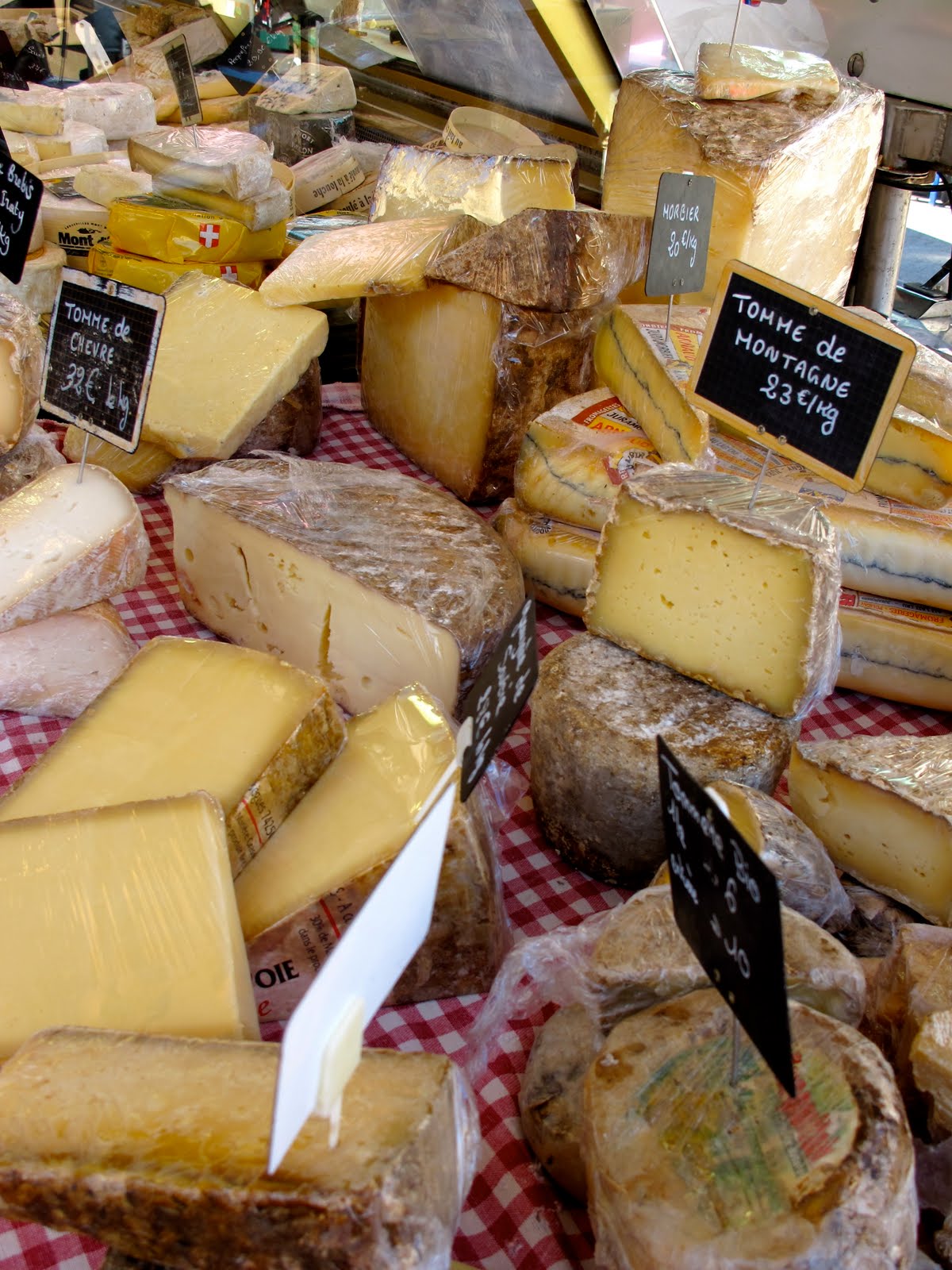
Is this cheese, or is this cheese?

No, this is cheese.


DHS statement so ludicrous, I could not pass up this article..

http://www.jihadwatch.org/2015/03/dhs-secretary-reading-quran-reminds-me-of-quintessential-american-values

Oh No....Oh No

http://www.catholicherald.co.uk/news/2015/03/25/cardinal-nichols-urges-priests-not-to-conduct-synod-debate-in-press/

Amen to this article--deeply disturbing I would say is an understatement...he is our (those in Britain) Dolan, sadly, this cardinal .

Wednesday, 25 March 2015

Cardinal Nichols' criticism of faithful priests is deeply disturbing

Cardinal Nichols conducting dialogue on the Synod via the press

I am deeply disturbed by Cardinal Nichols' criticism of the 461 brave priests who signed a letter upholding the unchangeable teachings of the Catholic Church on marriage and Holy Communion.
In the letter, which was published in the Catholic Herald yesterday, priests from all over England and Wales pledged to remain faithful to Catholic teaching and to offer true pastoral care to all those who find themselves in difficult situations.

A statement made by Cardinal Nichols spokesman said:
“Every priest in England and Wales has been asked to reflect on the Synod discussion. It is my understanding that this has been taken up in every diocese, and that channels of communication have been established.”
It continued:
“The pastoral experience and concern of all priests in these matters are of great importance and are welcomed by the Bishops. Pope Francis has asked for a period of spiritual discernment. This dialogue, between a priest and his bishop, is not best conducted through the press.”
I find this statement astonishing for a number of reasons.

Firstly, Cardinal Nichols has himself used the press to indicate sympathy for views being promoted by the "radical elements" (to use Cardinal Pell's phrase) who want to dismantle Catholic teaching on marriage and the family.

I drew attention yesterday to the press conference at which Cardinal Nichols' undermined Catholic teaching on the reception of Holy Communion by the divorced and "remarried".

The Cardinal also used the press to express his disappointment that the final report of the synod did not include controversial phrases originally placed in the notorious interim report. He told BBC Radio 4’s Sunday programme:
“I didn’t think it went far enough, there were three key words as far as I was concerned … ‘respect’, ‘welcome’ and ‘value’. I was looking for those words and they weren’t there and so I didn’t think that was a good paragraph.”
He added:
“I didn’t think it was a good text because it didn’t include those words strongly enough so I wasn’t satisfied with it.”
Secondly, it is hardly surprising that priests faithful to Catholic teaching would lack confidence in the "channels of communication" that are claimed to "have been established." I also mentioned yesterday that the official document produced by Bishops' Conference of England and Wales for clergy seemed nothing other than an instrument for intimidating priests who wish to remain faithful to the Church's traditional doctrine and discipline.

Is it any surprise that these brave priests would wish to speak directly to the Catholic faithful rather than trust "channels of communication" established by the same people responsible for this truly disgraceful document?

Indeed, in their press statement an anonymous priest was quoted who alleged that priests involved in the project had been intimidated by "senior churchmen."

Thirdly, and perhaps most importantly, how can any Catholic bishop object to priests using the media to express their loyalty to the teaching of Christ and their desire to give true pastoral care to all who need it?

Catholics should be very disturbed by the Cardinal's comments; very disturbed indeed.

Well

Mr. Voris is now talking about the real deal and not just symptoms.I wonder if he has been reading my blog.

The real deal is, of course, the lack of adults appropriating the Faith but not using Reason and not praying.

Back later. Glad to hear one of his guests say that Americans are more American than Catholic, which has been my point on Americanism....on this blog.

News from SPUC

Wednesday, 25 March 2015

The Annunciation reminds us of the pro-life movement's sacred work


Monsignor Barreiro's and Father Peter West's article "Salvation begins in the womb; honouring the Annunciation" reminds us of the sacred work of the pro-life movement which seeks to protect Christ Himself in Whose image and likeness all of us are made at the moment of our conception. It's also a reminder why we must patiently and charitably correct our colleagues in the international pro-life movement who do not yet understand that we must explicitly oppose contraceptive drugs and devices which, according to the manufacturers, can stop the newly-conceived embryo from implanting in the lining of the womb. One of the consequences of failing to do so is the virtually worldwide acceptance of the IVF industry - including amongst Church-goers. According to peer-reviewed research up to 23 babies are killed (discarded), or used in destructive human embryo research, or frozen, or miscarry, for every one baby born by IVF. Today's culture of death is characterised by contempt for the the human embryo - contempt for our Saviour Jesus Christ Who began His life in the womb of Our Lady, the Mother of God, Whose consent to our redemption we celebrate today in the feast of the Annunciation.

Comments on this blog? Email them to johnsmeaton@spuc.org.uk

Prayers, Please


I shall resume the Knowledge of Divine Things series later today or tomorrow. I apologize, but I am not feeling well.

Also, please pray for one of my oldest and best friends today who is having a knee replacement.

St. Raphael, Archangel of Healing, pray for us. I love this old prayer, which I have had for years, as it covers petitioning for safe traveling, health, and purity.


Update--feeling better, hence the blogging. Thanks for all the prayers.

Happy Feast of The Annunciation

I like to celebrate by reading my two favorite poems on the Annunciation. Both are by John Donne. And, while I am thinking of John Donne, I add his great poem on Good Friday.


Upon the Annunciation and 

Passion Falling upon One Day. 
1608


Tamely, frail body, abstain today; today

My soul eats twice, Christ hither and away.
She sees Him man, so like God made in this,
That of them both a circle emblem is,
Whose first and last concur; this doubtful day
Of feast or fast, Christ came and went away;
She sees Him nothing twice at once, who’s all;
She sees a Cedar plant itself and fall,
Her Maker put to making, and the head
Of life at once not yet alive yet dead;
She sees at once the virgin mother stay
Reclused at home, public at Golgotha;
Sad and rejoiced she’s seen at once, and seen
At almost fifty and at scarce fifteen;
At once a Son is promised her, and gone;
Gabriel gives Christ to her, He her to John;
Not fully a mother, she’s in orbity,
At once receiver and the legacy;
All this, and all between, this day hath shown,
The abridgement of Christ’s story, which makes one
(As in plain maps, the furthest west is east)
Of the Angels’ Ave and Consummatum est.
How well the Church, God’s court of faculties,
Deals in some times and seldom joining these!
As by the self-fixed Pole we never do
Direct our course, but the next star thereto,
Which shows where the other is and which we say
(Because it strays not far) doth never stray,
So God by His Church, nearest to Him, we know
And stand firm, if we by her motion go;
His Spirit, as His fiery pillar doth
Lead, and His Church, as cloud, to one end both.
This Church, by letting these days join, hath shown
Death and conception in mankind is one:
Or ‘twas in Him the same humility
That He would be a man and leave to be:
Or as creation He had made, as God,
With the last judgment but one period,
His imitating Spouse would join in one
Manhood’s extremes: He shall come, He is gone:
Or as though the least of His pains, deeds, or words,
Would busy a life, she all this day affords;
This treasure then, in gross, my soul uplay, 
And in my life retail it every day.


Annunciation


Salvation to all that will is nigh;

That All, which always is all everywhere,
Which cannot sin, and yet all sins must bear,
Which cannot die, yet cannot choose but die,
Lo, faithful virgin, yields Himself to lie
In prison, in thy womb; and though He there
Can take no sin, nor thou give, yet He will wear,
Taken from thence, flesh, which death's force may try.
Ere by the spheres time was created, thou
Wast in His mind, who is thy Son and Brother;
Whom thou conceivst, conceived; yea thou art now
Thy Maker's maker, and thy Father's mother;
Thou hast light in dark, and shutst in little room,
Immensity cloistered in thy dear womb.


Good Friday, 1613. Riding Westward


Let mans Soule be a Spheare, and then, in this,
The intelligence that moves, devotion is,
And as the other Spheares, by being growne
Subject to forraigne motion, lose their owne,
And being by others hurried every day,
Scarce in a yeare their naturall forme obey:
Pleasure or businesse, so, our Soules admit
For their first mover, and are whirld by it.
Hence is't, that I am carryed towards the West
This day, when my Soules forme bends toward the East.
There I should see a Sunne, by rising set,
And by that setting endlesse day beget;
But that Christ on this Crosse, did rise and fall,
Sinne had eternally benighted all.
Yet dare I'almost be glad, I do not see
That spectacle of too much weight for mee.
Who sees Gods face, that is selfe life, must dye;
What a death were it then to see God dye?
It made his owne Lieutenant Nature shrinke,
It made his footstoole crack, and the Sunne winke.
Could I behold those hands which span the Poles,
And tune all spheares at once peirc'd with those holes?
Could I behold that endlesse height which is
Zenith to us, and our Antipodes,
Humbled below us? or that blood which is
The seat of all our Soules, if not of his,
Made durt of dust, or that flesh which was worne
By God, for his apparell, rag'd, and torne?
If on these things I durst not looke, durst I
Upon his miserable mother cast mine eye,
Who was Gods partner here, and furnish'd thus
Halfe of that Sacrifice, which ransom'd us?
Though these things, as I ride, be from mine eye,
They'are present yet unto my memory,
For that looks towards them; and thou look'st towards mee,
O Saviour, as thou hang'st upon the tree;
I turne my backe to thee, but to receive
Corrections, till thy mercies bid thee leave.
O thinke mee worth thine anger, punish mee,
Burne off my rusts, and my deformity,
Restore thine Image, so much, by thy grace,
That thou may'st know mee, and I'll turne my face.

(Update: someone asked on another blog about Mary being seen at the spinning wheel sometimes when the Annunciation occurred. Here is my comment on that blog.)

As to Mary spinning, three symbolisms I know of, from history, literature, and meditation…the first is that she is a spinster, which originally did not mean an old unmarried woman, but any unmarried woman and yet, one of marriagable age. So that symbolism is connected to Mary’s ever-virginity. This type of woman would be of a certain class, as well, not a peasant, but a skilled worker. Spinning is a symbol of good households, and, therefore, stability. Spinning women were a good symbol, as spinsters, not bad-a pure person with skill from a good family.
The second would be that she is the mother of Christ, who is of the Tribe of Judah, a descendant of David, on the “distaff” side. Jewish custom is still to take the ancestry from the mother, as one always knows who the mother is, and in this case, Mary as the Mother of God, is the primary source of His identity, not Joseph. The distaff, which Mary would have had, not a spinning wheel, which came much later, indicates this Woman’s role of power in the household of God–the Theotokos, the most powerful, yet humble woman in the world.
The last is that Mary is the New Fate, the Woman in charge of our destiny, like the Fates in Greek mythology and other mythologies, who wove history and personal destinies. She weaves mystically the new life of all the saints by her humility, example and intercession. Mary has woven the destiny of all mankind by saying “yes” to God, thus changing history forever.
I use to teach art appreciation and history of art, btw, as well as intro to art when I taught Humanities a long time ago.


Sin 101


I have listed points for Sin 101, because weekly I hear confusion about sin. Here are a few review points.

One: If one is in mortal sin when one dies, one goes to hell. This state would be one in which the person knew the action or thought was seriously sinful, and did it anyway.

Two: If one has apostastised and left the Church, being a "fallen away Catholic", one is living in mortal sin. The word apostasy is from aphístÄ“mi, meaning, I withdraw,  I revolt”. Once a Catholic, always a Catholic.

For a Catholic to willingly leave the Church is a serious error in judgment. One cuts one's self away from the sacraments, especially Confession and the Eucharist.

Three: Apropos One, there is no repenting after death, no choice after death. One's choices are made in this life. The next life is for punishment, purification or reward; that is, hell, purgatory, or heaven.

Four: One must willingly repent or choose to come back to the Church, or join the Church as a convert, before death. I know this sounds basic, but I hear almost weekly people saying after an apostate has died "Oh, he was a good man, and God will have mercy on him for his good works". No merit is gained when one is in mortal sin and leaving the Church is a mortal sin.

Five: We must pray daily for those who are in mortal sin, and when we have the chance, instruct them as to the state of their souls. We must speak to those who are open, and pray for those who are closed.

Six, Very few people die and go straight to heaven. Those who do are "saints". The souls in purgatory are not saints--they are the Church Suffering, not the Church Triumphant. And, they cannot merit anything. This means, contrary to some simplistic ideas I have heard both in the States and in England, the souls in purgatory cannot intercede or pray for us. People in purgatory are not saints. Saints are those in heaven.

Seven: There is no middle ground concerning grace. One is either in sanctifying grace or not. One is either in mortal sin, deadly sin, or not. 

Eight: Sin blocks the use of the virtues. Even venial sin blocks the flowering of the virtues. As Father Chad Ripperger and other good priests note, we all are called to not sin even venially. Venial sins weaken the Church and our relationship with God

Nine: The sacrament of confession is the only way to be absolved of mortal sin. The Eucharist takes away venial sin, but the graces of Confession should be sought for venial sins as well, as the grace of that sacrament helps us break away from venial sin and the tendency to sin.

Ten: If we have been told something is sinful by someone in authority and we still pursue this action or thought, we are responsible for that sin.

Eleven: One is automatically excommunicated as a lay person if one, has an abortion; physically attacks the pope; apostasy; schism; descration of the Eucharist, Body or Blood. One cannot return to full communion in the Church without first going to Confession and having the excommunication lifted. Priests need special faculties to remove excommunications and these are written out in their faculties. Not all priests have these faculties.

Twelve: The saints and some good priests remind us that purgatory is very, very painful. Ask to be purified here and now. You will do more good for the Church in that state of being free from egotism.


Guest Blogger on Palliative Sedation Danger

from a reader in medicine...


Final Penitence and Palliative Sedation.

Palliative sedation has been in the news quite recently, well the French news, as the French government has recently voted and approved of its use. This has the prolife community up in arms because of the loose wording that allows one to use it as direct euthanasia.

What is palliative sedation? It is an end of life medical treatment where in the patient, who is in great pain that is beyond the comfort of palliative analgesia or painkillers. The patient is placed under deep, continuous sedation either for short periods to allow for concurrent treatment to take effect, or until death is reached.

The example on Wikipedia is that of a patient with end-stage oesophageal cancer wherein the tumour has become so enlarged that it compresses the trachea. The typical treatment for that is intubation, or a tracheostomy, where one opens the trachea from the neck to insert a tube in order to allow ventilation. These procedures in themselves are uncomfortable and the patient may refuse, and thus desire palliative sedation to avoid the conscious discomfort and pain of death by suffocation.

However, what the French has voted on its on is different from this, it is clearly euthanasia. Their bill involves those who are ‘deeply handicapped or ill persons who judge that any treatment they are receiving is “uselessly prolonging life,” either because they are “disproportionately heavy” or have lasted “too long.”’ And the withdrawal of feeding and hydration tubes while putting the patient into a deep continuous sedation until death. You can read more here: https://www.lifesitenews.com/news/french-president-approves-report-promoting-covert-euthanasia

The argument for the permissibility of palliative sedation in moral philosophy would be through the Principle of Double Effect. It is similar to the one for the use of palliative analgesiacs which suppress the respiratory system such as morphine. The argument of the latter being that it is good to relieve the pain and make the terminal patient comfortable, and this good outweights the consequential evil that death maybe hastened by respiratory suppression, however it can be tolerated because the patient is comfortable. This is not euthanasia because the intent and act are for pain relief and not death.

In palliative sedation, the arguemnt is similar except that it involves placing the patient into deep sedation to prevent the conscious sensation of pain. Also, palliative physicians ensure that respiratory suppression does not occur by titrating the drugs accurately, thus death will occur according to the underlying cause.  It is important to note the difference here as compared to the recent French ruling, is that feeding and hydration of the patient, as well as other life support interventions are continued during this sedation.

I must digress here and note that in certain cases, it is medically justifiable to withdraw hydration and feeding tubes from a dying patient in order to increase their comfort. In the case of dying by congestive cardiac disease where in the lungs are filled with fluid, the constant hydration by IV fluids may make it difficult for the patient to breath. Hence, removal is for comfort. However, this is only done in the final hours of life.

Thus, it would seem that palliative sedation on its own is morally justifiable,  and a good thing to give a patient in desperate pain. Ah, but up to this point we have not considered it from the viewpoint of moral theology.

One of the things the Christian prays for is the provision of a good death and the grace of final repentance. All repentence is through the grace of God, and without which, we fallen sons of Adam would be unable to seek reconcilliation and forgiveness for our sins. Final repentence is for the final conversion of the soul upon her deathbed. Conversion requires an act of  will to love God and to abandon and hate one’s sins.

The will, as St Thomas teaches, is in one of the higher facultives of the soul and is through we derive our volition. Furthermore, it can only express itself when a person is conscious. This is why, St Thomas teaches that the things we are not culpable for the things we dream about since we are not conscious during that time, unless of course, we arise halfway and persist in those sinful thoughts. Thus, in order for conversion or repentence to occur, one must be conscious to will it.

Secondly, we are rational animals, and because of that we are moral creatures. Thus, the Church teaches that anything that detracts from the dignity that comes from that gift of rationality is sinful. This is why impairing our congnitive facultives through excess drinking or the use of recreational drugs is a grave sin. We detract from the dignity that God gave us to take that of animals, which are below us. Hence, palliative sediation tows a fine line from begin necessary to unneccessary, and thus sinful. It would certainly be a grave sin to put oneself in such a state consciously knowing that it dulls the cognitive faculties and prevents the opportunity for the grace of final repentance. It would be a denial of the hope of God Himself.

That said, not all sedation is deep continuous sedation. There are legitamate uses of shallow sedation, such as when one is placed intubated and placed on a ventilated in cases of respiratory distress. The sedation is necessary to prevent the patient from taking out the tube himself thus injurying his vocal cords in the process and denying his body much needed oxygen. However, it is noted that in such a case, the patient is conscious. Another instance would be where one is overly anxious or excited and is a harm to oneself or others in the case of a behaviour altering brain tumour or dementia.

Thirdly, under such deep sedation where one is unconscious, there would be no merit for the sufferings that one undergoes. These may be from God as necessary mortification for our salvation. They may even be from God as penance for the salvation of others.

In conclusion, the moral aspects of palliative sedation must be studied from the lens of moral theology. Clearly, there are many issues that need to be discussed and clarified.  Sadly, there haven’t been any great moral theologians in this era, and most of these life issues, even in Catholic circles, are discussed only from the limited lens of moral philosophy. One wonders how many Catholics, outside of easy topics like abortion and contraception, actually understand the theological reasoning behind the other issues?

Tuesday, 24 March 2015

From Father Z's Site-Important Info “No-one is born gay,”

8 major studies of identital twins prove homosexuality Is NOT genetic  OrthodoxyToday


WOW! What a condemnation of some German clerics

http://www.catholicculture.org/news/headlines/index.cfm?storyid=24422

Look at this. Schism in the making..or worse. Thanks to a fellow blogger for the update.


At a February 25 press conference, Cardinal Marx—who is the president of the German bishops’ conference, as well as a member of the Council of Cardinals—said: “We are not a branch of Rome.” Regarding the hotly debated issue of allowing Communion to remarried Catholics, which will be discussed by the Synod of Bishops in October, he said: “We cannot wait for a Synod to tell us how we have to shape pastoral care for marriage and family here.”
In a letter to the editor of Die Tagespost, Cardinal Cordes took issue with those statements. He said that he had chosen “to object publicly to some of the utterances, in order to limit the confusion which they have caused.”

“The existing German ecclesial apparatus is completely unfit to work against growing secularism,” Cardinal Cordes said.

More on the disobedience of certain people

http://te-deum.blogspot.com/2015/03/ivan-dragicevic-thumbs-nose-at-cdf.html

and

http://te-deum.blogspot.com/2015/03/cdf-intervenes-in-st-louis-to-stop.html

Reminder on the CDF an USCCB on Medjugorje

Vatican Insider reports the Holy Father’s homily during Mass at St Martha’s on November 14, which also has relevance to this subject: discussing the reading about the Spirit of Wisdom, Pope Francis commented, “Curiosity …leads us to say “But I know a visionary who receives letters from Our Lady, messages from Our Lady.” He added in the homely imagery for which he is noted, “But look, Our Lady… is not a postmistress, sending messages every day.” He warned the faithful not to seek “strange things” or “novelties with worldly curiosity.”

http://www.catholicherald.co.uk/commentandblogs/2013/11/15/the-cdf-has-done-something-about-medjugorje-finally/


and


from here http://communio.stblogs.org/index.php/2013/11/medjugorje-visionaries-not-permitted-to-speak-church-advocates/


“Oh! How sweet and glorious is this virtue of obedience, which contains all the other virtues! Because it is born of charity, and on it the rock of the holy Faith is founded; it is a queen, and he who espouses it knows no evil, but only peace and rest.” St. Catherine of Siena.

The legitimate investigation of the Holy See continues as you can see from this letter of October 21, 2013 of the US Apostolic Nuncio, Archbishop Carlo Maria Viganò to the General Secretary of the US Conference of Catholic Bishops, Monsignor Ronny Jenkins. Archbishop Viganò writes on behalf of Archbishop Gerhard Ludwig Müller, Prefect of the Congregation for the Doctrine of the Faith. The letter reiterates an April 10, 1991, directive not to adhere to unverified proposals.
The Congregation for the Doctrine of the Faith is clear: “clerics and the faithful are not permitted to participate in meetings, conferences or public celebrations during which the credibility of such ‘apparitions’ would be taken for granted.”

We owe the bishops practical obedience, which means not contradicting the local ordinaries decisions on visionaries. We owe the CDF real obedience, as that body is part of one of the levels of the Teaching Magisterium of the Church.


Some people I know are having difficulties in their families, while the mother and father insist on following false seers. A direct consequence of disobedience, a sin, could be loss of faith in the children. Deception in spiritual matters can afflict entire families and lead individuals away from the Church.


I know followers of Medjugorje would believe in women priests and ssm. And, they have been to the shrine many times.

Think. Only obedience can lead to holiness, not the chasing after apparitions. Christ said this to St. Margaret Mary Alocoque: "…not only do I desire that you should do what your Superior commands, but also that you should do nothing of all that I request of you without their consent. I love obedience, and without it no one can please Me" 

quotations of the saints found here...

Follow-up on Priest's Letter from England and Wales

I was however greatly concerned to read in their press statement the accusation that there “has been a certain amount of pressure not to sign the letter and indeed a degree of intimidation from some senior Churchmen”.

It should be shocking to us to hear that senior clerics are intimidating priests who simply wish to remain faithful to the unchanging teachings of the Church. Unfortunately, I was not surprised by this allegation.


Back in December the Bishops' Conference of England and Wales published a document that insinuated that priests who remain faithful to the Catholic doctrine and discipline of the sacraments are guilty of an attitude similar to the fourth century heresy of Donatism. It is difficult to see this as anything other than an attempt to intimidate clergy who are unwilling to go along with the radical agenda being pursued by senior clerics, particularly with regard to the reception of Holy Communion by the divorced and “remarried”, and with regard to attempts to undermine the teaching of the Church on homosexuality and same-sex unions.

The President of the Bishops’ Conference of England and Wales, Vincent Cardinal Nichols, indicated his openness to the reception of Holy Communion by the divorced and “remarried” at a press conference on 21st October 2014 despite authoritative and irreformable Church teaching to the contrary.


from the SPUC site, pointing out pressure from bishops and maybe cardinals

http://spuc-director.blogspot.co.uk/2015/03/senior-churchmen-accused-of.html

Please pray for all of these people

http://www.france24.com/en/20150324-live-airbus-passenger-plane-crashes-southern-france/

Two teachers and maybe more than sixteen students from a high school are dead.

Stay in the state of grace, Readers.

Excellent News from Voice of the Family

Almost 500 priests sign support of traditional marriage in England and Wales.

I get the updates directly sent to me. Please sign up for these.

Here is the list and more on this website. Fourteen priests I know are not on this list...I hope they just missed it. Nice showing of Ordinariate priests. There are supposedly five million Catholics in England and Wales and there must be thousands of priests. I have looked for a recent statistic on numbers and only found a newspaper comment that there are about 4,500 priests in England and Wales.

Also, see here for what the laity can do. http://the-hermeneutic-of-continuity.blogspot.co.uk/2015/03/further-on-priests-support-for-marriage.html

Fr John Abberton, Fr Raymond Abuga MSP, Fr Benedict Bullem Abuo, Fr John Adikwu CM, Fr Richard Aladics, Fr Dominic Allain, Fr Hugh Allan OPraem, Monsignor John Allen, Fr Jim L Allen, Fr Blaise Amadi, Fr Moses Amune, Fr Thomas Amungwa, Fr David Annear, Fr Matt Anscombe, Fr Paul Antwi- Boasiako CSSP, Fr Gabriel Arnold OSB, Fr Thevakingsley Arulananthem OAR, Fr James Austin, Fr Francis Austin, Abbot Francis Baird OSB, Fr Gerard Balinnya, Fr John Barnes, Fr Kurt Barragan, Fr Lee Barrett, Fr Bernard Barrett, Fr Andrew Barrett, Fr Christopher Basden, Fr Jeremy Bath, Fr Antoine Baya OFM, Fr Michael Beattie SJ, Fr Miceal Beatty, Fr Lee Bennett, Fr Jerome Bertram CO, Fr Kazimierz Bidzinski, Fr Pawel Bielak, Fr Jonathan Bielawski, Fr Robert Billing, Fr Martin Birrell OSB, Fr Paul Blackburn, Fr Raymond Blake, Fr Terry Boyle, Fr Constant Botter SCJ, Fr Bede Rowe, Fr Bernard Boylan, Fr Cornelius Boyle, Fr Stephen Boyle, Fr James Bradley, Fr Jonathan Brandon, Fr Martin Breen, Fr John Brennan, Fr Neil Brett, Fr Charles Briggs, Fr Marcus Brisley, Abbot Cuthbert Brogan OSB, Fr Andrew Brown, Fr Stephen Brown, Fr Martin Budge, Fr Solomon Gidu Bulus, Fr Alan Burgess, Fr Paschal Burlinson OFMCap, Monsignor Andrew Burnham, Fr David Burns, Fr James Burns, Fr Peter Burns, Fr Gerard P Byrne, Fr John Cahill, Fr John Cairns, Fr Xavier Calduch, Fr Joe Calleja, Fr Victor Camilleri OFM, Fr Darren Carden, Fr Patrick Carroll, Fr Bernard Caszo MSFS, FrJohn Chandler, Abbot David Charlesworth OSB, Fr.William Charlton, Fr Neil Chatfield, Fr Gregory Chillman OSB, Fr David Chinnery, Fr Dominic Chukka, Fr Eddie Clare, Fr Basil Clark, Fr James Clark, Fr Peter Clarke, Fr Jose Claveria, Canon Joseph Clements, Fr Michael Clotheir OSB, Canon Matthew Coakley, Fr Anthony Cogliolo, Fr Christopher Colven, Fr Anthony Conlon, Fr Thomas Connolly, Fr Philip Conner, Fr Francis R Cookson, Fr John Cooper, Fr Robert Copsey SOLT, Fr John Corbyn, Fr Eamon Corduff, Fr Hugh Corrigan OAR, Fr James Cosker, Fr Francis Coveney, Fr Ross SJ Crichton, Fr Finton Crotty SSCC, Fr Edward Crouzet OSB, Fr C Crowther, Fr Michael Crumpton, Fr Anthony Cussen SMA, Fr Justin Daanaah, Fr James Daley MHM, Fr William Damah, Fr Michael D’Arcy-Walsh, Fr Jeremy Davies, Fr Philip de Freitas, Fr Armand de Malleray FSSP, Fr Timothy Dean, Fr Patrick Deegan, Fr Scott Deeley, Fr Richard Diala CM, Fr Paul Diaper, Fr Gary Dickson, Fr Charles Dilk CO, Fr Stephen Dingley, Fr Michael Docherty, Fr Charles Dornan, Fr Kevin Dow, Fr Jeffrey Downie, Fr Francis Doyle, Fr Marcin Drabik, Fr Gerry Drummond, Fr Tom Dubois, Fr John Duckett, Fr Richard Duffield CO, Fr Anthony Dukes, Fr Bruce Dutson, Fr Paul Dynan, Fr Philip Dyson, Fr James Earley, Fr Peter Edwards, Fr Robert Ehileme SMM, Fr Wilfrid Elkin, Fr Mark Elliot-Smith, Fr Joseph Etim, Fr Jude Eze, Fr Josaphat Ezenwa, Fr John Fairhurst SJ, Fr Ian Farrell, Fr Joseph Farrell, Fr Robert Farrell, Fr James Fasakin CSSp, Fr Prassad Fernando, Fr Christopher Findlay – Wilson, Fr Tim Finigan, Fr Kieran Fitzharris SVD, F. Gerald Flood, Fr John Fordham CO, Fr Andrew Forrest, Fr Thomas Forster, Fr Peter Fox, Fr William Fraser, Fr Patrick Gaffney CSSp, Fr Michael John Galbraith, Fr Andrew Gallagher, Fr Francis Gallagher, Fr Michael Gallagher, Fr Piotr Gardon SC, Fr John Gaul SCJ, Fr Guy de Gaynesford, Fr Vincent George CM, Fr Paul Gibbons, Fr Damien Gilhooley, Canon Leo Glancy, Fr Peter Glas, Fr Matthew Goddard FSSP, Fr Gonzalo Gonzales, Fr Maurice Gordon, Canon David Grant, Fr Brian Gray, Fr Andy Graydon, Fr Christopher Greaney, Fr John Greatbatch, Fr Julian Green, Fr Ian Grieves, Fr Nigel Griffin, Fr Philip J Griffin, Fr Tom Grufferty, Fr Jozef Gruszkiewicz, Fr Anton Guziel CO, Fr Bernard Hahesy, Fr Henryk Halman FDP, Fr John Hancock, Fr Neil Hannigan, Fr Francis Capener, Fr Stephen Hardaker, Fr Andrew Harding, Fr Benedict Hardy OSB, Fr David Hartley, Fr Raymond Hayne, Canon Brendan Healy, Fr Ian Hellyer, Fr John Hemer MHM, Fr Simon Henry, Fr Jonathan Hill, Fr Michael Ho-Huu-Nghia, Fr Marcus Holden, Fr Angelus Houle, Fr John Hunwicke, Fr Geoffrey Hurst, Fr David Hutton, Fr Patrick Hutton, Fr Raymond Hynes OFM, Fr Jude Iseorah SMM, Fr.Matthew Jakes, Fr Dylan James, Fr Slawomir Jedrych, Fr John Johnson, Fr Michael Jones, Fr Peter Jones, Fr Darryl Jordan, Fr Kevin Jordan, Fr Nicholas Kavanagh, Fr Brendan Kelly, Fr Daniel M Kelly, Fr John B Kelly, Fr Michael Kelly, Fr Peter Kelly, Fr Joseph Kendall, Fr Vincent Kennedy OFM, Fr John Kennedy, Fr Ian Ker, Fr Brendan Killeen, Fr Peter Kirkham, Monsignor David Kirkwood, Fr Krzysztof Kita, Fr Peter Knott SJ, Fr Vitalis Kondo, Fr Jaroslaw Konopko OFMCap, Fr Saji Matthew Koottakithayil MSFS, Fr Wojciech Kowalski SDS, Fr Douglas Lamb, Fr Michael Lang CO, Fr Julian Large CO, Fr John Laybourn, Fr Brian Leatherland, Fr.Paul Lester, Fr Nicholas Leviseur, Fr Jacob Lewis, Canon Michael Lewis, Fr Joseph Liang AA, Fr Gladstone Liddle, Fr Christopher Lindlar, Fr Denys Lloyd, Fr Laurie Locke, Canon Bernard Lordan, Fr Christopher Loughran, Fr Roy Lovatt, Fr Robbie Low, Fr Alexander Lucie Smith, Fr John Lungley, Canon Brendan MacCarthy, Canon John Angus MacDonald, Fr Stanislaus Maciuszek, Fr Hugh MacKenzie, Canon Peter Magee, Fr Brian O Mahony CSSP, Fr Kieran Mullarkey, Fr John Maloney, Fr Aleksander Marcharski, Fr Geoffrey Marlor, Fr Francis Marsden, Fr Bernard Marsh, Fr Terry Martin, Fr John Masshedar, Fr William Massie, Fr Michael Bateman, Fr Stephen Maughan, Fr Laurence Mayne, Fr Paul McAlinden, Fr James McAuley, Canon Anthony McBride, Monsignor Canon Kenneth McBride, Fr Ian McCarthy, Fr Derrick McCulloch, Fr John McCullough, Fr.David McDonald, Canon John McElroy, Fr John McFadden CSSP, Fr Terry McGarth MSFS, Fr Brian McGilloway, Fr Denis McGillycuddy, Fr Brendan McGuinness SDB, Fr Rupert McHardy CO, Canon Patrick McInally, Fr Bernard McInulty, Fr Michael McLaughlin, Fr William McMahon, Fr Martin McPake SVD, Fr Anthony Meredith SJ, Fr Stuart Meyer, Fr Nazarius Mgungwe, Fr Jan Milcz CSsR, Fr Philip Miller, Canon Paul Mitcheson, Fr Thomas Monaghan, Fr.Augustine Monaghan MHM, Monsignor Vaughan Morgan, Fr Richard Moroney, Fr Mark Morris, Fr Stephen Morrison OPraem, Fr Frederick Moss MHM, Fr Andrew Moss, Fr Deodat Msahala, Fr Clement M Mukuka, Fr Ted Mullen IC, Fr Ghislain B Mulumanzi, Fr John Mundackal, Fr Aidan Murray SDB, Monsignor Provost Cyril Murtagh, Fr Noel Bisibu N’Tungu, Fr Bijoy Chandra Nayak CMF, Fr James Neal, Fr Arthur Nearey, Fr Roger Nesbitt, Fr Peter Newsam, Fr Ponder Paulinus Ngilangwa SDS, Fr Guy Nicholls, Fr Aidan Nichols, Fr Julius Nkafu, Fr Peter Norris, Fr Bernardine Nsom, Canon Kevin O Connor, Fr Dominic O Conor, Fr Liam O Conor, Fr Patrick O Doherty, Fr Kevin O Donnell, Canon Vincent O Hara ODC, Fr Conleth O Hara CP, Fr Dominic O Hara, Fr Andrew O Sullivan, Fr Kevin O Toole, Fr Robert Ogbede CM, Fr Flavin Ohayerenwa CSSp, Fr Tobias Okoro, Fr Addison Opkeoh, Fr.Clement Orango MCCJ, Fr John Osman, Fr Arockia Mariadass Pagyasamy OCD, Fr Binu Palakapally IC, Fr David Palmer, Fr Fortunato Partisano, Fr John Pascoe, Fr Michael Patey, Fr Eoin Patten, Fr Sunny Paul, Fr Maurice Pearce, Fr Anthony Pellegrini, Fr Neil Peoples, Fr Leon Pereira OP, Fr David Phillips, Fr Terry Phipps, Fr.Andrew Pinsent, Fr Dawid Piot, Fr Anthony Plummer, Fr John Lawrence M. Polis FI, Fr Graham Preston, Fr James Preston, Fr Peter Preston SDS, Fr Robert Pytel, Fr Gerard Quinn, Fr Behruz Rafat, Fr N Ratu, Fr John Ravensdale, Fr David Rea, Monsignor Gordon Read, Monsignor Alex Rebello, Fr Charles Reddan SDS, Fr Alexander Redman, Fr Stephen Reynolds, Fr John Rice, Fr Graham Ricketts, Fr Jonathan Rollinson OSB, Fr George M Roth FI, Fr Andrew Rowlands, Canon Luiz Ruscillo, Fr Tadeusz Ruthowski, Fr Paschal Ryan, Fr Mario Sanderson, Fr John Saward, Fr Nicholas Schofield, Fr Alphege Stebbens OSB, Fr Francis Selman, Fr Jean Claude Selvini, Very Rev’d Fr Daniel Seward CO, Fr John Sharp, Fr Alexander Sherbrooke, Fr John Shewring, Fr Chris Silva, Fr William Simpson, Fr Bernard Sixtus, Fr Thomas Skeats OP, Fr Gerard Skinner, Fr John Smethurst, Fr Bernard Snelder MHM, Fr Pryemek Sobczak, Fr Edward Sopala, Fr Michael Spain OCD, Fr Roger Spencer, Fr.Simon Stamp, Fr Andrew Starkie, Fr Pawel Stebel, Fr Jeffrey Steel, Monsignor George Stokes, Fr Brian Storey, Monsignor Richard Stork, Fr Damian Sturdy OSB, Fr Shaun Swales, Fr Martin Sweeney MHM, Fr Mark Swires, Fr Roman Szczypa SDB, Fr Ryssard Taraszka, Fr Brian Taylor, Fr Christopher A Thomas, Fr Sean Thornton, Fr Matthew Thottathimyali, Fr Adrian Tomlinson, Fr Edward Tomlinson, Fr Dennis Touw, Fr Simon Treloar, Canon Harry Turner, Fr Andrew Undsworth, Fr John Vallomprayil SDS, Fr Edward van den Bergh CO, Fr Ian Vane, Fr Peter Vellacott, Fr Gregory Verissimo, Fr Mark Vickers, Fr Neil Vincent, Fr David Waller, Fr Gary Walsh, Fr John Walsh, Fr Joseph Walsh, Fr Patrick Walsh, Fr Victor Walter, Fr Edward Wanat SDS, Fr Peter Wareing CMF, Fr Ged Watkins, Fr Peter Wells, Fr Richard Whinder, Fr Henry Whisenant, Fr Joseph Whisstock, Fr.David J White, Fr Christopher Whitehouse, Fr William Wilby, Fr Bruno Witchalls, Fr Anthony Wood, Fr Jeffrey Woolnough, Fr William Wright OSB, Fr William R Young, Fr Lucjan Zaniewski OFMCap, Fr Richard Mary Zeng SDS, Fr Paul Zielinski, Fr Bartholomew Zubeveil CSSp