Recent Posts

Monday, 11 March 2013

We need more prayer, folks, much more..........


Good morning! According to my sources, tomorrow there will be four main groups at the start. Scola with his friends (mainly not Italian); the Americans, who might vote Dolan as forefront candidate, and ready to change on O'Malley; the Sodano's friends, the "diplomacy" cardinals, who will support Scherer from Sao Paulo at the start; and Bertone's group, who might present Coccopalmerio. These two last groups will be very important, because once the realize they have no chance to push their own candidate, will certainly converge on one of the two main runners.
da marco.tosatti 9.16

And, O'Malley twittered yesterday. How inappropriate and sad.

If Dolan is elected pope, I shall move into a cave for the rest of my life.


from here....http://live.lastampa.it/Event/THE_PAPAL_CONCLAVE

Hey, I have an idea--a younger, handsomer pope....

Ganswein for Pope! And, he is a Knight of Malta. And, an "insider".

Why not?


Anti-Euro Party Gaining Strength in Germany

http://www.telegraph.co.uk/finance/comment/ambroseevans_pritchard/9920666/Germanys-anti-euro-party-is-a-nasty-shock-for-Angela-Merkel.html

Excellent Link on the Horror of Obamacare

http://www.lifenews.com/2012/10/11/obamacare-a-pro-rationing-law-that-assaults-religious-liberty/

Repeat of Live Blog Link

http://live.lastampa.it/Event/THE_PAPAL_CONCLAVE

News Three-PDF File of Tomorrow's Mass

http://www.vatican.va/news_services/liturgy/libretti/2013/20130312ingresso-conclave.pdf

News Two-Opening Mass on Tuesday


OFFICE OF LITURGICAL CELEBRATIONS
OF HIS HOLINESS POPE
Notification
MASS "pro eligendo romano PONTIFICE»
 
Tuesday, March 12, 2013, at 10 am in the Vatican Basilica, as established by the General Congregation of Cardinals, will be celebrated Mass "for the election of the Roman Pontiff."
The Mass will be celebrated by Cardinal Angelo Sodano, dean of the College of Cardinals. Will concelebrate all the Cardinals.
The cardinals who are concelebrating, wearing a red robe, the spool and the mozzetta and carrying the miter white damask, are requested to meet for 9.30 am in the Chapel of St. Sebastian, to coat the holy garments.
***
All those who, in accordance with the Motu Proprio " Pontificalis Domus ", make up the Papal Chapel and wish to participate in the Holy Mass, are requested to meet for 9:30 am, at the altar of the Confession of St. Peter's Basilica for the post that will be indicated to them by the papal masters of ceremonies.
As for the dress take note the following:
- The Cardinals, Patriarchs, Archbishops and Bishops on the vestment proper to wear the spool, the mozzetta and cap;
- The Abbots and religious: the choir dress;
- The prelates: the spool and the cape, or a surplice over the purple robe with purple band, depending on their level;
- Chaplains of His Holiness the surplice over a black cassock with purple sash;
- The parish priests of Rome: surplice and red stole over a black cassock.
Vatican City, March 9, 2013.
By mandate of the College of Cardinals
Monsignor Guido Marini, 
Master of Papal Liturgical Celebrations


News


  1.  28 Cardinals spoke this morning, that's 161 who spoke in total, and marks the end of the congregations
  2. Cardinals voted not to meet this afternoon, tho some still wanted to talk. Immediate prep now for 

    The cardinals have decided to end pre-conclave meetings even though not all have spoken -- 28 speeches this morning, 161 in total in the GCs


    5.30pm Pauline chapel approx 90 conclave staff will swear confidentiality, including priests for confession, security staff, technicians


    They include Doctors, nurses, drivers, cleaners, catering staff and heads of Police


Amazing article on the new pope possibilities

http://pope2013.corriere.it/

And, if the Conclave news gets hot and heavy tomorrow, I shall not get to Leo I.  Hopefully, I can work on those posts this evening.


Part 76: DoC and Perfection: Gregory the Great


I am sad that I cannot spend more time on the amazing and prolific Gregory. I only will have three references here on this blog. I am pressed for time to finish the entire series within the next two months, so I am truncating the number of posts on Gregory and Leo, who I shall start tomorrow.

This has nothing to do with favoritism (although you all know I favor Bernard of Clairvaux) but merely with time. Like an excellent teacher, I would rather look at all in a cursory manner rather than skip any of these great Doctors of the Church.

I am using Gregory to remind us of hell and purgatory. This idea of purgatory is essential to the ideal of perfection. We know, through this series, that those who are imperfect do no go to heaven. This logically leads to the idea of either a purgation in life, as part of the steps to perfection, or a purgation after death, which the Church calls "purgatory".

Now, one can ask God to be purified while on earth, and for those seeking perfection, that to which we are all called, this is a good. For those who are not inclined to do so, the purification necessary will happen after one dies.

Here is the Great Doctor on this subject: my comments are in blue. From the Dialogues:


Chapter Thirty-Nine: whether there be any fire of purgatory in the next world.
GREGORY. Our Lord saith in the Gospel: Walk whiles you have the light:61 and by his Prophet he saith: In time accepted have I heard thee, and in the day of salvation have I holpen thee:62 which the Apostle St. Paul expounding, saith: Behold, |233 now is the time acceptable; behold, now the day of salvation.63 Solomon, likewise, saith: Whatsoever thy hand is able to do, work it instantly: for neither work, nor reason, nor knowledge, nor wisdom shall be in hell, whither thou dost hasten.64 David also saith: Because his mercy is for ever.65 By which sayings it is plain, that in such state as a man departeth out of this life, in the same he is presented in judgment before God. But yet we must believe that before the day of judgment there is a Purgatory fire for certain small sins: because our Saviour saith, that he which speaketh blasphemy against the holy Ghost, that it shall not be forgiven him, neither in this world, nor in the world to come.66 Out of which sentence we learn, that some sins are forgiven in this world, and some other may be pardoned in the next: for that which is denied concerning one sin, is consequently understood to be granted touching some other. But yet this, as I said, we have not to believe but only concerning little and very small sins, as, for example, daily idle talk, immoderate laughter, negligence in the care of our family (which kind of offences scarce can they avoid, that know in what sort sin is to be shunned), ignorant errors in matters of no great weight: all which sins be punished after death, if men procured not pardon and remission for them in their lifetime:

We have lost the sense of sin. Most people make excuses for gossip, sloth, greed, wasting time. Such things as the lack of almsgiving to the poor has been overtaken by the evil of socialism. Without conversion, metanoia, real change and sorrow, we shall not enter heaven at death. Quite the contrary

for when St. Paul saith, that Christ is the foundation: and by and by addeth: And if any man build upon this foundation gold, silver, precious stones, wood, hay, stubble: the work of every one, of what kind it is, the fire shall try. If any man's work abide which he built thereupon, he shall receive reward; if any mans work burn, he shall suffer detriment, but himself shall be saved, yet so as by fire.67 For although these words may be understood of the fire of tribulation, which men suffer in this world: yet if any will interpret them of the fire of Purgatory, which |234 shall be in the next life: then must he carefully consider, that the Apostle said not that he may be saved by fire, that buildeth upon this foundation iron, brass, or lead, that is, the greater sort of sins, and therefore more hard, and consequently not remissible in that place: but wood, hay, stubble, that is, little and very light sins, which the fire doth easily consume. Yet we have here further to consider, that none can be there purged, no, not for the least sins that be, unless in his lifetime he deserved by virtuous works to find such favour in that place.

One of the great evils of our time, and I must say, since Vatican II, being old enough to remember pre-Vatican II habits and sermons, has been the lessening of the sense of sin.

Many adults I know refuse to admit they are sinning. Mortal sin separates one from God and, indeed, from heaven. Venial sins weaken the will and worse, stand in the way of purification, stopping the life of the virtues and causing a sliding into a state of mediocrity.

Do not lie to yourselves. Only the perfect see God. The experience of being face to face with Beauty, Innocence, Truth and Goodness will cause more pain than one can imagine.

Every small imperfection will be seen as an affront, an insult to God, as well as the creatures against whom you have sinned.
Chapter Forty: of the soul of Paschasius the Deacon.68
For when I was yet in my younger years, and lived.a secular life, I heard from the mouth of mine elders, who knew it to be true: how that Paschasius, a Deacon of this Roman church (whose sound and eloquent books of the holy Ghost be extant amongst us), was a man of a wonderful holy life, a marvellous giver of alms, a lover of the poor, and one that contemned himself. This man, in that contention which, through the exceeding hot emulation of the clergy, fell out betwixt Symmachus and Lawrence, made choice of Lawrence to be Bishop of Rome: and though he was afterward by common consent overcome, yet did he continue in his former opinion till his dying day: loving and preferring him, whom the Church, by the judgment of Bishops, refused for her governor. This Deacon ending his life in the time of Symmachus, Bishop of the Apostolic see: a man possessed with a devil came and touched his dalmatic, as it lay upon the bier, and was forthwith delivered from that vexation. Long time after, Germanus, Bishop of Capua (before mentioned), by the counsel of physicians, for the recovery of his health went to the baths: into which after he was entered, he found there standing in those hot waters the foresaid Paschasius, ready to do him service. At which |235 sight being much afraid, he demanded what so worthy a man as he was did in that place: to whom Paschasius returned this answer: "For no other cause," quoth he, "am I appointed to this place of punishment, but for that I took part with Lawrence against Symmachus: and therefore I beseech you to pray unto our Lord for me, and by this token shall you know that your prayers be heard, if, at your coming again, you find me not here." Upon this, the holy man Germanus betook himself to his devotions, and after a few days he went again to the same baths, but found not Paschasius there: for seeing his fault proceeded not of malice, but of ignorance, he might after death be purged from that sin. And yet we must withal think that the plentiful alms which he bestowed in this life, obtained favour at God's hands, that he might then deserve pardon, when he could work nothing at all for himself.

And......

As for certain lesser faults, we must believe that, before the Final Judgment, there is a purifying fire. He who is truth says that whoever utters blasphemy against the Holy Spirit will be pardoned neither in this age nor in the age to come. From this sentence we understand that certain offenses can be forgiven in this age, but certain others in the age to come


For this supposedly small thing, a holy man suffered until another one prayed for his release.

Do not take for granted that you will not go to a place of purgation.

Now, goodbye to Gregory, and on, tomorrow, to Leo I.

It is snowing here again

Thankfully, a friend bought me boots, but they are not completely waterproof. I cannot believe that we are having snow on March 11th.

January 26, 2013 photo

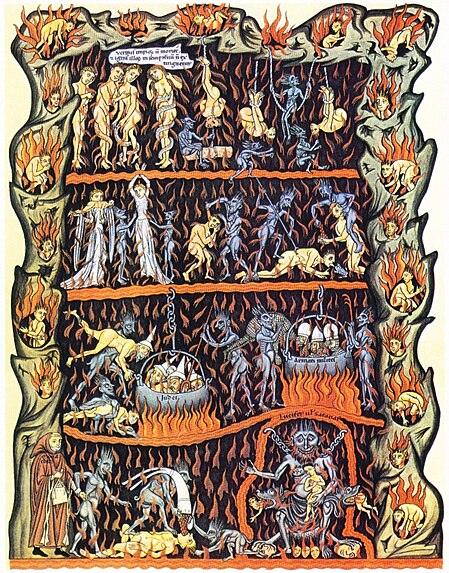
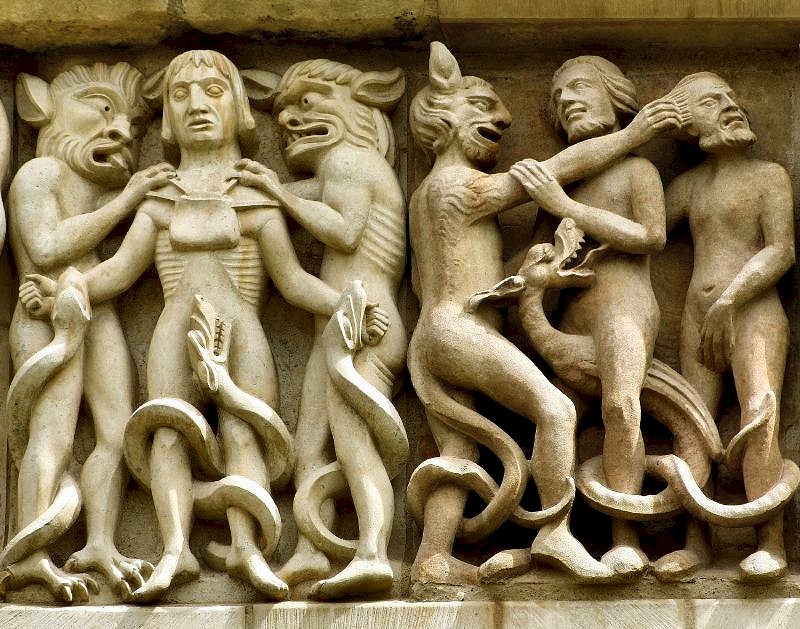
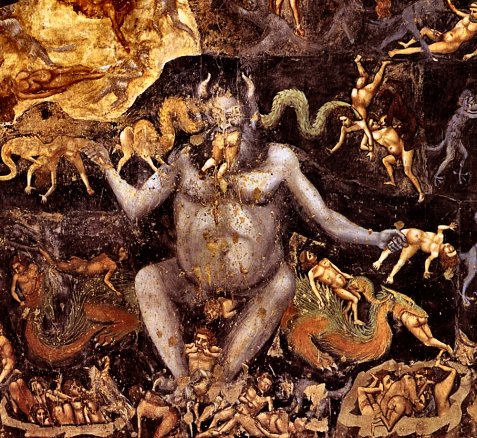
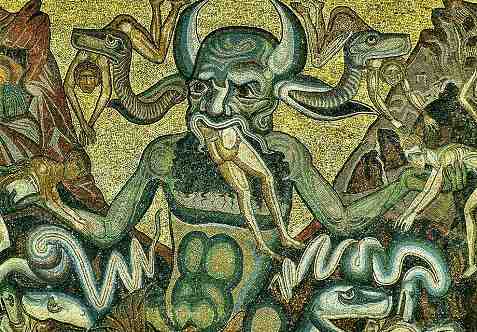
Part 75: DoC: Gregory on Hell


What does hell have to do with perfection?

Most of the pieces of writing I have chosen have been on love and consolations.

These are necessary, and love keeps us focused.

However, even the greatest saints had knowledge that hell is real and meditated on hell for the good of their own souls.

Why?

Because we all can get complacent and proud, because we can all fall into spiritual sloth....We can be moved either by love or fear, but perfect love casts out fear; that is, once we are past purgation of sin, we realize, in gratitude, the love of God, which becomes the reason for our own goodness. All we have is from Him.

Here is the Great Gregory on hell, to help us remain honest in our pursuit of perfection. From his Dialogues  My comments are in blueTo be continued...and excuse errors in spacing, as I cannot get these out of the document today.


Chapter Forty-three: whether there is one fire in hell, or many.
GREGORY. The fire of hell is but one: yet doth it not in one manner torment all sinners. For every one there, according to the quantity of his sin, |238 hath the measure of his pain. For as, in this world, many live under one and the same sun, and yet do not alike feel the heat thereof: for some be burnt more, and some less: so in that one fire, divers manners of burning be found, for that which in this world diversity of bodies doth, that in the next doth diversity of sins: so that although the fire be there all alike, yet doth it not in one manner and alike burn and torment them that be damned.

Some contemporary teachers in certain seminaries would disagree with the Great Gregory here!

PETER. Shall those, I pray you, which be condemned to that place, burn always, and never have any end of their torments?
Chapter Forty-four: whether those that be in hell shall burn there for ever.
Thanks to Wiki
GREGORY. Certain it is, and without all doubt most true, that as the good shall have no end of their joys, so the wicked never any release of their torments: for our Saviour himself saith: The wicked shall go into everlasting punishment, and the just into everlasting life.7Seeing, then, true it is, that which he hath promised to his friends: out of all question false it cannot be, that which he hath threatened to his enemies.

PETER. What if it be said that he did threaten eternal pain to wicked livers, that he might thereby restrain them from committing of sins?

GREGORY. If that which he did threaten be false, because his intent was by that means to keep men from wicked life: then likewise must we say that those things are false which he did promise: and that his mind was thereby to provoke us to virtue. But what man, though mad, dare presume so to say? For if he threatened that which he meant not to put into execution: whiles we are desirous to make him merciful, enforced we are likewise (which is horrible to speak) to affirm him to be deceitful.
PETER. Willing I am to know how that sin can justly |239 be punished without end, which had an end when it was committed.

GREGORY. This which you say might have some reason, if the just judge did only consider the sins committed, and not the minds with which they were committed: for the reason why wicked men made an end of sinning was, because they also made an end of their life: for willingly they would, had it been in their power, have lived without end, that they might in like manner have sinned without end. For they do plainly declare that they desired always to live in sin, who never, so long as they were in this world, gave over their wicked life: and therefore it belongeth to the great justice of the supreme judge, that they should never want torments and punishment in the next world, who in this would never give over their wicked and sinful life.

PETER. But no judge that loveth justice taketh pleasure in cruelty: and the end why the just master commandeth his wicked servant to be punished is, that he may give over his lewd life. If, then, the wicked that are tormented in hell fire never come to amend themselves, to what end shall they always burn in those flames?

It is because some do not understand God's mercy and His Goodness that some doubt that there is a hell, or deny that anyone is there.

GREGORY. Almighty God, because he is merciful and full of pity, taketh no pleasure in the torments of wretched men: but because he is also just, therefore doth he never give over to punish the wicked. All which being condemned to perpetual pains, punished they are for their own wickedness: and yet shall they always there burn in fire for some end, and that is, that all those which be just and God's servants may in God behold the joys which they possess, and in them see the torments which they have escaped: to the end that they may thereby always acknowledge themselves grateful to God for his grace, in that they perceive through his divine assistance, what sins they have overcome, which they behold in others to be punished everlastingly. |240 

We are created in God's Image and Likeness, and part of this is our free will.

God desires that we love Him freely. Only in freedom is there true love.

PETER. And how, I pray you, can they be holy and saints, if they pray not for their enemies, whom they see to lie in such torments? when it is said to them: Pray for your enemies.72

GREGORY. They pray for their enemies at such time as their hearts may be turned to fruitful penance, and so be saved: for what purpose else do we pray for our enemies, but, as the Apostle saith, that God may give them repentance to know the truth, and recover themselves from the devil, of whom they are held captive at his will? 73

PETER. I like very well of your saying: for how shall they pray for them, who by no means can be converted from their wickedness, and brought to do the works of justice?

Justice is part of the Divine Will. God Himself is Just. We can pray now for those who are dead, but in the next life, there is no longer intercession for those in hell.

We pray for great sinners while they are alive and even do penance.

We pray for the dead now and offer Masses.  But, once the final judgement occurs, the door to intercession is shut forever. Therefore, pray now.

GREGORY. You see, then, that the reason is all one, why, in the next life, none shall pray for men condemned for ever to hell fire: that there is now of not praying for the devil and his angels, sentenced to everlasting torments: and this also is the very reason why holy men do not now pray for them that die in their infidelity and known wicked life: for seeing certain it is that they be condemned to endless pains, to what purpose should they pray for them, when they know that no petition will be admitted of God, their just judge? And therefore, if now holy men living upon earth take no compassion of those that be dead and damned for their sins, when as yet they know that themselves do some thing through the frailty of the flesh, which is also to be judged: how much more straightly and severely do they behold the torments of the damned, when they be themselves delivered from all vice of corruption, and be more nearly united to true justice itself: for the force of justice doth so possess their souls, in that they be so intrinsical with the most just judge, that they list not by any means to do that which they know is not conformable to his divine pleasure.74 |241 


DoC. St. Gregory the Great; Part 74

“There are in truth three states of the converted: the beginning, the middle, and the perfection. In the beginning they experience the charms of sweetness; in the middle the contests of temptation; and in the end the fullness of perfection.” 

There are people who believe in some golden age of the Church when there were no sinners and no need for reformers.

Gregory the Great, Doctor of the Church was a reformer who did not mince words about specific needs of reform.

Indeed, he practiced a great severity upon himself in order to be purified to a greatest, a relationship with God which all trusted and admired. Yet, his job was huge-in a time of great upheaval and immorality in the Church.

I am beginning his statements on perfection with a well-known one of the three stages, which he calls conversion, purgation and perfection. 


To show the depth of his own call and the call he demanded of his clergy, I post this timely letter.

Like all the Doctors, he wrote so much one is spoiled for choice, but as this is pertinent to this day, I start here. There is a connection in the spiritual life between greed and sexual sin. More later....and nothing will shock a  reader in 2013 in this letter.


To Virgilius, Bishop of Arelate (Arles) .
Gregory to Virgilius, etc.
Since by the testimony of Holy Writ avarice is called the service of idols, with what earnestness it ought to be banished from thetemple of God is acknowledged; and yet (we say it with groaning) by some priests this is not regarded. For fierce cupidity holds the heart captive, and persuades one that what it commands is lawful, and so proceeds as to slay with the same sword both the giver and the receiver. What safe place, then, can hereafter be of avail against avarice, if the Church of God is opened to it by bad priests? How can he keep the sheepfolds inviolate who invites the wolf to enter? Alas for shame! He pollutes his hands by an unlawful bribe, and thinks to lift up others by his benediction, while himself prostrate under his own iniquity, and captive notwithstanding to his own ambition. Since then this evil of rapacity has never entered the citadel of your mind, and you say that you have your hands unpolluted in the matter of ordinations, give thanks to Almighty God, and acknowledge yourselves to be His debtors in that under His protection you have remained unharmed by the contagion of this disease. But this good in you will profit you less than it might have done if you have not carefully forbidden this thing in others also. As in yourself this evil had displeased you, you ought to have been zealous against it in your brother also. For, seeing that the divine precepts admonish us to love our neighbours as ourselves, it is no small fault to disregard them, and not to fear for others what for ourselves we shrink from. Even now, therefore, most beloved brother, give your mind to repairing what you have lost in others through your negligence in correction, and restrain whomsoever you can from this wickedness, and insist on a synod being assembled for rooting out this same heresy, to the end that, with reward to your Love, what shall have been condemned, God granting it, by the ordinance of all may be better guarded against by all.
Furthermore, it has come to our ears that our brother and fellow bishop, Serenus of Massilia (Marseilles), receives bad men into his intimate society, so as to have, in fine, as his familiar friend a certain presbyter. who, after lapse, is said to wallow still in hisiniquities. This you ought to enquire into closely. And, if it should prove to be so, let it be your care so to correct this matter in our stead that both he who has received such a one may learn not to encourage him by familiarity, but rather to constrain him by punishment, and he who has been received may learn to wash away his sins with tears, and not to pile up iniquity by uncleanliving. Let your Fraternity hold as commended to you in all respects the monks whom we have sent to our brother and fellowbishop Augustine, and take pains so to succour them for proceeding on their way, and so to concur with them, that through your assistance they may be able, under the protection of God, to arrive speedily at their destination.


Sunday, 10 March 2013

The New Gnostics

Moragan la Fey by Anthony Sandys


 Inmates Demand Wiccan Chaplain; from Newsmax (Modern Gnosticism-STM)

Two female inmates in California have filed a lawsuit against the state, claiming the lack of a full-time Wiccan chaplain results in “infringements, violations, and burdens.”
The suit was filed by Caren Hill, an inmate at the Central California Women’s Facility in Chowchilla, and another convict who has been released since the suit was filed. They assert that the prison pays full-time and part-time chaplains for Catholic, Jewish, Muslim, Native American, and Protestant inmates, but not Wiccans, who practice modern pagan witchcraft.
They contend that there are more Wiccan inmates at the prison than Jewish or Muslim inmates.
The lack of a Wiccan chaplain deprives the Wiccans, the suit claims, of “access to clergy, religious services, religious rights, chapel, communal activities with other Wiccans, religious literature and artifacts, available funds for religious activities, time off work for religious holidays and services, and counseling in times of personal crisis.”
The suit was dismissed in 2011 by a district court. But now the Ninth Circuit U.S. Court of Appeals has remanded the decision, forcing the lower court to re-examine the case.
The appeals court ruled that the “prison administration failed to employ any neutral criteria in evaluating whether a growing membership in minority religions warranted a reallocation of resources used in accommodating inmates’ religious exercise needs.”
Patrick McCallum, a Wiccan practitioner, said he feels the prison system does not want to hire Wiccan chaplains because of its perception of the religion, Christian News Network reported.
“People have a lot of misconception about Wiccans,” he stated. “It has nothing to do with Satan.” (Umm, someone is going to be surprised.)
California Deputy Attorney General Kenneth Roost argued on behalf of the prison system that the “Constitution permits prisons to employ chaplains to accommodate inmates’ religions needs, and does not require prisons to hire chaplains representative of all inmates’ religions.”
The Ninth Circuit has the highest percentage of sitting judges appointed by Democratic presidents. Of the 28 sitting judges currently on the court, 19 were appointed by Presidents Jimmy Carter, Bill Clinton, or Barack Obama.

On Tuesday from La Stampa Tweet


Smoke signals 10.30-11am. If white. Or 12 noon. Approx. 5.30 pm if white or 7pm

OK--repeat of two out three of the most adorable cats in the world...


Happy Mother's Day, Two

Evangelizing the Baptized: Six--the Holiness of the Church


This is the hard part for Protestants. They think that they grow in holiness through obedience to the Commandments and works. They do not teach, for the most part, the growth of personal holiness. And, the place to work out this holiness is the Catholic Church.

One must be orthodox to even begin the road to holiness. This has been repeated in many of the saints in the perfection series.

How we judge holiness? Through the fruits of the Spirit and good works is holiness seen.

If someone is contracepting, they are not yet on the road to holiness. If someone is committing fornication, they are not on the road to holiness. If someone is in an irregular marriage, one is not on the road of holiness. One is stuck in suffering, waiting and relying on the mercy of God. But, we all do this to some extent. If someone is greedy, purification is necessary. Hence, the idea of purgatory, which underscores the point that only the perfect see God. We must all be sanctified, not merely justified.

Only the Church can sanctify through the sacraments. Can and does God give graces to individuals? Of course, but they cannot be perfect without the Church.

If a Protestant is honest with one's self, that person will see areas in one's life not in keeping with the Scriptures.

Do people make money in cash and not report it as taxes? Do people gossip? Does someone not tithe? Does someone not attend Sunday services? The same examination of conscience which applied to Catholics applies to all Christians.

I know that God gives graces where He will, but to merit heaven, a Protestant is reliant on the merits of the Catholic Church and not his own merits. He cannot merit anything being in heresy.

This is what is meant by the phrase that all men and woman are saved through the merits of the Catholic Church, if they are baptized Christians.

This is the mercy of God, but it is very hard, or it must be, for a Protestant to remain outside of mortal sin without the grace. of the sacraments. Also, one of the main points, is that the CCC reminds all of us that our duty is to have a personal relationship with Christ, which is absolutely necessary for all Christians-the adult appropriation of our baptismal faith.

2558 "Great is the mystery of the faith!" The Church professes this mystery in the Apostles' Creed (Part One) and celebrates it in the sacramental liturgy (Part Two), so that the life of the faithful may be conformed to Christ in the Holy Spirit to the glory of God the Father (Part Three). This mystery, then, requires that the faithful believe in it, that they celebrate it, and that they live from it in a vital and personal relationship with the living and true God. This relationship is prayer.


One of the saddest parts of some Protestant denominations is the belief that the Church is the anti-Christ; that it is evil. Here is the CCC on the nature of the Church as holy.


THE CHURCH IS HOLY

823 "The Church . . . is held, as a matter of faith, to be unfailingly holy. This is because Christ, the Son of God, who with the Father and the Spirit is hailed as 'alone holy,' loved the Church as his Bride, giving himself up for her so as to sanctify her; he joined her to himself as his body and endowed her with the gift of the Holy Spirit for the glory of God."289 The Church, then, is "the holy People of God,"290 and her members are called "saints."291

824 United with Christ, the Church is sanctified by him; through him and with him she becomes sanctifying. "All the activities of the Church are directed, as toward their end, to the sanctification of men in Christ and the glorification of God."292 It is in the Church that "the fullness of the means of salvation"293 has been deposited. It is in her that "by the grace of God we acquire holiness."294
825 "The Church on earth is endowed already with a sanctity that is real though imperfect."295 In her members perfect holiness is something yet to be acquired: "Strengthened by so many and such great means of salvation, all the faithful, whatever their condition or state - though each in his own way - are called by the Lord to that perfection of sanctity by which the Father himself is perfect."296

826 Charity is the soul of the holiness to which all are called: it "governs, shapes, and perfects all the means of sanctification."297
If the Church was a body composed of different members, it couldn't lack the noblest of all; it must have a Heart, and a Heart BURNING WITH LOVE. And I realized that this love alone was the true motive force which enabled the other members of the Church to act; if it ceased to function, the Apostles would forget to preach the gospel, the Martyrs would refuse to shed their blood. LOVE, IN FACT, IS THE VOCATION WHICH INCLUDES ALL OTHERS; IT'S A UNIVERSE OF ITS OWN, COMPRISING ALL TIME AND SPACE - IT'S ETERNAL! 298
827 "Christ, 'holy, innocent, and undefiled,' knew nothing of sin, but came only to expiate the sins of the people. The Church, however, clasping sinners to her bosom, at once holy and always in need of purification, follows constantly the path of penance and renewal."299 All members of the Church, including her ministers, must acknowledge that they are sinners.300 In everyone, the weeds of sin will still be mixed with the good wheat of the Gospel until the end of time.301 Hence the Church gathers sinners already caught up in Christ's salvation but still on the way to holiness:
The Church is therefore holy, though having sinners in her midst, because she herself has no other life but the life of grace. If they live her life, her members are sanctified; if they move away from her life, they fall into sins and disorders that prevent the radiation of her sanctity. This is why she suffers and does penance for those offenses, of which she has the power to free her children through the blood of Christ and the gift of the Holy Spirit.30


......


"Fully incorporated into the society of the Church are those who, possessing the Spirit of Christ, accept all the means of salvation given to the Church together with her entire organization, and who - by the bonds constituted by the profession of faith, the sacraments, ecclesiastical government, and communion - are joined in the visible structure of the Church of Christ, who rules her through the Supreme Pontiff and the bishops. Even though incorporated into the Church, one who does not however persevere in charity is not saved. He remains indeed in the bosom of the Church, but 'in body' not 'in heart.'"321


838 "The Church knows that she is joined in many ways to the baptized who are honored by the name of Christian, but do not profess the Catholic faith in its entirety or have not preserved unity or communion under the successor of Peter."322 Those "who believe in Christ and have been properly baptized are put in a certain, although imperfect, communion with the Catholic Church."323 With the Orthodox Churches, this communion is so profound "that it lacks little to attain the fullness that would permit a common celebration of the Lord's Eucharist."324

DoC held off until Monday--but then!

Thanks to Wiki
I shall begin Gregory the Great and perfection on Monday. Catholic Encyclopedia on line has a great biography of him here. After him, I shall examine perfection from Leo I, the Great. These two men will lead us into the others of the early period.

I shall look at Basil, Peter Chrysologus, Gregory Nazianzus, Hilary of Poitiers  Athanasius, the two Cyrils,  and John Damascene, John Chrysostom, and Isidore of Seville before moving on to others closer to our own time. I have written about John of the Cross before, but I shall look at him again in the context of this series.

As a summary, these are the Doctors highlighted to date: the Dominicans, Franciscans, Benedictines, Women, and the beginning of the Latin or Classical Doctors, and one Eastern. The earliest are sometimes divided into Western and Eastern Doctors. The first eleven out of seventy-seven posts on the Doctors so far are found linked here.
http://supertradmum-etheldredasplace.blogspot.co.uk/2013/02/links-to-eleven-posts-on-doctors-of.html

Out of the seventy-seven posts to date, these are the Doctors examined with regard to perfection.

Thanks to Wiki


Catherine of Siena
Therese of Lisieux
Teresa of Avila
Hildegard of Bingen
Augustine of Hippo
Albert the Great
Bede the Venerable
Ephraim the Syrian
Bernard of Clairvaux
Peter Damian
Ambrose
Anselm of Canterbury
Bonaventure
Anthony of Padua
John of Avila
Lawrence of Brindisi
Thomas Aquinas
Jerome
Francis de Sales

Thanks to Wiki

To be continued...I am over half way finished with this series on the Doctors of the Church! I shall also return to Garrigou-Lagrange at the end, to continue his examination of perfection, which began this series. Make sure you take time to look at the posts on Jerome. His writings are so pertinent for today.


Happy Mother's Day to All British Mothers


Alma Redemptoris Mater, quae pervia caeli
Porta manes, et stella maris, succurre cadenti,
Surgere qui curat, populo: tu quae genuisti,
Natura mirante, tuum sanctum Genitorem
Virgo prius ac posterius, Gabrielis ab ore
Sumens illud Ave, peccatorum miserere.

Loving Mother of the Redeemer,
gate of heaven, star of the sea,
assist your people who have fallen yet strive to rise again.
To the wonderment of nature you bore your Creator,
yet remained a virgin after as before.
You who received Gabriel's joyful greeting,
have pity on us poor sinners.

Evangelizing the Baptized. Five


From the CCC:
1227 According to the Apostle Paul, the believer enters through Baptism into communion with Christ's death, is buried with him, and rises with him:

Do you not know that all of us who have been baptized into Christ Jesus were baptized into his death? We were buried therefore with him by baptism into death, so that as Christ was raised from the dead by the glory of the Father, we too might walk in newness of life.29
The baptized have "put on Christ."30 Through the Holy Spirit, Baptism is a bath that purifies, justifies, and sanctifies.31

As to the necessity for growing in grace, that is, sanctifying grace, the sacrament of Baptism opens the door to such a journey. 


III. HOW IS THE SACRAMENT OF BAPTISM CELEBRATED?
Christian Initiation
1229 From the time of the apostles, becoming a Christian has been accomplished by a journey and initiation in several stages. This journey can be covered rapidly or slowly, but certain essential elements will always have to be present: proclamation of the Word, acceptance of the Gospel entailing conversion, profession of faith, Baptism itself, the outpouring of the Holy Spirit, and admission to Eucharistic communion.

And, I skip to here...


The Baptism of infants
1250 Born with a fallen human nature and tainted by original sin, children also have need of the new birth in Baptism to be freed from the power of darkness and brought into the realm of the freedom of the children of God, to which all men are called.50 The sheer gratuitousness of the grace of salvation is particularly manifest in infant Baptism. The Church and the parents would deny a child the priceless grace of becoming a child of God were they not to confer Baptism shortly after birth.51
1251 Christian parents will recognize that this practice also accords with their role as nurturers of the life that God has entrusted to them.52
1252 The practice of infant Baptism is an immemorial tradition of the Church. There is explicit testimony to this practice from the second century on, and it is quite possible that, from the beginning of the apostolic preaching, when whole "households" received baptism, infants may also have been baptized.53
.......


1251 Christian parents will recognize that this practice also accords with their role as nurturers of the life that God has entrusted to them.52
1252 The practice of infant Baptism is an immemorial tradition of the Church. There is explicit testimony to this practice from the second century on, and it is quite possible that, from the beginning of the apostolic preaching, when whole "households" received baptism, infants may also have been baptized.53
Faith and Baptism
1253 Baptism is the sacrament of faith.54 But faith needs the community of believers. It is only within the faith of the Church that each of the faithful can believe. The faith required for Baptism is not a perfect and mature faith, but a beginning that is called to develop. The catechumen or the godparent is asked: "What do you ask of God's Church?" The response is: "Faith!"
1254 For all the baptized, children or adults, faith must grow after Baptism. For this reason the Church celebrates each year at the Easter Vigil the renewal of baptismal promises. Preparation for Baptism leads only to the threshold of new life. Baptism is the source of that new life in Christ from which the entire Christian life springs forth.
1255 For the grace of Baptism to unfold, the parents' help is important. So too is the role of the godfather and godmother, who must be firm believers, able and ready to help the newly baptized - child or adult on the road of Christian life.55 Their task is a truly ecclesial function (officium).56 The whole ecclesial community bears some responsibility for the development and safeguarding of the grace given at Baptism.

Remember, that whenever the CCC uses the term "divine life", the teachers mean sanctifying grace, the Life of God in us. And, here is more clarification: and there is more here:

1266 The Most Holy Trinity gives the baptized sanctifying grace, the grace of justification:
- enabling them to believe in God, to hope in him, and to love him through the theological virtues;
- giving them the power to live and act under the prompting of the Holy Spirit through the gifts of the Holy Spirit;
- allowing them to grow in goodness through the moral virtues.
Thus the whole organism of the Christian's supernatural life has its roots in Baptism.


To be continued.....