Instruction on the Enclosure of Nuns Cloistered nuns, listening unanimous in loving acceptance of the Father's word: "This is my beloved Son, in whom I am well pleased" (cf. Mt 3, 17), always "with him on Mount holy "( 2 Pt 1, 17-18) and, looking upon Jesus, shrouded in the cloud of the divine presence, adhere fully to the Lord. (2) Are recognized in a special way to Mary, (3) virgin, wife and mother figure of the Church, (4), and sharing the blessedness of those who believe (cf. Lk 1, 45, 11, 28), perpetuate " yes' worship and love the Word of life, becoming, along with it, in remembrance of spousal love (cf. Lk 2, 19.51) of the Church. (5) The esteem with which the Christian community has always had the nuns has deepened with the discovery of the contemplative nature of the Church and each call to the mysterious encounter with God in prayer. The nuns, in effect, living as "hidden with Christ in God" (cf. Col 3, 3), held in the highest degree the contemplative vocation of all Christian people, 6 making it luminous sign of the Kingdom of God ( cf. Rom 14, 17) "glory of the Church and the source of heavenly graces." (7) 2. Since Vatican II, several documents of the Magisterium have deepened the meaning and value of this kind of life, promoting the contemplative dimension of the cloistered communities and their specific role in the life of the Church, (8) especially Council Decree Perfectae caritatis (n. 7 and n. 16) and Section Venite seorsum , who presented the basics so admirable evangelical theological, spiritual and ascetic detachment from the world with a view to a total and exclusive devotion to God in contemplation. Pope John Paul II has often exhorted nuns to remain faithful to the cloistered life according to their charism and in the Apostolic Exhortation Vita consecrata, has arranged to give further specific rules regarding discipline concrete decommissioning , in line with the path of renewal already undertaken, to better respond to the variety of contemplative Institutes and traditions of the monasteries, so the cloistered contemplatives, regenerated by the Holy Spirit and faithful to their character and mission, walk forward with genuine momentum and renewed vigor. (9) This Instruction, while reaffirming the doctrinal foundations of the proposed closure by InstructionVenite Seorsum (I-IV) and the Exhortation Vita consecrata (n. 59), establishes the rules that should govern papal enclosure of nuns dedicated to the wholly contemplative life. MEANING AND VALUE OF THE CLOSING OF THE NUNS 3. The cloistered contemplatives, specifically and radical conform to Jesus in prayer on the mountain and his paschal mystery, which is death to the resurrection. (10) The ancient spiritual tradition of the Church, followed by the Second Vatican Council explicitly connects the contemplative life to the prayer of Jesus "on the mountain" (11) or in any case, in a solitary place not accessible to all, but only those whom He calls them, in a secluded place (cf. Mt 7, 1-9; Lk 6, 12-13; Mk 6, 30-31; 2 Pt 1, 16-18). The Son is always united to the Father (cf. Jn 10, 30, 17, 11), but in life there is a space, are special moments of solitude and prayer meeting and fellowship, to the joy of divine filiation. So he shows the loving perennial tension and movement of his Son towards Him who begot him from eternity. This association of the contemplative life to the prayer of Jesus in a solitary place suggests a way of sharing in Christ's relationship with the Father. The Holy Spirit who led Jesus into the wilderness (cf.Lk 4, 1), invites the nun to share the loneliness of Jesus Christ, that through the "eternal Spirit" ( Heb9, 14) offered to the Father. The solitary cell and cloister are closed where the nun, wife of the Incarnate Word, collection fully lives with Christ in God. The mystery of this communion is manifested in so far as, docile to the Holy Spirit and enlivened by his gifts, listen to the Son (cf. Mt 17: 5), staring at his face (cf. 2 Cor 3, 18 ), and allowed to settle for his life, until the supreme sacrifice to the Father (cf. Phil 2, 5S) as expressed praise of glory. The closure, even in its physical form, is, for that reason, a particular way of being with the Lord, to share "the annihilation of Christ through a radical poverty manifests in renunciation not only of things but also the "space", of contacts, of so many goods of creation "(12) the fruitful silence of the Word on the cross. It is clear then that "withdrawal from the world to devote himself to a life of loneliness more intense prayer is non other than a particular way of living and expressing the paschal mystery of Christ" (13) a true encounter with the Risen Lord in a continuous path of ascension to the Father's house. In watchful waiting the coming of the Lord, the cloister becomes a response to God's absolute love for her child and the fulfillment of his eternal desire to welcome the mystery of intimacy with the Word, who gave himself as Bridegroom in the Eucharist (14) and remains in the tabernacle at the center of the full communion of love with him, collecting all the nun's life continually offering it to the Father (cf. Heb 7, 25). The gift of Christ the Bridegroom, who on the Cross offered his body, the nun responds similarly with the gift of the "body" with Jesus Christ offered to the Father and to collaborate in the work of Redemption. Thus, the separation of the world gives life a Eucharistic closing, "besides its elements of sacrifice and atonement, acquires the dimension of thanksgiving to the Father, sharing the Thanksgiving beloved Son" . (15) In the mystery of the Church living their exclusive union with Christ the Bridegroom 4. The history of God with mankind is a history of spousal love, prepared in the Old Testament and held in the fullness of time. The Divine Revelation describes bridal image intimate and indissoluble relationship between God and his people ( Os 1-2, Isaiah 54, 4-8, Jr 2, 2; Ez 16; 2 Cor 11, 2, Rm 11, 29) . The Son of God is presented as the Bridegroom-Messiah (cf. Mt 9, 15, 25, 1), come to conduct the marriage of God with humanity, (16) in a wonderful exchange of love that begins in the Incarnation, reached the summit on the Passion sacrificial and life as a gift in the Eucharist. The Lord Jesus pours into the hearts of men and their love of the Father, make them able to respond fully, through the gift of the Holy Spirit, which always begs the Bride: "Come" ( Rev. 22: 17). This fullness of grace and holiness is realized in "the Bride of the Lamb ... coming down out of heaven from God, having the glory of God "( Rev. 21: 9-10). The nuptial dimension of the whole Church, but consecrated life is the living image of the same, more clearly expresses the tension towards the Bridegroom. (17) In a still more significant and radical, the mystery of the exclusive union of the Church as Bride with the Lord is expressed in the vocation of cloistered nuns, precisely because his life is totally dedicated to God, loved, in constant tension towards the heavenly Jerusalem, and in anticipation of the eschatological Church; fixed in the possession and contemplation of God, (18) is a call to all Christian people to the fundamental vocation of everyone to an encounter with God, (19) representation of the goal toward which the whole ecclesial community walks, (20) that will live forever as the Bride of the Lamb. Through the close, the nuns held the exodus of the world to find God in the solitude of 'cloistered desert ", which also includes inner solitude, the evidence of the spirit and the daily toil of common life (cf. Eph 4, 15-16), so spousal sharing the loneliness of Jesus in Gethsemane and his redemptive suffering on the cross (cf. Gal 6, 14). Also, the nuns, by nature feminine more effectively express the mystery of the Church "Immaculate Spouse of the Immaculate Lamb," rediscovering themselves uniquely in the spousal dimension of the wholly contemplative vocation. (21) The monastic life of women is thus an ability to perform the nuptial relationship with Christ and to be a living sign of it: Is not a woman, the Virgin Mary, where it meets the mystery of the Church? (22) In light of this, the nuns relive and perpetuate the work of Mary Church. Welcoming the Word in faith and worship in silence, are at the service of the mystery of the Incarnation, and united to Jesus Christ in his offering to the Father, become partners of the mystery of redemption. Just as Mary, with her prayerful presence in the Upper Room, guarded in his heart the origins of the Church, and loving heart and praying hands of nuns entrusted with the path of the Church. The closure in its ascetic dimension 5. The closing ascetical means of immense value, (23) is well suited to life wholly devoted to contemplation. It is a sign of God's holy protection to her child and is, moreover, a special form of belonging to him alone, because all signals absolute dedication to God. This is a typical mode of living adequate spousal relationship with God in oneness of love and without undue interference from people or things, so that the creature, directed and absorbed in God, can only live for the praise of his glory (cf. Eph 1, 6.10-12.14). The nun fulfills the highest degree the first commandment of the Lord: "Love the Lord your God with all your heart and with all your soul and with all your strength and with all your mind" ( Lk 10, 27), making this the full meaning of his life and love of God to all brothers and sisters. She tends to the perfection of charity, choosing God as the "one thing necessary" (cf. Lk 10, 42), loving him exclusively as the All in all things, holding him with unconditional love, in the spirit of waiver proposed by the Gospel (24) (cf. Mt 13, 45, Lk 9, 23), the sacrifice of all good, that is, "making sacred" to God alone all right, (25) so that only dwells in the silence of the cloister, filling it with his word and presence, and the bride can truly engage the One, "in constant prayer and ardent penance" (26) in the mystery of a total and exclusive love. Thus the oldest spiritual tradition spontaneously associated complete withdrawal of the world (27) and any such apostolic life that is silent emanation of love and grace overflowing in the beating heart of the Church as Bride. The monastery, located in a secluded place or in the city center, with its distinctive architectural, intended precisely to create a gap, of solitude and silence, where you can browse freely to God and to live not only for him and with him, but only of Him It is therefore necessary for the person, free from all attachment, restlessness or distraction, interior and exterior, gather her faculties turn to God to accept his presence in the joy of worship and praise. Contemplation becomes the beatitude of the pure of heart ( Mt 5, 8). A pure heart is a clear mirror of the interiority of the individual, purified and unified in love, inside which reflects the image of God that dwells; (28) is smooth as glass, illuminated by the light that God forth the splendor. (29) In light of contemplation and communion of love with God, purity of heart finds its highest expression in the virginity of spirit, for integrity requires not only a heart cleansed from sin, but unified in the movement towards God and, therefore love completely and without division, reflecting the purest love of the Holy Trinity, which has been called by the Padres 'first Lady'. (30) The cloistered desert is a great help to achieve purity of heart understood in this sense, because essentially limited to the opportunities for contact with the outside world, so it disrupt its various forms in the monastery, disturbing its atmosphere of peace and holy union with the only Lord and sisters.Thus the closure largely eliminates the dispersion from many unnecessary contacts, a multitude of images, which are often a source of worldly thoughts and vain desires, emotions and distracting information and the only thing necessary and dissipate indoor unit. "In the monastery, everything is directed to seek the face of God, all tending to basics, because only what is important to Him about monastic seclusion means attention to the presence of God: if one is distracted by many things , step loosens and loses sight of the goal. " (31) The nun, away from external things in the privacy of your being, purifying the heart and mind through a serious process of prayer, of resignation, of fraternal life, of listening to the Word of God and the exercise of the theological virtues, is called to converse with the divine Bridegroom, meditating on his law day and night to receive the gift of the Word of Wisdom and, under the impulse of the Holy Spirit, be with Him one. (32) This yearning for fulfillment in God, in an unbroken heart nostalgia with unceasing desire turns to contemplation of the Bridegroom, feeds the ascetic commitment of the nun. Wholly absorbed by its beauty, is in the closure of his house early grace and bliss of the vision of the Lord. Refined by the purifying flame of the divine presence, is prepared full bliss in his heart singing the new song of the redeemed, on the Mount of sacrifice and offering, temple and contemplation of God. Thus, the regulation of the closure, in its practical aspect, should be sufficient to achieve this lofty ideal contemplative, involving the entire delivery of care integrity, unity and coherence feelings behaviors. Participation of wholly contemplative nuns living in communion and mission of the Church In the communion of the Church 6. Cloistered nuns, for their specific call to union with God in contemplation, are firmly in ecclesial communion, becoming a unique sign of intimate union with God of the whole Christian community.Through prayer, especially the celebration of the liturgy and its daily offering, interceding for the whole people of God and join the thanksgiving to the Father of Jesus Christ (cf. 2 Cor 1, 20, Eph 5, 19-20 ). The contemplative life, then, is his way of being the Church, making it the fellowship, to serve a mission for the benefit of the whole Church. (33) A Cloistered contemplatives are not asked to do so involved in new forms of active presence, but rather remain in the source of Trinitarian communion, living in the heart of the Church. (34) The cloistered community is also an excellent school of fraternal life and expression of true communion force that leads to communion. (35) Thanks to mutual love, the fraternal life is the enlightened space in which we experience the presence of the Risen Lord: (36) in a spirit of communion, grace nuns share the same vocation with members of their own community, helping each other to walk together and advance together, harmonious and unanimous, to the Lord. Nuns With monasteries of the Order's commitment to grow in fidelity to specific charism and spiritual heritage, working for it, if necessary, in the methods provided by the constitution. By virtue of their vocation, that is at the heart of the Church, nuns undertake special way to "think with the Church" with sincere adherence to the Magisterium and unconditional obedience to the pope. The Mission of the Church 7. "The pilgrim Church is by its very nature missionary"; (37) Therefore, the mission is also essential for Institutes of contemplative life. (38) The nuns dwelling at the heart of the Church's mission through continuous prayer, the offering of themselves and offering the sacrifice of praise. Thus, his life becomes a mysterious source of apostolic fruitfulness (39) and a blessing to the Christian community and to the world. The charity, poured into our hearts by the Holy Spirit (cf. Rom 5: 5), makes cloistered nuns co-workers of the truth (cf. Jn 3: 8), participants in the work of the Redemption of Christ ( cf. Col 1: 24) and vital union with the other members of the Mystical Body, for their lives fruitful, wholly directed to the achievement of the charity for the benefit of all. (40) St. John of the Cross writes, "is more precious in the sight of God and the soul a bit of pure love and greater benefit to the Church, although it appears to do nothing, that all these things." (41) In the wonderment of her splendid intuition, S.Therese says, "... I understood that the Church had a Heart and that this Heart was burning with love.I understood that love is the only drives to work to members of the Church ... Yes, I have found my place in the Church ... in the heart of the Church, which is my mother, I will love. " (42) The conviction of the saint of Lisieux is the same of the Church, expressed repeatedly by the Magisterium: "The Church firmly believes, and proclaims forcefully and without hesitation, that there is an intimate relationship between prayer and spreading the Kingdom of God , between prayer and conversion of hearts, between prayer and fruitful reception of the saving message of the Gospel and sublime. " (43) The specific value of the nuns to evangelization, ecumenism, to extend the Kingdom of God in different cultures, is eminently spiritual, soul and leaven of apostolic initiatives, leaving the active participation in them to those whose vocation . (44) Furthermore, who becomes absolute property of God becomes God's gift to everyone, so your life "is truly a gift that is placed in the center of the mystery of ecclesial communion, accompanying the apostolic mission of all who work for advertising the Gospel. " (45) Reflecting and irradiation of the contemplative life, the nuns offered to the Christian community and the world of today, more than ever in need of authentic spiritual values, an ad quiet and humble testimony of God's mystery, thus keeping alive the prophecy in the spousal love of the Church. (46) Their existence, totally dedicated to the service of God's praise in full freedom (cf. Jn 12, 1-8), proclaims and itself the primacy of God and the transcendence of the human person created in his image and likeness . It is therefore an invitation to everyone to "that heart cell in which each one is called to union with the Lord." (47) Living in the presence and in the presence of the Lord, nuns pose a special anticipation of the eschatological Church, then, still in the possession and contemplation of God, 'visibly represent the goal towards which addresses the whole ecclesial community , zealous in action and dedicated to contemplation, walks along the paths of time staring at the future restoration of all things in Christ. "(48) The monastery in the Local Church 8. The monastery is the place guarded by God (cf. Za 2, 9), is the abode of his unique presence, the image of the store of the Alliance, which is performed daily encounter with Him, where the thrice Santo occupies the entire space and is recognized and honored as the only Lord. A contemplative monastery is also a gift to the local church, to which he belongs. Representing the prayerful face, more complete and meaningful presence of Church. (49) may be compared with Moses a monastic community, which in prayer determines the fate of the battles of Israel (cf. Ex 17, 11), and the guard who keeps the night waiting for the dawn (cf. Is 21 , 6). The monastery is the intimate to a church, the heart, where the Spirit always moans and begs for the needs of the whole community and which rises unceasingly Thanksgiving for Life every day He gives us (cf. Col 3, 17). It is important that the faithful learn to recognize the charisma and the specific role of contemplatives, her discreet but vital, silent testimony constitutes a call to prayer and the truth of God's existence. The bishops, as pastors and guides of all the flock of God, (50) are the primary custodians of contemplative charism. Therefore, they must nurture contemplative communities with the bread of the Word and the Eucharist, offering where necessary, adequate spiritual assistance through trained priests. At the same time, have to share with the community the responsibility to see that in today's society marked by dispersion, lack of silence and illusory values, the life of the monasteries, sustained by the Holy Spirit, remains genuinely and wholly directed to the contemplation of God. Only the prospect of true and fundamental apostolic mission all their own, which consists of the "deal only with God," the monasteries can accommodate, to the extent and in the manner that suits their spirit and traditions of their own religious family, to those who wish to drink from his spiritual experience or participate in the prayer of the Community. Be maintained, however, the separation material so that it recalls the meaning of the contemplative life and custody of their demands, in accordance with the Standards for the closure of this document. (51) A spirit of freedom and hospitality, "in the bowels of Christ" (52) nuns carry in their hearts the sufferings and anxieties of those who seek their help, and all men and women. Deeply attuned to the vicissitudes of the Church and the people of today, spiritually collaborate in building the Kingdom of Christ that "God may be all in all" ( 1 Cor 15, 28). THE CLOSING OF THE NUNS Each institute should contemplative faithfully maintain their way of separation from the world. This loyalty is essential to the existence of an institute, which in fact exists only while maintaining adherence to the pillars of the original charism. (54) Therefore, the vital renewal of the monasteries is essentially linked to the authenticity of the search for God in contemplation and the means to achieve it, and should be considered genuine when it restores its original splendor. The role, responsibility and joy of the nuns to understand, preserve and defend firmly and intelligently their special vocation, safeguarding the identity of the specific charism against any internal or external pressure. The papal enclosure 10. "Monasteries of nuns wholly contemplative life must observe papal enclosure, ie according to the norms issued by the Apostolic See." (55) Since a commitment to God, and stable binding more fully expresses the union of Christ with the Church, his Bride, papal enclosure, with its particularly rigorous form of separation, better manifests and complete dedication of the nuns to Jesus Christ. It is the sign, the protection and the form (56) of the wholly contemplative life, lived in the totality of the gift, which comprises the integrity not only intentional, but real, so that the Lord Jesus is truly the only nostalgia and sole happiness of the nun, exulting in waiting and radiant in contemplation of his face early. For the nuns, papal enclosure means specific recognition of female wholly contemplative life, which developed within the monastic spirituality of marriage with Christ, becomes a sign and realization of the exclusive union of the Church as Bride with her Lord. (57) A real world separation, silence and solitude, express and protect the integrity and identity of the wholly contemplative life, to be faithful to its specific charism and the sound traditions of the Institute. The Magisterium of the Church has repeatedly reiterated the need to maintain this kind of life faithfully, for the Church is a source of grace and holiness. (58) 11. Wholly contemplative life, to be considered as papal enclosure must be ordered completely unique and achieve union with God in contemplation. Institute is considered a wholly contemplative life if: a ) its members direct all their activities inside and outside of the constant and intense search for union with God; b ) excludes external apostolate direct, albeit limited, and physical participation in events and ministries of the church community (59), therefore should not be requested, as a counter witness to the true participation of the nuns in the life of the Church and its true mission; c ) implements the separation of the world that is practical and effective, (60) not merely symbolic.Any adjustment of the external forms of separation must be such that "separation is preserved material" (61) and must be submitted to the approval of the Holy See. Closure according to the Constitutions 12. The monasteries of cloistered nuns professing the contemplative life, but associated with the primary role of any apostolic worship or charitable, not follow papal enclosure. These monasteries carefully preserve its principal or predominant character contemplative, engaging chiefly in prayer, asceticism and fervent spiritual progress, and in the careful celebration of the liturgy, regular observance and discipline of separation from the world. In their Constitutions an enclosure befitting their nature and according to sound traditions. (62) The Superior may authorize the inputs and outputs according to the rules of their own law. The monasteries of nuns of ancient monastic tradition 13. The venerable monasteries of nuns in monastic tradition, (63) which is manifested in various forms of contemplative life, when they are entirely devoted to divine worship with a hidden life within the monastery walls, observe papal enclosure, if associated with life contemplative activity for the people of God or practice more extensive forms of entertainment according to the tradition of the Order, define its closure in the Constitutions. (64) Respecting his own identity, each monastery or monastic congregation follows papal enclosure or defined in the Constitutions. OF NUNS 14. § 1. The enclosure of nuns called contemplative life only papal because the rules governing it must be confirmed by the Holy See, even in the case of standards to be set in the Constitutions and other texts of the Institute (Statute Directory , etc.). (65) Given the variety of institutes dedicated to the wholly contemplative life and traditions, some forms of separation from the world is left to particular law and must be approved by the Apostolic See. The law can also lay down stricter rules on decommissioning. Extension of Closing § 2. The law extends papal enclosure to the building and all spaces, internal and external, reserved for nuns. The exterior of the building separation monastic choir, the parlors and all the space reserved for the nuns must be physical and effective, not just symbolic or modality called "neutral" must be established in the Constitutions and in additional regulations, taking into account both the different traditions of each institute or monastery as local circumstances. The participation of the faithful in liturgical celebrations does not allow the output of the nuns of the closure or the entry of the faithful in the choir of the nuns, if there were guests, they can not be placed in the enclosure of the monastery. Mandatory closure § 3. a ) Under the law of the cloister, nuns, novices and postulants must live within the enclosure of the monastery, and he is not permitted to leave it, except in cases provided by law; nor is anyone allowed to enter the area of the closure of the monastery, except in cases provided. § 3. b ) The rules on the separation of the Sisters of the external world must be defined in its own right. § 3. c ) The law of closure entails a grave obligation of conscience, both nuns and for outsiders. Exits and entrances 15. The granting of permission to enter or exit always requires a just and grave cause, (66) is dictated by a real need for some of the nuns or the monastery. This is required by the guidance of the conditions required for the wholly contemplative life and, by the nuns, in line with their vocational choice. In itself, therefore, each input or output must be an exception. The custom of recording in a book the inputs and outputs can be preserved, at the discretion of the conventual Chapter, thereby also contributing to a better understanding of the life and history of the monastery. 16. § 1. The Superior of the monastery direct custody of the closure, ensuring the concrete conditions of separation and promoting within the monastery, the love of silence, meditation and prayer. She is the one who judges the opportunity of the inputs and outputs of the closure, valued with prudence and discretion his need, in light of the wholly contemplative vocation, according to the rules in this document and the Constitutions. § 2. The whole community has a moral obligation to protect, promote and observe papal enclosure, so that no secondary or subjective motivations prevail over the weekend proposed separation. 17. § 1. The output of the closing, except special pardons of the Holy See or in case of serious and imminent danger, is authorized by the Superior in ordinary cases relating to the health of the nuns, nuns assistance to sick, exercise civil rights and those of the monastery needs can not be met otherwise. § 2. For other worthy causes and grave, the Superior, with the consent of the Council or the conventual Chapter, as provided by the Constitutions, may authorize the removal of the time, but not more than a week. If the stay outside the monastery has to be further extended to a maximum of three months, the Superior will seek permission from the diocesan bishop (67) or the regular Superior, if any. If the absence exceeds three months, except in cases of their own health care, they must seek permission from the Holy See. The Superior also apply these rules in authorizing departures to participate, when necessary, in religious training courses organized by monasteries. (68) Note that the norm of can. 665, § 1 concerning residence outside the Institute, does not refer to the cloistered nuns. § 3. To send novices or professed, when necessary, (69) for part of their training in another monastery of the Order, as well as for temporary or permanent transfers (70) to other monasteries of the Order, the Superior express her consent, by involving the Council or conventual Chapter, according to the norms of the Constitutions. 18. § 1. The closing entry is allowed, unless special pardons for the Holy See: - The Cardinals, which can have someone accompanying them, to Nuncios and Apostolic Delegates in places subject to its jurisdiction, the Visitor for the canonical visitation, the diocesan Bishop or the Superior Regular, for cause. § 2. With permission of the Superior: - To a priest to administer the sacraments to the sick, to assist with severe or prolonged illness and, if necessary, to hold them sometime to mass. Eventually, for liturgical processions and funerals; - Those whose work or skills are needed to address the health of the nuns and provide for the needs of the monastery; - To aspirants and nuns own way, if so provided in their own right. Meetings of nuns 19. Can be arranged, subject to authorization of the Holy See, meetings of contemplative nuns of the same Institute, within the same country or region, which are motivated by a genuine need for common reflection, the nuns always freely agree and not happen too often. These meetings should preferably in a monastery of the Order. The monasteries that are gathered in Federations establish the frequency and the organization of the assemblies to Federal Statutes, respecting the spirit and requirements of the wholly contemplative life. The media 20. The rules on social media, in all its variety of forms, this tends to safeguard the gathering. Indeed, the silence of contemplation can be emptied if the closure is full of noises, news and talk. Therefore, these media should be used with moderation and discretion, (71) not only in regard to its content, but also the amount of information and the type of communication. Note that, for those who are used to the silence inside, all this more strongly affects the sensitivity and emotion, making it harder recollection. The use of radio and television in particular circumstances can afford Religious. May consent to the monastery is the possible use of other modern means of communication such as fax, cell phone, Internet, or information for reasons of work, with prudent discernment and common benefit, under the provisions of Chapter convent. The nuns are to seek to have adequate information on the Church and the world, not many news, but knowing which are essential to choose the light of God, to bring them to prayer, in tune with the heart of Christ. Monitoring the closing 21. The diocesan bishop or the regular Superior monitor compliance with the closure in monasteries entrusted to them and defend according to their skills, helping the Superior, to which belongs the immediate custody. The diocesan bishop or the regular Superior not ordinarily involved in granting waivers of the closure, but only in particular cases, according to the norms of this Instruction. During canonical visitation, the visitor must verify compliance with the standards of the closure and separation of the spirit world. The Church, by the immense appreciation he has for his vocation, encourage nuns to remain faithful to the cloistered life, living with a sense of responsibility and discipline spirit cloistered community to promote a successful and comprehensive guidance to the contemplation of Triune God. Perseverance in fidelity 22. The formation of the cloister is preparing people for their total dedication to God in the following of Christ, according to the way of life ordered solely to contemplation of his own particular mission in the Church. (72) Training must go deep into the person, trying to unify it in a progressive journey of conformity to Jesus Christ and his total offering to the Father. The method must take himself for that and express therefore the property of the whole (73) educated in the wisdom of the heart. (74) It is clear that this formation, precisely because it tends to the transformation of the whole person, not over ever. The specific requirements of the training of those who are called to the contemplative life have been fully exposed in Instruction Potissimum institutioni (Part IV, 72-85). The formation is primarily contemplative faith formation, "foundation and a real scoop contemplation."(75) Indeed, by faith we learn to discover the constant presence of God to join in charity to the mystery of communion. The renewal of the contemplative life is entrusted, in large part, to the formation of each nun and the whole community, so they can achieve the realization of the divine through the assimilation of their charism. 23. In this respect is particularly important training program, inspired by the charism, to be covered, well-differentiated, early years to solemn profession or perpetual and beyond, which should ensure the endurance of lifelong fidelity . This cloistered communities must have adequate formationis ratio, (76) which form part of the law itself, having been submitted to the Holy See and prior conventual Chapter deliberative vote. The context of the cultures of our time behaves for Institutes of contemplative life a level of adequate preparation for the dignity and the requirements of this state of consecrated life. Therefore, the monasteries requiring candidates before admission to the novitiate, a degree of personal maturity and emotional, human and spiritual, to be appropriate for the loyalty and understanding of the nature of life wholly directed to the cloistered contemplation. The obligations of the religious life should be well known and accepted by each candidate in the first period of training and, in any case, before issuing or perpetual solemn vows. (77) The study of the Word of God, in the tradition of the Fathers, the documents of the Magisterium, liturgy, spirituality and theology, must be the doctrinal basis of training, trying to provide the foundations of knowledge of mystery of God within the Christian Revelation, "penetrating light of faith the truth hidden in the mystery of Christ." (78) The contemplative life must be fed continuously into the mystery of God, for it is essential to give the nuns the basis and method for a personal and community formation that are constant and not limited to regular experiences. 24. The general rule is that the entire cycle of initial and ongoing training is conducted in the monastery. The absence of external activities and stability of members allows gradual advancement and greater participation various stages of training. In the monastery itself, the nun grows and matures in the spiritual life and reaches the grace of contemplation. Training in the monastery itself also has the advantage of favoring the harmony of the whole community. In addition, the monastery, with its distinctive environment and lifestyle, is the most convenient place for the formation process, (79) as the daily food of the Eucharist, the liturgy, lectio divina , Marian devotion, asceticism and work, the exercise of fraternal charity and the experience of solitude and silence, and time factors are essential for the formation of the contemplative life. The Superior of a monastery, as primarily responsible for the formation, (80) favors an adequate initial formation process of the candidates. Also promotes the training of teaching nuns to feed the mystery of God that occurs continuously in the liturgy and in the various moments of monastic life, providing the means to spiritual and doctrinal formation, and finally to a continuous stimulating demand growth as a gift ever new fidelity to the divine call. Education is a right and duty of every monastery, which can be served even collaboration from outsiders, particularly the Institute which eventually was tied. If necessary, the Superior may still allow correspondence courses of the subjects of the training program of the monastery. When a monastery is not self-sufficient, some common education services can be organized in one of the monasteries of the same Institute, and usually in the same geographic area. The monasteries concerned shall determine the modalities, frequency and duration, so as to respect the fundamental demands of the contemplative vocation in the closure and indications of self formationis ratio . The regulations governing the closure outputs also for training purposes. (81) However, the frequency of training can not replace the gradual and systematic training in the community. Each monastery has to be, in fact, the architect of its own vitality and future, so it needs to be self sufficient especially in the field of training, which can not be addressed only some of its members, but should encompass the whole community, to be rather dynamic progress and spiritual growth. Autonomy of the monastery 25. The Church recognizes every monastery sui juris fair legal autonomy of life and government, so that they can enjoy their own discipline and keep intact the heritage itself. (82) Autonomy favors stability of life and the internal unity of each community, ensuring the best conditions for the exercise of contemplation. This autonomy is a right of the monastery, which by its nature is autonomous, for it can not be limited or diminished by external interventions. However, autonomy does not mean independence of ecclesiastical authority, but it is fair, appropriate and timely information to protect the nature and identity of a life wholly contemplative monastery. It is made of Ordinary preserve and defend this autonomy. (83) The diocesan bishop in monasteries entrusted to their supervision (84) or the regular Superior, if any, play your request under the laws of the Church and the Constitutions. They should indicate their spheres of competence, particularly so as regards the presidential election, the visitation and property management. From the moment that the monasteries are autonomous and independent of, any form of coordination between them, facing the common good requires the free adhesion of the monasteries themselves and the approval of the Apostolic See. Relations male Institutes 26. Throughout the centuries the Holy Spirit has led the Church in religious families composed of several branches, vitally united by the same spirituality but different from each other and often diversified lifestyle. The monasteries of nuns have had with the respective Institutes male different links, which have resulted in different ways. A relationship between the monasteries and the respective male Institute, saves monastic discipline, can foster growth in the common spirituality. In this light the association of monasteries to male Institute, respecting the legal autonomy of each one, is preserved in the monasteries themselves the genuine spirit of the religious family to embody in a contemplative dimension only. The monastery associated with male Institute maintains its own law and its own government. (85) Therefore, the definition of the reciprocal rights and obligations, oriented toward the spiritual, must safeguard the effective autonomy of the monastery. In the new vision and perspective with which the Church today considers the role and presence of women, must be overcome, if any, that form of legal protection, by the orders of superiors male and regular, which can actually limit the autonomy of the monasteries of nuns. The male superiors should perform their duties with a spirit of collaboration and humble service to avoid creating any undue subordination to the nuns, so they decide to freedom of spirit and sense of responsibility with regard to their religious life. ASSOCIATIONS AND FEDERATIONS We have to encourage these agencies especially where, having no other effective forms of coordination and support, communities could find themselves unable to meet the basic needs of various kinds. The rules in this document refer to the Federations are equally valid for Partnerships, considering its legal structure and its own statutes. The constitution of any association, federation or confederation of monasteries of nuns is reserved to the Apostolic See, which also falls approve its statutes, exercise surveillance over them and authority, (87) or separate register of them monasteries. The option to join or not is up to each community, whose freedom should be respected. 28. The Federation, for serving the monastery, must respect their legal autonomy and has no authority over the same government, which can not decide on all matters relating to the monastery and has a mandate to represent the Order. The federated monasteries live the fraternal communion in a manner consistent with its cloistered vocation, not with the multitude of meetings and common experiences, but with mutual support and collaboration solicitous aid applications, contributing to the extent possible and respecting their autonomy. Federations, an evangelical spirit of service, seek to respond to the specific needs and real communities by ensuring their dedication only to search for God, regular observance and dynamics of the internal drive. The aid Federations can offer to solve common problems are mainly: the appropriate renewal and reorganization of monasteries, the initial and ongoing training and mutual support. (88) The modalities of collaboration with the Federation monasteries are offered and determined by the Board of Superiors of the monasteries, according to statutes approved, clarify the tasks that the Federation should play for the benefit and support of their monasteries. Ordinarily the Vatican appoints a spiritual assistant, which may delegate, to what he considers necessary or individual cases, some faculties or orders. Wizard is committed: to ensure that the Federation is preserved or accretive genuine spirit entirely contemplative life of the Order itself, working in a spirit of fraternal service in the directory of the Federation and in the most important economic problems and contribute to solid training of novices and professed. Formation 29. The service can offer training that is subsidiary Federation. (89) must develop a federated monasteries formationis ratio , containing detailed implementing rules (90) and will be part of the proper law of a monastery, with the assent of the conventual Chapter monastery itself and after being subjected successively to the Holy See. Each monastery has rightfully her novitiate. However the Federation, even avoiding centralism, can institute a novitiate and other educational services to the monasteries, for lack of candidates, teachers or others, not self-sufficient and want to use them freely, these training services, which will determined the ratio formationis , be developed in a monastery, usually of the Federation (91) respecting the fundamental demands of the contemplative life in seclusion. Federations will endeavor to reach communities gradually being self-sufficient in terms of lifelong learning, which involves a spiritual endeavor and not intermittent but continuous study, in the monasteries favoring the development of a culture and a contemplative mind. Renovation and helps monasteries 30. Federations can cooperate validly reinvigorate the monasteries, vocational renewed momentum around the essential elements of spirituality, in the wholly contemplative dimension of lifestyle and stimulating fervent observance of the Rule and Constitutions . The monasteries of the Federation should help each other, even when it was really necessary and avoiding instability, with the exchange of nuns. (92) Anyway up to each community to decide on the request and response, to the extent of its possibilities. The monasteries that can not guarantee regular life or who are in particularly serious circumstances, please contact the President and his Council, to find a suitable solution. When you have a community that no longer has the conditions to operate in a free, independent and responsible, the President must inform the diocesan bishop and the regular Superior, where it exists, and submit the case to the Holy See. (93) That support and encourage all contemplative encouraging words of Pope John Paul II: "Just as the Apostles gathered in prayer with Mary and other women in the Upper Room were filled with the Holy Spirit (cf. Acts 1: 14) The community of believers today expected to experience, thanks to your prayers, a new Pentecost, to testify the gospel more effectively in the new millennium. Dear sisters, I entrust to Mary, Virgin most faithful and devoted to God's abode, your communities and to each of you, as well as a few aspire to share your very spiritual experience. The Mother of the Lord get that from Loreto, through young people who have come here on pilgrimage to Europe again radiate a beam of light that enveloped the world when the Word became flesh and dwelt among us. " (95) On May 1, 1999, the Holy Father approved this document of the Congregation for Institutes of Consecrated Life and Societies of Apostolic Life, authorizing publication. Vatican, May 13, 1999, the Solemnity of the Ascension of the Lord. Piergiorgio Silvano Nesti Secretary Part I - Meaning and value of the Enclosure of Nuns In the mystery of the Son who lives loving communion with the Father In the mystery of the Church living their exclusive union with Christ the Bridegroom The closure in its ascetic dimension Participation of wholly contemplative nuns living in communion and mission of the Church Part II - The Enclosure of Nuns The papal enclosure Closure according to the Constitutions The monasteries of nuns of ancient monastic tradition RULES ON THE PAPAL CLOSING OF NUNS General principles Exits and entrances Meetings of nuns The media Monitoring the closing Part III - Perseverance in fidelity Formation Autonomy of the monastery Relations male Institutes Part IV - Associations and Federations Formation Renovation and helps monasteries Conclusion (1) John Paul II, Apostolic Exhortation. ap. postsynodal Vita consecrata , on consecrated life and mission in the Church and in the world (25 March 1996), 59. (2) Second Vatican Ecumenical Council II, Const. dogm. Dei Verbum, on Divine Revelation, 8, John Paul II, Apostolic Exhortation. ap. postsynodal Vita consecrata , on consecrated life and mission in the Church and in the world (25 March 1996), 14, 32, Catechism of the Catholic Church , 555; S. Thomas Aquinas, Summa Theologiae , III, 45, 4, ad 2: "The whole Trinity appeared: the Father in the voice, the Son in man, the Spirit in the shining cloud"; Cassian, Conference 10, 6: PL 49, 827: "He retired to the mountain to pray, to teach, thereby giving us such retirement, so that we too, if we are challenged to love God with a pure heart and integrity, just as we get away from nagging and confusion of the people ', William of St. Thierry, The brothers of the Mount of God , I, 1: PL 184, 310: "The solitary life was familiarly practiced by the Lord while he was with the disciples, when he was transfigured on the holy mountain, causing in them a desire such as Peter immediately said: What would be happy staying here forever! ». (3) John Paul II, Apostolic Exhortation. ap. postsynodal Vita consecrata , on consecrated life and mission in the Church and in the world (25 March 1996), 28, 112. (4) Second Vatican Ecumenical Council II, Const. dogm. Lumen Gentium , the Church, 63. (5) John Paul II, Enc. Redemptoris Mater (March 25, 1987), 43; Address to Cloistered Nuns(Loreto, September 10, 1995), 2: "What the cloistered life is otherwise continual renewal of a "yes" that opens the doors of his being to the reception of the Savior? You you utter this "yes" in the daily acceptance of God's work and the assiduous contemplation of the mysteries of salvation. " (6) Second Vatican Ecumenical Council II, Const. Sacrosanctum Concilium on the Sacred Liturgy, 2; Congregation for the Doctrine of the Faith, Letter to the Bishops of the Catholic Church on Some Aspects of Christian meditation Orationis Forms (October 15, 1989), 1; Catechism of the Catholic Church , 2566-2567. (7) Second Vatican Ecumenical Council, Decree. Perfectae Caritatis , on the Appropriate Renewal of Religious Life, 7, cf. John Paul II, Angelus (17 November 1996): "What inestimable treasure for the Church and society are the communities of contemplative life! ». (8) Second Vatican Ecumenical Council, Const. dogm. Lumen Gentium , the Church, 46, Paul VI, Motu proprio Ecclesiae sanctae (August 6, 1966), II, 30-31; Sacred Congregation for Religious and Secular Institutes, The Contemplative Dimension of Religious Life ( August 12, 1980), 24-29; Congregation for Institutes of Consecrated Life and Societies of Apostolic Life, Instruction.Potissimum institutioni on training in religious institutes (February 2, 1990), IV, 72-85 , John Paul II, Apostolic Exhortation. ap. postsynodal Vita consecrata , on consecrated life and mission in the Church and in the world (25 March 1996), 8, 59. (9) Paul VI, Apostolic Exhortation. ap. Gaudete in Domino (May 9, 1975), VI: "The Church, in fact, regenerated by the Holy Spirit, as it remains true to its task and mission, is to be regarded as the true" youth world. '" (10) Second Vatican Ecumenical Council II, Const. dogm. Lumen Gentium , the Church, 46; Code of Canon Law , can. 577, Sacred Congregation for Religious and Secular Institutes, Instruction.Venite seorsum , on the contemplative life and the Enclosure of Nuns (15 August 1969), I, John Paul II, Apostolic Exhortation. ap. postsynodal Vita consecrata , on consecrated life and mission in the Church and in the world (25 March 1996), 59; Address to Cloistered Nuns (Nairobi, May 7, 1980), 3: "In your life prayer is praise of Christ continues his Eternal Father. All of his love for the Father and of his obedience to the Father's will is reflected in your consecration radical love. His selfless sacrifice for his Body which is the Church, is expressed in the offering of your life together with his sacrifice. " (11) Second Vatican Ecumenical Council II, Const. dogm. Lumen Gentium , the Church, 46, John Paul II, Apostolic Exhortation. ap. postsynodal Vita consecrata , on consecrated life and mission in the Church and in the world (25 March 1996), 14. (12) John Paul II, Apostolic Exhortation. ap. postsynodal Vita consecrata , on consecrated life and mission in the Church and in the world (25 March 1996), 59. (13) Sacred Congregation for Religious and Secular Institutes, Instruction. Venite seorsum on the Contemplative Life and the Enclosure of Nuns (15 August 1969), I. (14) John Paul II, Apostolic Letter. Mulieris dignitatem (August 15, 1988), 26: "We are at the heart of the Paschal Mystery, which completely reveals the spousal love of God. Christ is the Bridegroom because "it has given himself": his body has been "given" his blood was "poured out" (cf. Lk 22: 19-20). Thus "loved them to the end" ( Jn 13: 1). The "sincere gift" contained in the Sacrifice of the Cross gives definitive prominence to the spousal meaning of God's love. Christ is the Bridegroom of the Church, as the Redeemer of the world. The Eucharist is the sacrament of the Bridegroom and of the Bride . " (15) John Paul II, Apostolic Exhortation. ap. postsynodal Vita consecrata , on consecrated life and mission in the Church and in the world (25 March 1996), 59. Cf Clarisse's Letter on the occasion of the eighth centenary of the birth of St. Clare of Assisi (August 11, 1993), 7: "In reality, the life of Clara was a Eucharist because, like Francisco- rising from its closure a continuous thanksgivingto God through prayer, praise, supplication, intercession, weeping, offering and sacrifice. Welcomed and offered everything the Father in union with the infinite thanksgiving of the only begotten Son "; B. Elizabeth of the Trinity, Writings , Retreat 10, 2: "A praise of glory is always busy on Thanksgiving. Each of their actions, their movements, every thought and every breath, while the more deeply rooted in love, are like an echo of the eternal Sanctus. " (16) See S. Gregory the Great, Homilies on the Gospels , homily 38, 3: PL 76, 1283: "So, in effect, God Father God celebrated the nuptials of her son, when in the womb of the Virgin he joined human nature, when he wanted that it was God before time, should become man at the end of time "; S.Antonio de Padua, Sermons , Sunday 20 after Pentecost, I, 4: "Wisdom, the Son of God, built the house of his humanity in the womb of the Blessed Virgin, supported by seven columns house, that is, the sevenfold gifts of grace. This is the same as saying: will celebrate the nuptials of his Son ", John Paul II, Apostolic Letter. Dies Domini (May 31, 1988), 12: "God is manifested as a husband to his wife (cf. Os 2 16-24: Jr 2, 2, Is 54, 4-8). [...] It should be noted that characterizes the nuptial intensity, from the Old to the New Testament, God's relationship with His people. This is expressed, for example, this marvelous Hosea: "I will espouse you to me forever; betroth you in righteousness and in justice, in love and compassion, will betroth you in faithfulness, and you shall know the Lord" (2 , 22) ". (17) Second Vatican Ecumenical Council, Decree. Perfectae Caritatis , on the Appropriate Renewal of Religious Life, 12: "to all Christians recall that wonderful marriage made by God, to be fully manifest in the century future, by which the Church is only spouse of Christ ", John Paul II, Apostolic Exhortation. ap. postsynodal Vita consecrata , on consecrated life and mission in the Church and in the world (25 March 1996), 3, 34. (18) John Paul II, Apostolic Exhortation. ap. postsynodal Vita consecrata , on consecrated life and mission in the Church and in the world (25 March 1996), 59. (19) Second Vatican Ecumenical Council II, Const. past. Gaudium et Spes , on the Church in the Modern World, 19: "The highest reason for human dignity is the human vocation to communion with God." (20) John Paul II, Apostolic Exhortation. ap. postsynodal Vita consecrata , on consecrated life and mission in the Church and in the world (25 March 1996), 59; Second Vatican Ecumenical Council, Const. Sacrosanctum Concilium on the Sacred Liturgy, 2. (21) John Paul II, Apostolic Exhortation. ap. postsynodal Vita consecrata , on consecrated life and mission in the Church and in the world (25 March 1996), 59; Charter ap. Mulieris dignitatem(August 15, 1988), 20; Sacred Congregation for Religious and Secular Institutes, Instruction. Venite seorsum on the Contemplative Life and the Enclosure of Nuns (August 15, 1969), IV. (22) See S. Ambrosio, Virgin Formation , 24: PL 16, 326-327. (23) John Paul II, Apostolic Exhortation. ap. postsynodal Vita consecrata , on consecrated life and mission in the Church and in the world (25 March 1996), 59. (24) See S. Benedict, Rule , 72, 11: "Not putting absolutely nothing to Christ": CSEL 75, 5163, Maximus the Confessor, ascetic Paper , n. 43: PG 90, 953 B: "Let's give the Lord with all your heart to receive him completely", John Paul II, Letter to the Discalced Carmelites occasion of the fourth centenary of the death of Santa Teresa (31 May 1982), 5: "No doubt the Carmelites today, no less than those of yesterday, cheerfully tend to the goal of this all, to adequately respond to the profound instances bursting from a total love for Christ and unreserved surrender to mission of the Church. " (25) S. Gregory the Great, Homilies on Ezekiel , Book 2, Homily 8, 16: CCL 142, 348: "When a person gives to God Almighty all you have, your life, everything you own is a holocaust ... And this is what the left this time. " (26) Second Vatican Ecumenical Council, Decree. Perfectae Caritatis , on the Appropriate Renewal of Religious Life, 7. (27) See S. Augustine, Sermon 339, 4: PL 38.1481: "No one would exceed in the will to live in full security of contemplation, there is nothing better, nothing more sweet and good to scrutinize the divine treasure without noise, is something sweet good ', Guido I, "In Praise of the solitary life," Customs , 80, 11: PL 153, 757-758: "Nothing better than loneliness to promote softness of psalmody, the reading application, the fervor of prayer, insight meditation, ecstasy of contemplation and baptism of tears "; S. Euquerio of Lyon, "Praise eremo" Letters to Hilario , 3: PL 50, 702-703: "Rightly called the uncircumcised eremo temple of our God ... Surely God must believe that there is more immediately, where he may be found more easily. " (28) See S. Basil, The true integrity of virginity , 49: PG 30, 765 C: "The soul of the virgin bride of Christ, is like a pure source ... it must not be disturbed by words from abroad and communicate ear, or distracted from its serene tranquility for images that distract the eye, so that, beholding as in a mirror image and the pure beauty of the Bridegroom, will fill more and more of your true love. " (29) See S. John of the Cross, Ascent of Mount Carmel , 2, 5, 6. (30) S. Gregory Nazianzen, Poems , I, 2, 1, v. 20: PG 37, 523. (31) John Paul II, Address to the cloistered nuns (Loreto, September 10, 1995), 3. (32) See S. Buenaventura, in honor of S. Agnes V. and M. , Serm. 1: Opera Omnia , IX, 504 b: "When a person is like how soft the Lord, turns away from all outdoor occupations; then enters your heart and fully available to the contemplation of God directed entirely to the eternal splendor; becomes radiant and is owned by the eternal splendor. If you see this beautiful soul incomparable, all links in this world could no longer be separated from Him. " (33) Sacred Congregation for Religious and Secular Institutes, The Contemplative Dimension of Religious Life (August 12, 1980), 26; Congregation for Institutes of Consecrated Life and Societies of Apostolic Life, Instruction. Fraternal Life in Community (February 2, 1994), 59: "The contemplative type of community (which presents Christ in the mountain) is centered on the double communion with God and with their members. It has an efficacious apostolic impact, however, remains largely hidden in mystery ", John Paul II, Address to the clergy, consecrated and nuns(Chiavari, September 18, 1998), 4: "Now I wish to address a special word to you, dear nuns, who make up the sign of the exclusive union of the Church as Bride with her Lord, who is loved. Sending you an irresistible attraction that draws you to God, exclusive goal of all your feelings and all your actions. The contemplation of the beauty of God has become your inheritance, your program of life, your way of being present in the Church. " (34) Second Vatican Ecumenical Council II, Const. dogm. Lumen Gentium , the Church, 4: "It appears the whole Church as the people united" for the unity of the Father, the Son and the Holy Spirit '"; S. Cipriano, The Lord's Prayer , 23: PL 4, 536. (35) John Paul II, Apostolic Exhortation. ap. postsynodal Vita consecrata , on consecrated life and mission in the Church and in the world (25 March 1996), 46; Congregation for Institutes of Consecrated Life and Societies of Apostolic Life, Instruction. Fraternal Life in Community ( February 2, 1994), 10: "The fraternal life in common, in a monastery, is called to be a living sign of the mystery of the Church." (36) John Paul II, Apostolic Exhortation. ap. postsynodal Vita consecrata , on consecrated life and mission in the Church and in the world (25 March 1996), 42. (37) Second Vatican Ecumenical Council II, Decree. Ad gentes , on the Missionary Activity of the Church, 2. (38) John Paul II, Apostolic Exhortation. ap. postsynodal Vita consecrata , on consecrated life and mission in the Church and in the world (25 March 1996), 72; Charter Enc. Redemptoris Missio(December 7, 1990), 23. (39) Second Vatican Ecumenical Council II, Decree. Perfectae Caritatis , on the Appropriate Renewal of Religious Life, 7, John Paul II, Apostolic Exhortation. ap. postsynodal Vita consecrata , on consecrated life and mission in the Church and in the world (25 March 1996), 8, 59. (40) See Catechism of the Catholic Church , 953; S. Clara de Asis, 3 Letter to Agnes of Prague, 8; Writings : SC 325, 102: "And, to borrow the words of the Apostle, I think God himself contributor and supporter of the weak and wavering members of his own mysterious body" . (41) Spiritual Canticle 29, 2, cf. John Paul II, Homily at St. Peter's Basilica (November 30, 1997), 5: "At contemplative nuns ask them are located in the heart of the mission with his constant prayer of adoration and contemplation of the mystery of the cross and the resurrection. " (42) Ms B, 3VO. (43) John Paul II, Address to the cloistered nuns (Nairobi, May 7, 1980), 2, cf. Second Vatican Ecumenical Council, Decree. Ad gentes , on the Missionary Activity of the Church, 40: "The Institutes of contemplative life, for your prayers, acts of penance and tribulations, are paramount in the conversion of souls, being God himself, through prayer, send forth laborers into his harvest (cf. Mt9: 38), opens the minds of non-Christians to hear the Gospel (cf. Acts 16, 14) and the word of salvation fruitful in their hearts (cf. 1 Cor 3, 7). " (44) Cf B. Jordan of Saxony, Letter IV to B. Diana d'Andalo : "What you fulfill your stillness, I fill up walking from place to place: all that we do for love. He is our only goal. " (45) John Paul II, Address to the cloistered nuns (Loreto, September 10, 1995), 4. (46) See S. Irenaeus, Against Heresies , 4, 20, 8ff: PG 7, 1037: "Not only the prophets prophesied talking, but watching and talking with God and all actions performed, as I suggested doing the Spirit." (47) John Paul II, Apostolic Exhortation. ap. postsynodal Vita consecrata , on consecrated life and mission in the Church and in the world (25 March 1996), 59. (48) Ibid. (49) Cf Second Vatican Ecumenical Council, Decree. Ad Gentes , on the Missionary Activity of the Church, 18. (50) Second Vatican Ecumenical Council II, Const. dogm. Lumen Gentium , the Church, 45; Decr.Christus Dominus , on the Pastoral Office of Bishops, 15; Code of Canon Law , can. 586, 2. (51) Sacred Congregation for Religious and Secular Institutes and Sacred Congregation for Bishops, Directives Mutuae relationes (14 May 1978), 25; Sacred Congregation for Religious and Secular Institutes, The contemplative dimension of religious life (12 August 1980), 26. (52) Second Vatican Ecumenical Council, Const. dogm. Lumen Gentium , the Church, 46. (53) Sacred Congregation for Religious and Secular Institutes, Instruction. Venite seorsum on the Contemplative Life and the Enclosure of Nuns (15 August 1969), VII. (54) John Paul II, Address to the Plenary Session of the Congregation for Religious and Secular Institutes (7 March 1980), 3: "Indeed, the abandonment of the closure would fail on one specific forms of religious life with which the Church manifests to the world the primacy of contemplation over action, of what is eternal about what is temporary. " (55) Code of Canon Law, can. 667 § 3, cf. Sacred Congregation for Religious and Secular Institutes, Instruction. Venite seorsum on the Contemplative Life and the Enclosure of Nuns (15 August 1969), Normae, 1. (56) Paul VI, Motu proprio Ecclesiae sanctae (August 6, 1966), II, 30. (57) Sacred Congregation for Religious and Secular Institutes, Instruction. Venite seorsum on the Contemplative Life and the Enclosure of Nuns (August 15, 1969), IV. (58) Second Vatican Ecumenical Council II, Decree. Perfectae Caritatis , on the Appropriate Renewal of Religious Life, 7, John Paul II, Apostolic Exhortation. ap. postsynodal Vita consecrata , on consecrated life and mission in the Church and in the world (25 March 1996), 8; Address to the contemplative nuns at the Carmel of Lisieux (2 June 1980), 4: "Love your separation from the world, comparable in all the biblical desert. Paradoxically, this is not the empty desert. Here the Lord speaks to your heart and associates you closely to his work of salvation "; Sacred Congregation for Religious and Secular Institutes, The Contemplative Dimension of Religious Life (August 12, 1980), 29. (59) Cf. Code of Canon Law , can. 674. (60) John Paul II, Address to the cloistered nuns (Bologna, September 28, 1997), 4: "Your life, whose separation from the world, expressed in concrete and effective, proclaims the primacy of God constitutes a constant call to the preeminence of contemplation over action, of the eternal over the temporal. " (61) Paul VI, Motu Proprio Ecclesiae sanctae (August 6, 1966), II, 31. (62) Cf. Code of Canon Law , can. 667, § 3. (63) Second Vatican Ecumenical Council II, Decree. Perfectae Caritatis , on the Appropriate Renewal of Religious Life, 9, John Paul II, Apostolic Exhortation. ap. postsynodal Vita consecrata , on consecrated life and mission in the Church and in the world (25 March 1996), 6. (64) Cf. Code of Canon Law , can. 667, § 3. (65) Second Vatican Ecumenical Council II, Decree. Perfectae Caritatis , on the Appropriate Renewal of Religious Life, 16; Sacred Congregation for Religious and Secular Institutes, Instruction.Venite seorsum , on the contemplative life and Enclosure of Nuns (15 August 1969), Normae 1; 9. (66) John Paul II, Apostolic Exhortation. ap. postsynodal Vita consecrata , on consecrated life and mission in the Church and in the world (25 March 1996), 59. (67) Cf. Code of Canon Law , can. 667, § 4. (68) Cf Congregation for Institutes of Consecrated Life and Societies of Apostolic Life, Instruction.Potissimum institutioni on training in religious institutes (February 2, 1990), IV, 81, 82. (69) See ibid . (70) When it comes to transfers Nuns final or solemn vows, have to follow the provisions of can.684, § 3. (71) Cf. Code of Canon Law , can. 666: "Observe the necessary discretion in the use of the media." (72) John Paul II, Apostolic Exhortation. ap. postsynodal Vita consecrata , on consecrated life and mission in the Church and in the world (25 March 1996), 65. (73) See ibid. (74) Second Vatican Ecumenical Council II, Decree. Optatam totius on priestly formation, 16, note 32; S. Buenaventura, Journey of the Mind into God , Prol. n. 4: Opera omnia V, 296: "Let no one think that it is enough to read without unction, speculation without devotion, research without admiration, circumspection without exultation, industry without piety, knowledge without love , intelligence without humility, study without grace, the mirror without divinely inspired wisdom. " (75) Congregation for Institutes of Consecrated Life and Societies of Apostolic Life, Instruction.Potissimum institutioni on training in religious institutes (February 2, 1990), 74. (76) John Paul II, Apostolic Exhortation. ap. postsynodal Vita consecrata , on consecrated life and mission in the Church and in the world (25 March 1996), 68; Congregation for Institutes of Consecrated Life and Societies of Apostolic Life, Instruction. Potissimum institutioni on training in Religious Institutes (February 2, 1990), 85. (77) John Paul II, Catechesis at the General Audience (January 4, 1995), 8: "The contemplative engaged ... offering a state as high staff requiring a special vocation, which must be verified before admission or final profession. " (78) Second Vatican Ecumenical Council, Const. dogm. Dei Verbum, on Divine Revelation, 24, cf.Const. past. Gaudium et Spes , on the Church in the Modern World, 22: "does the mystery of man take on light only in the mystery of the Incarnate Word. For Adam, the first man, was a figure of Him who was to come (cf. Rom 5: 14), that is, Christ the Lord. Christ, the final Adam, by the revelation of the mystery of the Father and His love, fully reveals man to himself and brings to light his most high calling. " (79) Cf Congregation for Institutes of Consecrated Life and Societies of Apostolic Life, Instruction.Potissimum institutioni on training in religious institutes (February 2, 1990), 81. John Paul II,Address to the cloistered nuns (Bologna, September 28, 1997), 5: "Your cloistered communities, with their own rhythm of prayer and exercise of fraternal charity, where solitude is filled with soft Lord's presence and silence prepares the mind for listening to your suggestions interiors are where each day I love you form on this knowledge of the Father. " (80) Cf. Code of Canon Law , can. 619, 641, 661. (81) Cf Congregation for Institutes of Consecrated Life and Societies of Apostolic Life, Instruction.Potissimum institutioni on training in religious institutes (February 2, 1990), 82. (82) Cf. Code of Canon Law , can. 586, § 1. (83) See ibid. , can. 586. § 2. (84) See ibid. , can. 615. (85) See ibid. , can. 614. (86) See Pius XII, Const. ap. sponsa Christi (Nov. 21, 1950), VII, § 2, 2, John Paul II, Apostolic Exhortation. ap. postsynodal Vita consecrata , on consecrated life and mission in the Church and in the world (25 March 1996), 59. (87) See Pius XII, Const. ap. sponsa Christi (Nov. 21, 1950), VII, § 3, § 4, § 6. (88) John Paul II, Apostolic Exhortation. ap. postsynodal Vita consecrata , on consecrated life and mission in the Church and in the world (25 March 1996), 59. (89) Cf Congregation for Institutes of Consecrated Life and Societies of Apostolic Life, Instruction.Potissimum institutioni on training in religious institutes (February 2, 1990), 81, 82. (90) See ibid. , 85. (91) Cf Congregation for Institutes of Consecrated Life and Societies of Apostolic Life, Instruction.Potissimum institutioni on training in religious institutes (February 2, 1990), 82. (92) See Pius XII, Const. ap. sponsa Christi (Nov. 21, 1950), VII, § 8, 3. (93) Second Vatican Ecumenical Council II, Decree. Perfectae Caritatis , on the Appropriate Renewal of Religious Life, 21; Code of Canon Law , can. 616, § 4. (94) John Paul II, Apostolic Exhortation. ap. postsynodal Vita consecrata , on consecrated life and mission in the Church and in the world (25 March 1996), 109. (95) Address to Cloistered Nuns (Loreto, September 10, 1995), 4. |
Monday, 8 April 2013
"Sponsa Verbi" from the Vatican Website


Sunday, 7 April 2013
The Doctor of the Church Series and Perfection Update
I need to finish this series soon. I do not always have access to the Net. I hope you are enjoying it as well as learning much. Isidore of Seville will be completed tomorrow.

There are only a few to cover. By the way, I do not know anyone who has followed perfection in the Doctors of the Church. I would be interested in making this into a book, if someone could help me do so very soon. Thanks for thinking about this.

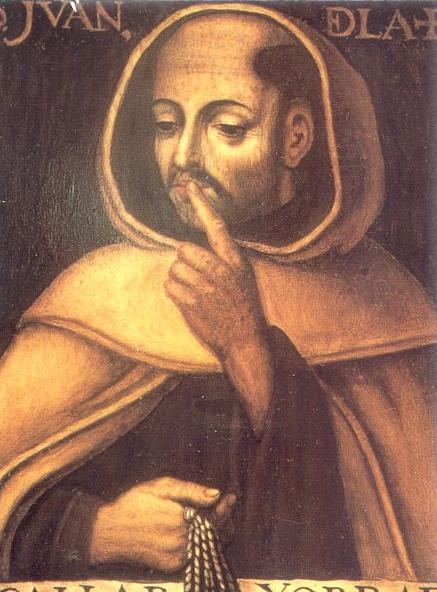
Here are the ones left to do. The great Jesuits, Robert Bellarmine and Peter Canisius, Alphonsus Liguori, and finishing up with John of the Cross, which is appropriate, and somewhat of a repetition, but necessary for the perfection discussion.

I shall briefly return to Garrigou-Lagrange at the end of the series.

By the way, please pray for me, as I have been very ill for two days going into a third, with respiratory problems started by an allergy to smoke from wood fires in Devon. Sadly, I cannot be around these. I actually missed Mass this morning, which is very serious for me, as I was too ill to go to Church. Thank you.

There are only a few to cover. By the way, I do not know anyone who has followed perfection in the Doctors of the Church. I would be interested in making this into a book, if someone could help me do so very soon. Thanks for thinking about this.

Here are the ones left to do. The great Jesuits, Robert Bellarmine and Peter Canisius, Alphonsus Liguori, and finishing up with John of the Cross, which is appropriate, and somewhat of a repetition, but necessary for the perfection discussion.

I shall briefly return to Garrigou-Lagrange at the end of the series.
By the way, please pray for me, as I have been very ill for two days going into a third, with respiratory problems started by an allergy to smoke from wood fires in Devon. Sadly, I cannot be around these. I actually missed Mass this morning, which is very serious for me, as I was too ill to go to Church. Thank you.
Pt. 103 in the Doctors of the Church and Perfection Series: Isidore of Seville-My Desert Island Book
 |
| A medieval rendition of Isidore on the re-population of the earth by Noah's sons |
It is a stroke of genius and the inspiration of the Holy Spirit that this Doctor, Isidore of Seville, who wrote on the edge of destruction his twenty volumes of classical, Catholic knowledge, that he is the patron of computer programmers, geeks, and all of us who use computers regularly.
Part of our call is to preserve civilization and spread Catholicism throughout the Net.
How wonderful we have such a great patron.
There is so much in his work that I can hardly choose which sections to highlight for the perfection series. His section on baptism is great. His section on the Names and Attributes of God is brilliant. Here is a small piece on the Trinity.
5. For this Trinity some names are appellative (appellativus), and some are proper (proprius). The proper
ones name the essence, such as God, Lord, Almighty,
Immutable, Immortal. These are proper because they
signify the very substance by which the three are one.
6. But appellative names are Father and Son and Holy
Spirit, Unbegotten and Begotten and Proceeding. These
same are also relational (relativus) because they have reference (referre, ppl. relatus) to one another. When one
says “God,” that is the essence, because he is being named
with respect to himself. But when one says Father and
Son and Holy Spirit, these names are spoken relationally,
because they have reference to one another. 7. For we say
‘Father’ not with respect to himself, but with respect to
his relation to the Son, because he has a son; likewise we
speak of ‘Son’ relationally, because he has a father; and so
‘Holy Spirit,’ because it is the spirit of the Father and the
Son. 8. This relationship is signified by these ‘appellative
terms’ (appellatio), because they have reference to one
another, but the substance itself, in which the three are
one, is not thus signified.
Hence the Trinity exists in the relational names of the
persons. Deity is not tripled, but exists in singleness, for
if it were tripled we would introduce a plurality of gods.
9. For that reason the name of ‘gods’ in the plural is said
with regard to angels and holy people, because they are
not his equal in merit.10. Concerning these is the Psalm
(81:6 Vulgate), “I have said: You are gods.” But for the
Father and Son and Holy Spirit, because of their one and
equal divinity, the name is observed to be not ‘gods’ but
‘God,’ as the Apostle says (I Corinthians 8:6): “Yetto us
there is but one God,” or as we hear from the divine voice
(Mark 12:29, etc.), “Hear, O Israel: the Lord thy God is
one God,” namely inasmuch as he is both the Trinity
and the one Lord God.
However, here is Isidore on martyrs, which is applicable to my study here on perfection. Notice that he writes both of red and green martyrdom. These are two ways to perfection.
xi. Martyrs (De martyribus) 1. ‘Martyrs’ (martyr) in
the Greek language (i.e.
) are called ‘witnesses’
(testis) in Latin, whence ‘testimonials’ are calledmartyria
in Greek. And they are called witnesses because for their
witness (testimonium) of Christ they suffered their passions and struggled for truth even to the point of death.
2. But because we call them nottestes, which we certainly
could do, using the Latin term, but rather ‘martyrs’ in
the Greek, this Greek word sounds quite familiar in the
ears of the Church, as do many Greek terms that we use
in place of Latin.
3. The first martyr in the New Testament was Stephen,
whose name in Hebrew speech is interpreted “standard,”
because in his martyrdom he was the first standard for
the imitation of the faithful. The same name is rendered
from the Greek tongue into Latin as “the crowned one,”
and this by way of prophecy, because through a certain foreseeing of the future his name signified beforehand what would come to pass, for he suffered, and
what he was called, he received. Thus ‘Stephen’ means
“crown”; he was in humility stoned, but in sublimity
crowned.
4. Further there are two kinds of martyr: one in manifest passion, the other in hidden valor of the soul. Indeed,
many people, suffering the snares of the enemy and
resisting all carnal desires, because they sacrificed themselves in their hearts for almighty God, became martyrs
even in times of peace – those indeed who, if a period of
persecution had occurred, could have been martyrs.
To be continued...
Again, on the Liberal Arts and the Trivium and Quadrivium: Perfection and the Doctors of the Church-Isidore of Seville: Part 102
For many years of my life, I was involved in helping schools and one college set up Trivium and Quadrivium studies. I have taught the famous book on this subject, by Martianus Minneus Felix Capella, De nuptiis Philologiae et Mercurii sometimes called the On the Seven Disciplines or the seven liberal arts.
But, if I had to choose one book dealing with classical education to take to a desert island, it would be the Doctor of the Church St. Isidore of Seville's Etymologie.

This work is a compilation of knowledge and definitions from the classical world, which is being lost to ennui and the lack of structure in our educational systems. For centuries, children and adolescents learned the liberal arts in order to learn how to think.
This ideal was destroyed on purpose in the 19th century by Bismarck and by Dewey, among others.
If a Catholic has not had the benefit of a classical education, the culture of the West will die, as well as creating an impoverishment in the Church.
Tradition and Revelation formed part of this great Western tradition we called civilization. Thankfully, the Benedictine monks kept copying Isidore for the future students who would use him. Learning and the Love of God formed the basis of the Benedictine way.
Those who cannot see the value cannot see how the discipline of the monasteries and seminaries in ancient times created men and women who not only could become holy, but think. The use of the intellect and the pursuit of holiness go together.
This entire way of life is disappearing so fast, I cannot imagine a stemming of the tide of anarchy, which is the result of a lack of thinking. Here is one small section of Isidore's work, which I shall highlight in the next few days in the perfection series.
The great problem of the 21st century is the emphais on emotion rather than thought and the notion that religion is not connected to thinking.
How wrong this is.... first take a look at this reminder of the liberal arts.
ii. The seven liberal disciplines (De septem liberalibus
disciplinis) 1. There are seven disciplines of the liberal
arts. The first is grammar, that is, skill in speaking.
The second is rhetoric, which, on account of the brilliance
and fluency of its eloquence, is considered most necessary in public proceedings.
The third is dialectic, otherwise known as logic, which separates the true from the
false by very subtle argumentation.
2. The fourth is arithmetic, which contains the principles and classifications
of numbers. The fifth is music, which consists of poems
and songs.3. The sixth is geometry, which encompasses
the measures and dimensions of the earth. The seventh
is astronomy, which covers the law of the stars.
For many of my readers, this list looks like a foreign curriculum. However, I have helped set up such in some schools in the States and in Canada, and my home school was based on this and the Montessori Method.

What does all this have to do with perfection?
God has given us brains to use to discover Who He Is.
Revelation and the study of Scripture is part of this journey to knowledge. But, there is more.
As Father, as Creator, as Son of God, the Incarnate One and as the Holy Spirit, God dwells in us through grace.
Our intellects are to be renewed in that grace. The Benedictines understood this by creating the oldest institution in Christian Europe, the classical educating school system.
This was created out of the ruins of Rome, and God Himself, becoming Incarnate at a particular time in history, shows us the way to be human and divine.
We cannot ignore the human in our search for perfection. The honing of the mind allows us to come to know God Himself.
One reason for the lack of holiness in the world is the destruction of thinking skills. People have fallen into New Age and Pentecostal religious experience because they have not learned that the mind is part of the way to God. We ignore learning at our own peril.
Isidore knew this. He is one of the most important Doctors of the Church for our time.
Here is another section: Isidore wrote all the knowledge he could at the time of the failing of the Roman empire. We should be doing the same-passing down knowledge for the sake of the souls of our children, and grandchildren before it is too late. All this is found here. I shall highlight more sections later pertaining to the road to unity with God. Without Isidore, we would not have had the space race to the moon, or penicillin, or Shakespeare, or Tolkien. Without Isidore, we would not have the later Doctors of the Church, such as St. Bernard of Clairvaux, whose superb sermons used so much on this blog, are based on Cicero and other classical orators.
Out of Isidore's massive twenty volume encyclopedia the only thing missing is musical notation, which he felt could not be written down. The Benedictines took up that challenge nicely.
The first printed map EVER in Europe was that of Isidore of Seville's, printed in 1472.
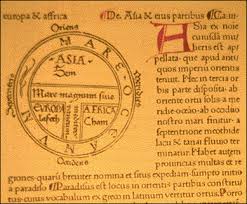
Does this mean that a simple person cannot become holy? Of course not, but the duty of the vast majority of the laity is to find God through learning. This is part of the heritage of Catholicism. To be continued...
i. The Old and New Testament (De Veteri et Novo Testamento) 1. The Old Testament is so called because it
ceased when the New came. The apostle Paul reminds
us of this, saying (II Corinthians5:17): “Old things have
passed away, and behold, new things have come about.”
2. One testament is called New (Novus) because it innovates (innovare). Indeed, the only ones who come to
know it are those who are renewed (renovatus) from the
old by grace and who belong now to the New Testament,
which is the kingdom of heaven.
3. The Hebrews take the Old Testament, with Ezra
as its redactor, as consisting of twenty-two books, corresponding to the number of letters in their alphabet. They
divide these books into three classes: Law, Prophets, and
Sacred Writings. 4. The first class, Law (Lex), is taken as
being five books: of these the first is Bresith,1
which is
Genesis; second Veelle Semoth, which is Exodus; third
Vaiicra, which is Leviticus; fourth Vaiedabber, which is
Numbers; fifth Elleaddebarim, which is Deuteronomy.
5. These are the five books of Moses, which the Hebrews
call Torah (Thora), and Latin speakers call the Law. That
which was given through Moses is properly called the
Law.
6. The second class is of Prophets (Propheta), in which
are contained eight books, of which the first is Josua
Benun, called Iesu Navein Latin (i.e. the book of Joshua
‘ben Nun,’ the son of Nun). The second is Sophtim,
which is Judges; third Samuel, which is First Kings;
fourth Malachim, which is Second Kings; fifth Isaiah;
sixth Jeremiah; seventh Ezekiel; eighth Thereazar, which
is called the Twelve Prophets, whose books are taken as
one because they have been joined together since they
are short.
7. The third class is of Sacred Writings (Hagiographa),
that is, of ‘those writing about holy things’ (sacra
scribens; ....

9. We also have a fourth class: those books of the Old
Testament that are not in the Hebrew canon. Of these the
first is the Book of Wisdom, the second Ecclesiasticus;
the third Tobit; the fourth Judith; the fifth and sixth,
the books of Maccabees. The Jews hold these separate
among the apocrypha (apocrypha), but the Church of
Christ honors and proclaims them among the divine
books.
10. In the New Testament there are two classes: first
the Gospel (evangelicus) class, which contains Matthew,
Mark, Luke, and John, and second the Apostolic (apostolicus) class which contains Paul in fourteen epistles, Peter in two, John in three, James and Jude in single
epistles, the Acts of the Apostles and the Apocalypse
(i.e. Revelation) of John. 11. The entire content of both
Testaments is characterized in one of three ways, that
is, as narrative (historia), moral instruction (mores), or
allegorical meaning (allegoria). These three are further
divided in many ways: that is, what is done or said by
God, by angels, or by humans; what is proclaimed by the
prophets about Christ and his body [that is, the Church],
about the devil and his members, about the old and the
new people, about the present age and the future kingdom and judgment.
But, if I had to choose one book dealing with classical education to take to a desert island, it would be the Doctor of the Church St. Isidore of Seville's Etymologie.
This work is a compilation of knowledge and definitions from the classical world, which is being lost to ennui and the lack of structure in our educational systems. For centuries, children and adolescents learned the liberal arts in order to learn how to think.
This ideal was destroyed on purpose in the 19th century by Bismarck and by Dewey, among others.
If a Catholic has not had the benefit of a classical education, the culture of the West will die, as well as creating an impoverishment in the Church.
Tradition and Revelation formed part of this great Western tradition we called civilization. Thankfully, the Benedictine monks kept copying Isidore for the future students who would use him. Learning and the Love of God formed the basis of the Benedictine way.
 |
| Consanguinity Chart from a Medieval Etymologie |
Those who cannot see the value cannot see how the discipline of the monasteries and seminaries in ancient times created men and women who not only could become holy, but think. The use of the intellect and the pursuit of holiness go together.
This entire way of life is disappearing so fast, I cannot imagine a stemming of the tide of anarchy, which is the result of a lack of thinking. Here is one small section of Isidore's work, which I shall highlight in the next few days in the perfection series.
The great problem of the 21st century is the emphais on emotion rather than thought and the notion that religion is not connected to thinking.
How wrong this is.... first take a look at this reminder of the liberal arts.
ii. The seven liberal disciplines (De septem liberalibus
disciplinis) 1. There are seven disciplines of the liberal
arts. The first is grammar, that is, skill in speaking.
The second is rhetoric, which, on account of the brilliance
and fluency of its eloquence, is considered most necessary in public proceedings.
The third is dialectic, otherwise known as logic, which separates the true from the
false by very subtle argumentation.
2. The fourth is arithmetic, which contains the principles and classifications
of numbers. The fifth is music, which consists of poems
and songs.3. The sixth is geometry, which encompasses
the measures and dimensions of the earth. The seventh
is astronomy, which covers the law of the stars.
For many of my readers, this list looks like a foreign curriculum. However, I have helped set up such in some schools in the States and in Canada, and my home school was based on this and the Montessori Method.

What does all this have to do with perfection?
God has given us brains to use to discover Who He Is.
Revelation and the study of Scripture is part of this journey to knowledge. But, there is more.
As Father, as Creator, as Son of God, the Incarnate One and as the Holy Spirit, God dwells in us through grace.
Our intellects are to be renewed in that grace. The Benedictines understood this by creating the oldest institution in Christian Europe, the classical educating school system.
This was created out of the ruins of Rome, and God Himself, becoming Incarnate at a particular time in history, shows us the way to be human and divine.
We cannot ignore the human in our search for perfection. The honing of the mind allows us to come to know God Himself.
One reason for the lack of holiness in the world is the destruction of thinking skills. People have fallen into New Age and Pentecostal religious experience because they have not learned that the mind is part of the way to God. We ignore learning at our own peril.
Isidore knew this. He is one of the most important Doctors of the Church for our time.
Here is another section: Isidore wrote all the knowledge he could at the time of the failing of the Roman empire. We should be doing the same-passing down knowledge for the sake of the souls of our children, and grandchildren before it is too late. All this is found here. I shall highlight more sections later pertaining to the road to unity with God. Without Isidore, we would not have had the space race to the moon, or penicillin, or Shakespeare, or Tolkien. Without Isidore, we would not have the later Doctors of the Church, such as St. Bernard of Clairvaux, whose superb sermons used so much on this blog, are based on Cicero and other classical orators.
Out of Isidore's massive twenty volume encyclopedia the only thing missing is musical notation, which he felt could not be written down. The Benedictines took up that challenge nicely.
The first printed map EVER in Europe was that of Isidore of Seville's, printed in 1472.
Does this mean that a simple person cannot become holy? Of course not, but the duty of the vast majority of the laity is to find God through learning. This is part of the heritage of Catholicism. To be continued...
 |
| d Diagram of the phases of the moon from an old copy of Isidore |
i. The Old and New Testament (De Veteri et Novo Testamento) 1. The Old Testament is so called because it
ceased when the New came. The apostle Paul reminds
us of this, saying (II Corinthians5:17): “Old things have
passed away, and behold, new things have come about.”
2. One testament is called New (Novus) because it innovates (innovare). Indeed, the only ones who come to
know it are those who are renewed (renovatus) from the
old by grace and who belong now to the New Testament,
which is the kingdom of heaven.
3. The Hebrews take the Old Testament, with Ezra
as its redactor, as consisting of twenty-two books, corresponding to the number of letters in their alphabet. They
divide these books into three classes: Law, Prophets, and
Sacred Writings. 4. The first class, Law (Lex), is taken as
being five books: of these the first is Bresith,1
which is
Genesis; second Veelle Semoth, which is Exodus; third
Vaiicra, which is Leviticus; fourth Vaiedabber, which is
Numbers; fifth Elleaddebarim, which is Deuteronomy.
5. These are the five books of Moses, which the Hebrews
call Torah (Thora), and Latin speakers call the Law. That
which was given through Moses is properly called the
Law.
6. The second class is of Prophets (Propheta), in which
are contained eight books, of which the first is Josua
Benun, called Iesu Navein Latin (i.e. the book of Joshua
‘ben Nun,’ the son of Nun). The second is Sophtim,
which is Judges; third Samuel, which is First Kings;
fourth Malachim, which is Second Kings; fifth Isaiah;
sixth Jeremiah; seventh Ezekiel; eighth Thereazar, which
is called the Twelve Prophets, whose books are taken as
one because they have been joined together since they
are short.
7. The third class is of Sacred Writings (Hagiographa),
that is, of ‘those writing about holy things’ (sacra
scribens; ....

9. We also have a fourth class: those books of the Old
Testament that are not in the Hebrew canon. Of these the
first is the Book of Wisdom, the second Ecclesiasticus;
the third Tobit; the fourth Judith; the fifth and sixth,
the books of Maccabees. The Jews hold these separate
among the apocrypha (apocrypha), but the Church of
Christ honors and proclaims them among the divine
books.
10. In the New Testament there are two classes: first
the Gospel (evangelicus) class, which contains Matthew,
Mark, Luke, and John, and second the Apostolic (apostolicus) class which contains Paul in fourteen epistles, Peter in two, John in three, James and Jude in single
epistles, the Acts of the Apostles and the Apocalypse
(i.e. Revelation) of John. 11. The entire content of both
Testaments is characterized in one of three ways, that
is, as narrative (historia), moral instruction (mores), or
allegorical meaning (allegoria). These three are further
divided in many ways: that is, what is done or said by
God, by angels, or by humans; what is proclaimed by the
prophets about Christ and his body [that is, the Church],
about the devil and his members, about the old and the
new people, about the present age and the future kingdom and judgment.
"God is great, hang the atheist bloggers". News from Bangladesh/sensitive photo
http://www.jihadwatch.org/2013/04/allahu-akbar-hang-the-atheist-bloggers-100000-march-in-bangladesh-demanding-execution-of-atheist-blo.html
Read this....there was another demonstration in February and four people were killed.

Read this....there was another demonstration in February and four people were killed.

Help on the Perfection Series Three Out of Three

He refers to Psalm 72 here, and goes on to say that "For the soul that is such desires nothing for herself with a private affection, neither happiness nor glory nor anything else whatever, but loses herself completely in God, and has but one most eager desire, namely, that the King would bring her into His bed-chamber that she might belong to HIm alone and enjoy His sweet caresses."
One may be afraid of this state, seeing one's imperfections and lowliness and tendency towards sin, which is why one allows God to purge one of all sin and all imperfections.
In my entire life, besides the Doctors of the Church, I have only found three priests who have understood this well enough to speak about it.
Most priests do not understand this dealing with imperfections in the Confessional. Many discourage people at the illuminative stage. It is important to have a good spiritual director or good confessor to help.
And, yet, God can work with one in many ways, including through daily meditation and Lectio Divina.

Bernard states that by gazing at the Beloved's Face, the Face of Jesus, one becomes like HIm. One is fulfilling the reason why one came into being-to become like God.
He notes the Song of Songs, 4:7 and 2:16.
He states, "Such, my brethren, is the most sweet and happy converse which a soul in these dispositions is privileged and delighted to hold with her heavenly bridegroom."
One becomes a symbol of the Church in the world as well, as the entire Church is the Bride of Christ. If each member sought the path of perfection, what a difference this would make in the Church and in the world. The contemplative nun is the sign of the Bride of Christ, the Church in the world.
Her entire life is that of learning to gaze on the Face of the Beloved, through trial, suffering, purification, illumination and finally, unity.
St. Benedict's Rule is a short-cut to perfection. Hard, yes, very, but a tried and true way, nonetheless.
I suggest that women and men read Blessed John Paul II's Congregation for the Institutes of Religious Life's Sponsa Verbi, which I share share on this blog tomorrow.
However, I want to emphasize that it is not just nuns, priests and nuns who are called to this state, but all baptized Catholics.

Help on Perfection Series Two Out of Three
I want to briefly reiterate that the Protestant idea of Christians merely relying on the righteousness of God is not only false, but limited in that a person is not seen as being capable of becoming pure, or just or righteous, something to which we are all called, but merely saved.

This is one reason why Protestantism does not understand saints and the saintliness. This is one reason why Protestants do not, for the most part, understand salvific suffering and the overflowing of good works that comes only after purification.
Without understanding that each one of us becomes purified and holy in God, through the Church, one cannot even being this walk towards perfection.
The mind and heart are limited by the false theology which basically believes that men and women are always evil and cannot attain the mind or character of Christ to the ability to which each person was created.
Hence, the denial of the writings of the Church and the sacraments....to be continued....
A Help on the Perfection Series
He describes in his sermon "On the Different Stages in the Spiritual Life" that the purification, illuminative and unitive stages and put them into corresponding stages of personal growth. He notes that although God does not change, as His Essence is immutable, that each one of us changes in our relationship to Him
The three stages are spiritual childhood, disciple and bride.
Before those, one is what Bernard calls a "hireling", like the Prodigal Son who hire himself to others, under the eyes of the Head of the Household. One is still a slave at this point, and as one converts and changes, one's character changes as well, perceiving God in different ways. The slave is the pre-conversion stage.
One is a slave to sin and to one's own will. Bernard states that a person begins by being subject to one's own will, but rapidly falls into the slavery of sin. One becomes a stranger in a strange land.
This, notes Bernard, is the state of the soul before Baptism-a truth denied by many people today. One becomes a slave to the prince of darkness, states Bernard, either in the state of pre-baptism, or by choice, which is voluntary sin, and then even against one's will, wherein the person is still bound by habits of sin.
He refers to the last type as the lukewarm Christians in the world, which have peaceful even happy lives but are not living up to the great call of holiness to which we are all called.
They are not seeking the things above. Fear of the Lord changes this and with conversion comes the first real stage of perfection, that of spiritual childhood. One must do do penance and as he was speaking to his novices, Bernard stated that one "blots out sins of the past" and "guards against future faults."
Purification only begins after conversion. The child is disciplined by his father, just as God disciplines His children. and this purification is formation. Bernard says that this is the stage noted in 1 Peter 2:2, when one is a little one in Christ, drinking milk and being formed. This is the age of discipline and training. A child needs consolation as well, which disappears in adulthood.
(Formation of children leads to holiness of teens and adults, by the way.)
The second stage of perfection is the stage wherein one is a disciple, calling God "Master" and "Lord". The disciples were at this stage for most of the Gospel, except for John. Christ says in John 13:13. "You call me Master and Lord, and you say well, for so I am."
The illuminative stage happens at this point. One begins to have infused knowledge of the Scriptures and understand the teachings of the Church. This is the stage of the grown-up, weaned son who works with the Father. Bernard refers to Ephesians 4:13 and Luke 2:49. Christ Himself at twelve or so knew he had to be about His Father's business and so does the person in the illuminative stage.
Prayer and work go together and the reward is that of a son, states Bernard, quoting Psalm 126, which reminds me that St. David, King, experiences these stages.
One must have a desire to go on to the last two stages, as it is so easy to stay in the childhood stage.
Most people get caught up in the excellent and good works of this stage and do not move on to the last and most precious stage, which I shall continue in the next post.
On grace and free will again

One of the themes of this blog has been the interaction of grace and free will. Thankfully, we have a long tradition of the writings of the Doctors of the Church and others on this subject.
The reason I bring it up again is that there seems to be a growing confusion on free will, the gift which makes us like God.
We were created in His image and likeness, the image being freedom and the likeness being grace. We lost the grace through Adam's sin, but kept the image, of course.
The goal of every Catholic is to regain that image, to put on the Mind of Christ and conform one's self to the teachings of the Church. Why? It is only in the Church that we have the fullness of Truth, the way to heaven and the greatest gifts of the sacraments.
If others are saved, and they are, it is through the merits of the Catholic Church, our own gained merits. If we are not growing in grace and virtue ourselves, it affects more persons than just ourselves.
It affects the world.
I reiterate this point today as many converts coming from the Evangelical and Lutheran, as well as Anglican communities do not understand this interplay of grace and will.
Grace is not a feeling. It is not a consolation. It is the sharing of God's Life. The CCC is clear on this and uses the terms interchangeably. Grace is not merely personal. It is given to the Church in history.
We need to remember that the Incarnation of Christ, the Second Person of the Blessed Trinity becoming Man changed history, as history had a focal point.
God the Father entered history in the Old Testament, with the call of Abraham, the first person to have a personal relationship with God and a covenantal relationship with God.
The Patriarchs were given grace to respond to God's generous call in preparing a People from whom would come the Messiah, and His Own Incarnated Son, Jesus Christ.
Christ comes to us in grace, in the acceptance of Him through our free wills.
Nothing would happen in the world without our wills. All inventions, history, births, politics, art, etc. come from our ability to create , like God, in freedom. We mimic Him in this creation-His is poesis and ours is mimesis.
Our freedom creates with God's grace, the movement of the Church in the world.
If the Church is weak, we have become weak both in grace and in will. If the Church is strong, we have become strong in will and grace.
Our baptismal vows, either made by us or for us by our God-parents, begins the interplay of grace and free will.
In this interplay is our hope, only if we conform our minds and hearts to Christ, as He is conformed to the Father and the Spirit in the Trinity..
See more on the tags...
White House tries to stop Catholic Archdiocese from getting information.....
http://www.newsmax.com/Newsfront/white-house-catholic-birth/2013/04/05/id/498106
More on the above link
The lawsuit was filed on Thursday and released on a court website on Friday.
Religious organizations, individuals and corporations have filed scores of suits to block a planned mandate that employers generally include coverage of contraception in health insurance plans they offer workers.
Though the mandate has some exceptions for religious employers, the New York archdiocese, one of the largest in the United States, said it expected to incur nearly $200 million each year in penalties if it refuses to comply.
More on the above link
Subscribe to:
Posts (Atom)