Father Z. always has list of what he is reading. Here is mine at this time:
Father Phelim on St. John of the Cross (need to find more stuff of his-finished now)
Dialogues of St. Catherine of Siena, again, third time
Spiritual Exercises of St. Ignatius Loyola, again, for the umpteenth time.
Windswept House, first time and it is really boring, cardboard characters and nothing I did not know
None Other Gods, Benson for the third time
Inferno, by Dante, for the umpteenth time classic
An Introduction to Counselling by McLeod-sections on values, ethics and morals to see what the seculars are thinking; and I am concerned about the standards of some so-called charismatic counsellors, so I am checking standards.
The Child in the Church, Montessori, starting that tomorrow, as I am borrowing a rare copy
Dark Night of the Soul, John of the Cross, umpteenth time
Dublin and Irish Collections, on line and will get more tomorrow from another source
Transcripts and on line sources on the trial of King Charles I-fascinating and timely
Deus Caritas Est, third time found here, btw http://www.catholic.org/clife/publications/b16_encyclical_godislove.pdf
Paper on Suarez, because I do not have his books with me found here
http://www3.nd.edu/~afreddos/papers/suarez%20intro.pdf
Lectio Divina, Gospel of Matthew and Numbers (just finished that again)
Histories on line of the architecture and history of Valletta
and other stuff as comes up....
Thursday, 22 August 2013
"Democrats have got to shake off the Clinton albatross and find new blood."
Not my words, but of the leftist darling Camille Paglia. Interesting article.
http://www.salon.com/2013/08/21/camille_paglia_it_remains_baffling_how_anyone_would_think_that_hillary_clinton_is_our_party%E2%80%99s_best_chance/
http://www.salon.com/2013/08/21/camille_paglia_it_remains_baffling_how_anyone_would_think_that_hillary_clinton_is_our_party%E2%80%99s_best_chance/


Reminder
Anonymous comments, as indicated on the side, either good, bad, or indifferent, do not get posted. Sorry. Some have been excellent, such as a comment on the Liturgy of St. John Chrysostom, which I attended for three years, but rules are rules here for more than one reason.
Small Tour of Dublin-Dutch Billys

I took an architectural and archaeological tour of some areas south of the River Liffey this afternoon, and I shall have three posts on the tour tomorrow or Saturday. The tour guide, Nicki Matthews of the Dublin City Council was fantastic. It included the old monastic areas, Dutch Billys and the Royal College of Surgeons.

More to come later...Sadly most of the Flemish influenced houses have been destroyed. I found this photo on line of a street with some still standing in the 1950s on the north side of the river. The vast majority were destroyed in the 1960s to make room for public housing. Dutch Billys have a fascinating roof structure in a cruciform style of building. Th insides, according to Ms. Matthews, would have been built around a central core, with rooms all ensuite, attached to each other by doors.
One I saw today was 9 Aungier Street, here seen with the double-gabled roof from the back.

For more information on Dutch Billys, see this site, from which all these photos here are.
Relics of SS. Therese, Louis and Zelie Martin
On this feast day, the celebration of the Queenship of Mary, and for two more daysthe relics of SS. Therese, the Little Flower and her parents are on loan to Whitefriars Street Carmelite Church.
These saints provide very powerful friends and guides for our troubled times. St. Therese herself is the patron of my personal journey through Europe. And, her saintly parents give us a great example of love and fortitude in suffering. As a cancer survivor, I am particularly drawn to Bl. Zelie Martin, who died so young of breast cancer.
I prayed for all my readers, my twitter friends, (and enemies), my e-mail buddies, priests, seminarians and would-be sems.
In the small exhibition in the community center and at the side of the church, one of the most striking items is a Benedictine cope embroidered by Sister Celine, St. Therese's sister.

Remember that Mary was of the House of David herself and married into the House of David, hence a royal house, although depleted. Hail, Queen of Heaven and Queen of our hearts. Bless us this day, Dear Queen.

Luke 1
26 And in the sixth month, the angel Gabriel was sent from God into a city of Galilee, called Nazareth,
27 To a virgin espoused to a man whose name was Joseph, of the house of David; and the virgin's name was Mary.
28 And the angel being come in, said unto her: Hail, full of grace, the Lord is with thee: blessed art thou among women.
29 Who having heard, was troubled at his saying, and thought with herself what manner of salutation this should be.
30 And the angel said to her: Fear not, Mary, for thou hast found grace with God.
31 Behold thou shalt conceive in thy womb, and shalt bring forth a son; and thou shalt call his name Jesus.
32 He shall be great, and shall be called the Son of the most High; and the Lord God shall give unto him the throne of David his father; and he shall reign in the house of Jacob for ever.
33 And of his kingdom there shall be no end.
34 And Mary said to the angel: How shall this be done, because I know not man?
35 And the angel answering, said to her: The Holy Ghost shall come upon thee, and the power of the most High shall overshadow thee. And therefore also the Holy which shall be born of thee shall be called the Son of God.
36 And behold thy cousin Elizabeth, she also hath conceived a son in her old age; and this is the sixth month with her that is called barren:
37 Because no word shall be impossible with God.
38 And Mary said: Behold the handmaid of the Lord; be it done to me according to thy word. And the angel departed from her
On Free Will and Free Love

One really knows something when it is in the head, the heart, and the soul. And, how joyful that knowledge can be for a person who comes to know in the depths of being a truth.
Once in awhile, one has an epiphany which illuminates a mystery of faith one may have not appropriated.
In the last 24 hours, I have had an epiphany---a long unwinding of light, like strings of bright pearls, on the real meaning of freedom.

God gave us free will, which sets us apart from the animals, and is part of how we are made in His Image and Likeness.
We are called, especially those of us who are baptised, to know, to love, to serve God in this world and to be happy with Him in the next, which is the old, but true catechism answer as to why we were created.
Epiphany moment: only free love is real love. Love which is manipulated or a reward, or given reluctantly, or coerced, is not love. Love which has ANY expectations is not true love.
Love must be the purest act of freedom we can give to another person. And, to God...

I love, but do not expect any love in return. Can you love someone with joy, and let them not love you?
This is what God wants from us. Love without expectations, ... love in the Dark Night.
God loved us like this on Calvary. Sacrificial love expects nothing back. And, it is still freely given, even when one knows it will not be returned. That is real freedom.
But, here is the key. If one loves freely. one MUST allow the other freedom NOT to love in return; that is true sacrificial love-the highest love of all. That type of real love brings joy. This love is the love of God.
That is what God wants of us-free love. And, this is not the same as the sacrificial love of a mother for her child. That is a love tied by flesh and blood.
This free love is Bridal Love. I adjure you, O ye daughters of Jerusalem, by the roes, and the harts of the, fields, that you stir not up, nor make the beloved to awake, till she please. Song of Songs, 2:7 DR
Dark Night of the Soul Part 42

The goods labelled sensual, moral, supernatural and spiritual need to be examined briefly. Again, Father Phelim's pamphlets help me.
Vanity, or vainglory impede the growth of virtues. But the deep sins of gluttony, drunkenness, luxury, spiritual laziness, sensuality and the lack of penance lead one directly out of the Dark Night. This can happen.
Satan tempts and only vigilance keeps one from falling.
The moral goods also need to be purged. Father Phelim warns against edifying people who do good. He quotes St. John of the Cross,
"Many Christians today accomplish great acts which will profit them nothing for eternal life, because they have not sought in them the glory and honour which belong to God alone."
Harsh words, indeed. One must work entirely out of love for God alone.
If one relies, as Father Phelim notes using John, on the esteem of men and praise or recognition, there will be no recompense in heaven for such good moral works. One must work without praise and in a state of doing one's duty.
The next two categories are the most difficult for many Catholics, especially charismatics. Please note Father Phelim's words here. The supernatural goods given for the building up of the Body of Christ "...do not imply holiness in those who exercise them."
God's gifts and charisms are NEVER a sign of holiness or purity of heart.
Frequently, charisms are misused, as Father emphasizes Two things help one in this regard-one, complete detachment from gifts and, two, the reluctance to use them. Father and St. John are clear on these two points. One need not feel any rejoicing or emotions regarding the use of gifts and most likely, those who are doing so in a showy manner when exhibiting gifts lack holiness.
Lastly, spiritual goods, such as statues, medals, beautiful music and churches, and all manner of Christian art can become idols. One must realize they are there to help our faith and are not substitutes for holiness. I have see much magical thinking with regard to holy things which is dangerous.
The important aspect of spiritual goods is that these build our faith, increase our hope and encourage us in love.
The last warning on the use of goods pertains directly to charismatics and those prone to prayer meetings. St. John of the Cross writes, "We must not be anxious to cling to ceremonial inventions which are not approved by the Church. We must leave the method and manner of saying Mass to the priest whom the Church sets in her place giving him her orders as to how he is to do it."
Father Phelim warns us, by reminding us that St. John of the Cross rebukes those who experiment with new methods, "as if they knew more than the Church and the Holy Spirit." Wow!
To be continued....
Readers, more questions....

Are you having family meetings at least once a week in order to build up trust and communication?
Can you organize your neighborhood for an emergency without relying on public services?
Do you understand that money may be useless?
Are you forming yourself and your children with a strong interior life to withstand economic collapse and isolation?
Do you have family drills for emergencies? You should.
Are you discussing safety, defense, flight plans?
Are you discussing alternative places to live?
Parents, are you forming your children to have independent, Catholic minds and be wise in dangerous situations?
Are you teaching the entire family not to gossip or talk about things which happen at home?
Are you combating the general softness of society by training yourself and your children not to fall into the dullness of sensuality and spiritual torpor?
Are you practicing penances and training your children to do likewise?
And, most importantly, are you learning yourselves to listen daily to God's counsel and teaching your children how to do likewise?
Do you know how to listen to God and reflect on what He is telling you?
Readers, answer these questions tonight with your family or by yourself

In the last great war, the enemy was without. What if the enemy is already within?
One, if the Net went down completely, do you have an alternative way of getting real news, not the television?
Two, do you have access to a land-line and not merely a cell phone?
Three, in the event of a total electronic communications shut down, do you have friends and family around to help?
Four, do you have a short-wave radio?
Do you have weapons?
Do you have first aid kits?
Do you have local leaders you can trust, or are they all in the hands of the central government of your country?
Do you have a local priest who is not a socialist or communist and who is intelligent about the persecution to come?
Are you prepared to move if needed, quickly?
Do you have a network of friends or family who can communicate verbally without phones?
Do you have television, if so get rid of it NOW.
Can you exist in an electronic free zone?
Do you have alternatives to cars, such as bicycles?
Do you have Bibles, catechisms, and rosaries?
Plan for two things-one, a shut down of electronic communications, and two, a shut-down of free movement.
The Doctor of Divine Love and The Dark Night Part 41
As Father Phelim states, the soul must transcend all goods in order to focus on God. This first category covers "riches, rank, high offices, titles , status". Father Phelim writes that these are the thorns in the passage of the parable of the sower in Matthew 13. To be greedy is the old sin of idolatry.
The person who is free of such goods, has, as Fr. Phelim lists "great liberty of soul, a clarity of reason, tranquillity, and confidence in God. Not a bad list of virtues to have.
Natural goods, notes Father Phelim, are "bodily beauty, good looks, and comeliness of figure." Also, natural discretion, discernment, and understanding. Of course, these are gifts from God, but one must hold these things lightly in one's hands, as it were.
The evils which result in attachment to these gifts are vanity, presumption and "the lack of esteem for others." What is hard to read, is this phrase from Father, "Some even reach a stage where the things of God are tedious, troublesome and abhorrent."
When one gets to this stage of hating the things of God, one has chosen hell over heaven, sadly.
The great need of a person who wants to break away from such sins is that of detachment.
Detachment allows one to ignore praise, esteem and status and only desire doing what pleases God.
The third category includes sensual goods, those of the five senses.
Any pleasures which come through the senses do not lead us directly to God. I want to stop here and return to this in the next post.
To be continued...
Wednesday, 21 August 2013
Good news for the Catholic Church in Scotland
http://www.catholicherald.co.uk/news/2013/08/21/american-dominican-sisters-move-to-scotland/ You might recognize this group from other posts on this blog.
Battle of Aljubarrota (14th August 1385)

I missed this date last week with so many feasts and events, but today I want to highlight St. Nuno Avarez Pereria, who was a soldier, a husband, a monk, and a saint. For a complete biography, look at this site here. This battle gave the Portuguese independence and paved the way for a renewal of Catholicism.
In the Whitefriars Street Church in Dublin, there is a stunning window of this saint. I like this man, as he seems to be a true Renaissance Man, a little before the time. He exhibited an intense prayer life, as well as giving to the poor, being a humble lay brother, and paying for many churches and monasteries with his own money, including Lisbon's Carmelite Church and Our Lady of Victories at Batalha. I would like to visit these someday very much.
Let us pray to this saint for strong leadership among the laity, as well as more vocations to Carmel.
For my good readers, a thought for you today
2 But having suffered many things before, and been shamefully treated (as you know) at Philippi, we had confidence in our God, to speak unto you the gospel of God in much carefulness.
3 For our exhortation was not of error, nor of uncleanness, nor in deceit:
4 But as we were approved by God that the gospel should be committed to us: even so we speak, not as pleasing men, but God, who proveth our hearts.
5 For neither have we used, at any time, the speech of flattery, as you know; nor taken an occasion of covetousness, God is witness:
6 Nor sought we glory of men, neither of you, nor of others. 7 Whereas we might have been burdensome to you, as the apostles of Christ: but we became little ones in the midst of you, as if a nurse should cherish her children: 8 So desirous of you, we would gladly impart unto you not only the gospel of God, but also our own souls: because you were become most dear unto us. 1 Thessalonians 2:2-8
...from the Mass in honor of St. Pius X, one of the greatest men of modern times. Happy Feast Day in the NO of St. Pius X.

The Dark Night Part 40 and Blaming Satan Three
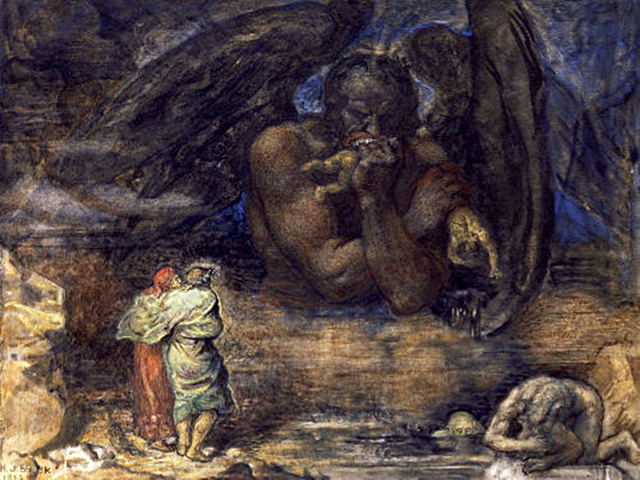
The devil, as Father Phelim points out, can only"gain a foothold on the soul through the working on its faculties." This is why the Dark Night includes the destruction of images and memories which take one away from God.
Recently, in a drama I was watching, a woman spoke to her lover that she had already sinned against God and her husband by thinking of her lover. The woman and her lover did commit adultery in the play, and they were aware the entire year they were together, that they were sinning. Now, the drama timeline was written in a time, many years ago, when people still knew that adultery was a serious, mortal sin. Interesting to me was the depiction of these lost souls, who verbalized that they were both damned, but chose each other anyway. What is more interesting, is that they become more miserable as the year went on. They began to hate the life of lust that they had chosen freely.
But, notice, the two sinners were very aware that they had chosen mortal sin over God and given in to temptation. Again, although satan watched them and tempted them, they chose to sin. As they were both, in this drama, Christians, they had knowledge, but their wills were weakened by frequent contact, and by speaking of their "love". Free will is a mighty gift. Their wills led them to misery.
This is the nature of sin. It starts in the imagination, in the mind. In the Dark Night, God pulls us away from any distractions from His grace, so that one can become pure enough for His coming as the Bridegroom.
Father Phelim did not have movies, television dramas, or novels to help him visualize sin, but he understands the roots of sin, as does St. John of the Cross. He notes that vanity and "disquiet" come from the roots of sin. Once one is purged of these roots of self-love, peace and "equanimity", (such a word is rarely used now), become the way of live for the person living in the Dark Night. The Dark Night steadies one to be able to fight satan, even to the point of moving away from venial sin and the desire for sin.
To be continued...
Postscript on The Dark Night of the Soul
Of course, the timeline varies from saint to saint, as I have written here before. And, heroic virtue demands heroic circumstances, such as the experience of the distancing of God before He allows the Illumination of the soul and body in that stage.
There is an illumination before the Dark Night, but the great Illumination happens only after purgation, and for many saints, this illumination quickly moves into the Unitive State, union with God in love. See the link below.
http://supertradmum-etheldredasplace.blogspot.ie/2013/08/re-posting-and-reminder-of-june-6th.html
I have already covered the Illuminative and Unitive States in the perfection series. This Dark Night series is merely a more detailed section on some posts in the perfection series. Here is only one on the Illuminative State, and only one on the Unitive State from earlier posts.
http://supertradmum-etheldredasplace.blogspot.ie/2013/01/part-five-saints-on-illuminative-state.html
http://supertradmum-etheldredasplace.blogspot.ie/2012/11/a-brief-summary-of-unitive-state.html
There are at least 53 posts which include references to St. John of the Cross.
I shall try and continue this mini-exploration. Would it not be wonderful if one could interview Blessed Mother Teresa on her experience of such a long, long Dark Night, especially as Catholics enter into a period of great persecution?
To be continued....
Consumerism, Materialism, Pride and the Theological Virtues-The Dark Night of the Soul, Part 39
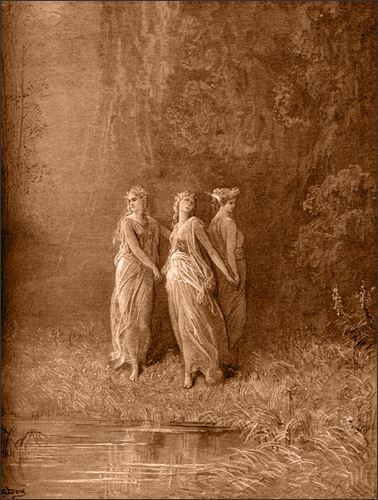
Catholics receive the theological virtues directly from God. We all have human virtues, but the theological virtues pave the way to heaven, allowing one to live in and with the Holy Trinity. The theological virtues, as most know, are faith, hope and charity.
Now, one wonders why these virtues do not flourish in the Church, through the lives of the members of the Church. What happens to stop the growth of faith, hope and love? As these are infused virtues, one would expect all Catholics to exhibit faith, hope and love.
Faith, as defined in the CCC, is the theological virtue by which we believe in God and believe all that he has said and revealed to us, and that Holy Church proposes for our belief, because he is truth itself. By faith "man freely commits his entire self to God."78 For this reason the believer seeks to know and do God's will. "The righteous shall live by faith." Living faith "work[s] through charity."79
To believe in God daily and to believe in Revelation and Tradition are no small feats. A Catholic who is orthodox, that is, obedient to all the Church teaches, and, in addition, gives his life to God totally, is living in and by faith.
One who lives in faith constantly prays and desires to know God, love God and do His Will.
This first theological virtue may be "sinned against", that is, one may turn against this gift and choose not to believe. For some, this is apostasy, the complete denial of faith. For others, the cause could be sloth, not cultivating a prayer life, or not receiving the sacraments frequently.
A habit of sin can destroy faith. One of the greatest enemies of faith is materialism, the belief that the life on earth is the only life, and that there is no eternal, no spiritual life, Materialism denies the soul, and the dignity of the person. This heresy is fast becoming the great heresy of Europe, where many no longer believe in heaven or hell, following the Marxist view of dialectic materialism.
Anarchists are usually materialists, denying a hierarchy of spirituality in the world.
Hope, the second theological virtue, is, according to the CCC, the theological virtue by which we desire the kingdom of heaven and eternal life as our happiness, placing our trust in Christ's promises and relying not on our own strength, but on the help of the grace of the Holy Spirit. "Let us hold fast the confession of our hope without wavering, for he who promised is faithful."84 "The Holy Spirit . . . he poured out upon us richly through Jesus Christ our Savior, so that we might be justified by his grace and become heirs in hope of eternal life."85
This virtue is the most misunderstood of all three. Notice the phrase, "relying not on our own strength, but on the help of the grace of the Holy Spirit". This virtue grows in the Dark Night of the Soul. Father Phelim quotes St. John of the Cross, that, "the more things we possess the less scope and capacity there is for hoping and consequently, the less hope we have." He notes that the less we have in reality and in memory, the more able we are to possess God and hope in His love.
The great enemy of hope is consumerism. Consumerism, which is the greatest sin of the American people, demands that happiness may be bought. People become obsessed with buying more and more and more things, thereby becoming preoccupied with wealth and the consumption of goods obtained by wealth.
One cannot develop the virtue of hope when one is literally consumed with things. Those who possess things do not have room in their hearts, minds, and souls for God. The dispossession of things allows for the freedom to let God into one's being. Hope rests on not having, and if one has one does not perfect hope for the love of God. Consumerism feeds selfishness, which stifles hope.
The third theological virtue is love. The CCC notes that Charity is the theological virtue by which we love God above all things for his own sake, and our neighbor as ourselves for the love of God.
Perhaps, most Catholics understand love, or charity, more that faith or hope. But, love cannot enter the soul, the heart or the mind without first faith and hope. Love is the fulfilment of faith and hope. When one is finally purged of selfishness and greed, of doubt and disobedience, love follows.
The great enemy of love is pride, as pride brainwashes the mind, the heart and the soul into denying the sacrifice of Christ on the Cross, Who loved us, as the CCC reminds us in the section on charity, while we were still enemies. Strong words. Pride denies that we were ever enemies of God, blaming others for our sins, as Eve blamed the serpent, and Adam blamed Eve.
All of these virtues are free gifts from God, but these can lie dormant for years and years unless one allows God to kill materialism, consumerism and pride in us.
That is one of the reasons for the Dark Night of the Soul, the purification of both the senses and the spirit.
To be continued....
Subscribe to:
Posts (Atom)