Without you all, there would be no supertradmum blog...
Thank you
STM
Wednesday, 27 November 2013
More on the predominant fault

Thanksgiving time is a good time to reflect on one's predominant fault.
One must ask God to help one with this root of all sins in one's life.
One cannot fight it if we do not know it. Some of this post is repetition. Ask yourself, as Garrigou-Lagrange notes, what makes me happy or sad?
What are the same sins I confess over and over? Can I see a pattern in these sins?
If someone points out a sin in my life, how do I react?
Am I honest in the confessional about tendencies to sin?
Cultures share sins as well, and sometimes one must remove one's self from a culture of sin to see that sin.
This is what the nuns and monks do in monastic life. They remove themselves from the habitual, even inherited sins of families in order to create a new atmosphere of grace and repentance.
Too often, families share predominant faults and parents must be careful not to pass these on to their children. Is there an atmosphere of anger and impatient in your house? Is there an atmosphere of sloth? Is greed in your family? Can you be brave enough to break away from these sins.? Do I really believe in God's Perfect Purity and Innocence? Do I believe in God's forgiveness?
HOW TO RECOGNIZE THE PREDOMINANT FAULT
Evidently it is of primary importance that we recognize our predominant fault and have no illusions about it. This is so much the more necessary as our adversary, the enemy of our soul, knows it quite well and makes use of it to stir up trouble in and about us. In the citadel of our interior life, which is defended by the different virtues, the predominant fault is the weak spot, undefended by the theological and moral virtues. The enemy of souls seeks exactly this easily vulnerable point in each one, and he finds it without difficulty. Therefore, we must recognize it also.
But how can we discern it? For beginners who are sincere, this is quite easy. But later the predominant fault is less apparent, for it tries to hide itself and to put on the appearances of a virtue: pride clothes itself in the outward appearances of magnanimity, and pusillanimity seeks to cover itself with those of humility. Yet we must succeed in discerning the predominant fault, for if we do not know it, we cannot fight it; and if we do not fight it, we have no true interior life.
That we may discern it, we must first of all ask God for light: "Lord, make me know the obstacles I more or less consciously place in the way of the working of Thy grace in me. Then give me the strength to rid myself of them, and, if I am negligent in doing so, do Thou deign to free me from them, though I should suffer greatly."
After thus asking sincerely for light, we must make a serious examination. How? By asking ourselves: "Toward what do my most ordinary preoccupations tend, in the morning when I awake, or when I am alone? Where do my thoughts and desires go spontaneously?" We should keep in mind that the predominant fault, which easily commands all our passions, takes on the appearance of a virtue and, if it is not opposed, it may lead to impenitence. Judas fell into impenitence through avarice, which he did not will to dominate; it led him to impenitence like a violent wind that hurls a ship on the rocks.
A second step in discerning the predominant fault, is to ask ourselves: "What is generally the cause or source of my sadness and joy? What is the general motive of my actions, the ordinary origin of my sins, especially when it is not a question of an accidental sin, but rather a succession of sins or a state of resistance to grace, notably when this resistance persists for several days and leads me to omit my exercises of piety?" Then we must seek sincerely to know the motive of the soul's refusal to return to the good.
In addition, we must ask ourselves: "What does my director think of this? In his opinion, what is my predominant fault? He is a better judge than I am." No one, in fact, is a good judge in his own case; here self-love deceives us. Often our director has discovered this fault before we have; perhaps he has tried more than once to talk to us about it. Have we not sought to excuse ourselves? Excuses come promptly, for the predominant fault easily excites all our passions: it commands them as a master, and they obey instantly. Thus, wounded self-love immediately excites irony, anger, impatience. Moreover, when the predominant fault has taken root in us, it experiences a particular repugnance to being unmasked and fought, because it wishes to reign in us. This condition sometimes reaches such a point that, when our neighbor accuses us of this fault, we reply that we have many bad habits, but truly not the one mentioned".(4)
The predominant fault may also be recognized by the temptations that our enemy arouses most frequently in us, for he attacks us especially through this weak point in our soul.
Lastly, in moments of true fervor the inspirations of the Holy Ghost ask us for the sacrifice of this particular fault.
If we have sincere recourse to these different means of discernment, it will not be too difficult for us to recognize this interior enemy which we bear within ourselves and which enslaves us: "Whosoever committeth sin is the servant of sin," (5) says our Lord.
It is like an interior prison that we bear about with us wherever we go. We must earnestly aspire to deliverance.
It is like an interior prison that we bear about with us wherever we go. We must earnestly aspire to deliverance.
It would be a great grace for us if we were to meet a saint who would say: "This is your predominant fault and this your principal attraction of grace which you must follow generously to reach union with God." In this way Christ applied the name, "sons of thunder" (Boanerges) (6) to the young apostles James and John who wished to call down fire from heaven on a city that had refused to receive them. We read in St. Luke: "He rebuked them, saying: You know not of what spirit you are. The Son of man came not to destroy souls, but to save." (7) In the school of the Savior, the Boanerges became such gentle souls that toward the end of his life St. John the Evangelist could say only one thing: "My little children, . . . love one another." (8) When asked why he always repeated the same exhortation, he used to reply: "This is His commandment. . . . And he that keepeth His commandments, abideth in Him and He in him." John had lost nothing of his ardor, of his thirst for justice, but it had become spiritualized and was accompanied by a great gentleness.


On the sin of impatience and the predominant fault
I am living in the land of impatience. So many people cannot wait in lines, deal with traffic, or slow phone trees. A lot of anger seems to be felt by people who just cannot wait or be patience.
One definition of impatience is the tendency to be impatient; irritability or restlessness.
This is a sin. Impatience stems from pride. Anger is also connected to pride. Meekness comes with humility.
I have a friend who is a doctor in another state. He is the most humble man I know. He is never impatience. His humility allows him to be patient with many people.
One thinks that the business one is doing is more important than other people's business.
I have written on the predominant fault here several times. Follow the tags.
Here is the great Garrigou-Lagrange on this topic, and some of this is a repeat.

One definition of impatience is the tendency to be impatient; irritability or restlessness.
This is a sin. Impatience stems from pride. Anger is also connected to pride. Meekness comes with humility.
I have a friend who is a doctor in another state. He is the most humble man I know. He is never impatience. His humility allows him to be patient with many people.
One thinks that the business one is doing is more important than other people's business.
I have written on the predominant fault here several times. Follow the tags.
Here is the great Garrigou-Lagrange on this topic, and some of this is a repeat.
DEFINITION OF THE PREDOMINANT FAULT
The predominant fault is the defect in us that tends to prevail over the others, and thereby over our manner of feeling, judging, sympathizing, willing, and acting. It is a defect that has in each of us an intimate relation to our individual temperament.(1) There are temperaments inclined to effeminacy, indolence, sloth, gluttony, and sensuality. Others are inclined especially to anger and pride. We do not all climb the same slope toward the summit of perfection: those who are effeminate by temperament must by prayer, grace, and virtue become strong; and those who are naturally strong, to the point of easily becoming severe, must, by working at themselves and by grace, become gentle.
Before this progressive transformation of our temperament, the predominant defect in the soul often makes itself felt. It is our domestic enemy, dwelling in our interior; for, if it develops, it may succeed in completely ruining the work of grace or the interior life. At times it is like a crack in a wall that seems to be solid but is not so; like a crevice, imperceptible at times but deep, in the beautiful facade of a building, which a vigorous jolt may shake to the foundations. For example, an antipathy, an instinctive aversion to someone, may, if it is not watched over and corrected by right reason, the spirit of faith, and charity, produce disasters in the soul and lead it to grave injustice. By yielding to such an antipathy, it does itself far more harm than it does its neighbor, for it is much more harmful to commit injustice than to be the object of it.
The predominant fault is so much the more dangerous as it often compromises our principal good point, which is a happy inclination of our nature that ought to develop and to be increased by grace. For example, a man is naturally inclined to gentleness; but if by reason of his predominant fault, which may be effeminacy, his gentleness degenerates into weakness, into excessive indulgence, he may even reach the complete loss of energy. Another, on the contrary, is naturally inclined to fortitude, but if he gives free rein to his irascible temperament, fortitude in him degenerates into unreasonable violence, the cause of every type of disorder.
In every man there is a mixture of good and bad inclinations; there is a predominant fault and also a natural quality. If we are in the state of grace, we have a special attraction of grace, which generally perfects first of all what is best in our nature, and then radiates over that which is less good. Some are thus more inclined toward contemplation, others toward action. Particular care must be taken that the predominant fault does not snuff out our principal natural quality or our special attraction of grace. Otherwise our soul would resemble a field of wheat invaded by tares or cockle, of which the Gospel speaks. And we have an adversary, the devil, who seeks to foster the growth of our predominant fault that he may place us in conflict with those who work with us in the Lord's field. Christ Himself tells us: "The kingdom of heaven is likened to a man that sowed good seed in his field. But while men were asleep, his enemy came and oversowed cockle among the wheat and went his way." (2)
Christ explains that the enemy is the devil,(3) who seeks to destroy the work of God by creating disunion among those who, in a holy manner, ought to collaborate in the same work for eternity. He is skillful in exaggerating in our eyes the defects of our neighbor, in transforming a grain of sand into a mountain, in setting up, as it were, a magnifying glass in our imagination, that we may become irritated at our brethren instead of working with them. Considering all this, we can see what evil may spring up in each of us from our principal fault if we are not most attentive to it. At times it is like a devouring worm in a beautiful fruit.
Learning to diffuse impatience is a gift as well. Diffusing impatience means being patient and waiting. Waiting demands that one realizes that all people have things to do which as just as important as what one has to do.
Patience reveals a meek and humble heart. Think of the patience of Christ on the Cross. What right do we have to demand that others do our biding in our time lines?

To be continued....
Personal Accolade to Von Maur
The Von Maur department stores will not be open tomorrow. This is the only major store I know which will be closed.
God bless those owners and managers. No shop needs to be open on Thanksgiving, or Christmas, or Easter, or any other national holiday.
Many shops stay open or open in the evening. If a worker objects, that person gets fired.
Greed rules too many store owners.
Von Maur is a good example for all.

God bless those owners and managers. No shop needs to be open on Thanksgiving, or Christmas, or Easter, or any other national holiday.
Many shops stay open or open in the evening. If a worker objects, that person gets fired.
Greed rules too many store owners.
Von Maur is a good example for all.

On Listening to God

I have a friend who is a saint. She is also married to a saint. This family has raised six children to be excellent Catholics. Not one child fell away. They are a TLM family. The dad and mom did not raise their children as "friends", but as sons and daughters. There is no confusion in that family as to who is the authority-Dad.
This saintly woman told me yesterday that she has learned over the years to hear God, to listen to movements from the Holy Spirit to pray for people, to give advice as needed, to correct, to sustain.
Are we listening to God?
This family does not and has not had television. The children are all grown-up and in their middle or late twenties except for one teenager.
The children have learned how to pray.
Prayer is listening to God. But, there must be silence.
I know of another family where all but one child has fallen away from the Faith. The parents to this day live a life full of noise and useless activity. The house is never quiet, as the television and radio are on constantly. These parents cannot understand why their children fell away. The home was not reflective; the home was not an oasis of peace and silence.
Most Americans seem not to be able to live in silence, even for part of the day. Noise here is constant. The Americans have become afraid of quiet and silence. Since moving here, except for a few days in a house where a friend of mine was gone all day, I have been surrounded in noise. Why cannot Americans be quiet?
I think part of it is fear, fear of meeting one's sinful self, fear of God.
I think that purgatory must be loud and noisy. I think hell must be cacophonous.
God speaks to us in the silence. If we do not make silence in our day, daily, we shall not hear God.
To whom are you listening?
Two Questions
What movie is this which shows a pig with a cricket bat?

And, do you need a miracle? Pray to this woman...
http://www.indcatholicnews.com/news.php?viewStory=23694#.UpYp1upYZYQ.twitter
On Wheelie Bins and Limitations
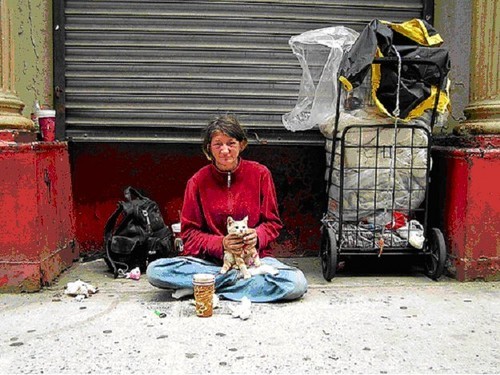
A mindset of the American Dream is that happiness is gauged by the accumulation of things. Some people become angry when they do not have things. As most of you know, by choice and by circumstances both, I have been living out of two suitcases for three years. This simplification of my life led to an emphasis on the interior life and an de-emphasis on the accumulation of things in my life, a tendency, to be honest, for which I was not prone.
However, the "wheelie bin" syndrome of Americans astounds me after so many years in the EU. The proliferation of paper, plastic, various wrappings, and the lack of simplification of lifestyle, wherein the purchasing of fast food and therefore, the use of more paper and plastic add to refuse collectors' busy days, and to the problems of the lack of landfills, makes me wonder why Americans are one, angry, and two, so non-reflective of their lifestyles.
I cook, most women in my generation cook. That is not true of the two generations under me. The fast food and restaurant industries thrive on the fact that women do not cook.
Now, when one is without the means to cook, like the two men I have seen in the McDonald's who are homeless and who come in for a daily meal, that is not the same as those who merely cannot be bothered to shop and cook.
The wheelie bin syndrome allows for the proliferation of garbage. In some places, there is still no recycling and in some places, many items cannot be recycled-like yogurt pots.
I use to make my own yogurt.
St. Benedict Labre is one of my personal patrons. He made homelessness into an occasion of saintliness. People in his time recognized something in this man, because they looked at him. The homeless here are invisible. Some people with large wheelie bins do not see the homeless.

Wheelie bins represent the waste here. Recycling, which should eliminate waste, encourages waste, as fast food places can advertise that they recycle.
My ancestors used every bit of the deer and cows they killed and cleaned. My grandmother used fat for her hands. The generations of the past did not need wheelie bins.
This Thanksgiving, I ask readers to try and not buy so much and not waste. Europeans eat much less and waste much less. Of course, markets still exist, but few people use plastic bags and buy jute bags to use over and over again for shopping. Why cannot Americans do the same?
I am grieved by all this waste in view of the number of homeless and hungry people, to whom the Pope referred in his apostolic exhortation yesterday, and who are obvious to me in this Midwest city.
What would Americans do in a town, such as the one I lived in part of the time in Surrey, where garbage collection was only once every two weeks and recycling picked up on the alternate week?
Do Catholics stop and think that this waste can go on without limitations? The greed and lust of Americans has spun out of proportion to the blessings of this once God-fearing land.
It is not the job of socialist governments to take care of the weak and suffering; it is our individual duty.
We do not need all the boxes, bags, plastic wrap, and paper cups as well as bottles and cans which fill up our lives.
Ask yourselves and your families today and especially, tomorrow, how you can all cut down on waste?
I passed garbage bags in Chicago so full of thrown away food that I was ashamed and knew that the garbage dump gathering children of Central America could live on this waste. Skipitarianism, or the living off of things found in skips, or dumpsters, is a reality in many cities. When I lived in Calgary, there was a man who lived in the skip next to our apartment. I would bring winter bedding and hot food out to him. If you know the weather in Calgary, you might wonder if he survived. I doubt it. He took the things I gave him and and I tried to get help for him, but he disappeared.
A nation is not civilized which has starving, hungry and homeless people of any age. Catholics must begin to address these realities. In my diocese, there has been no Catholic Charities for a long time.
Why? The Protestant Work Ethic, which judges the poor and condemns them for sin and failure, is endemic in the Catholic circles.
 |
| Homeless Child 1860 |
Please take the Pope's words yesterday and apply them to your lives. I am trying to do that.
Giving money to food banks or homeless care centers is not enough. Those are temporary solutions.
America is no longer civilized. Judge by those who are hungry and homeless. Live more simply. Think before buying. Limit yourself.
Limitations are good.............
If you have not been following this, check out this link. God forgive us for thinking that all people have a "support unit".
http://www.policymic.com/articles/57113/hawaii-votes-homeless-people-off-the-island
“Bleak, dark, and piercing cold, it was a night for the well-housed and fed to draw round the bright fire, and thank God they were at home; and for the homeless starving wretch to lay him down and die. Many hunger-worn outcasts close their eyes in our bare streets at such times, who, let their crimes have been what they may, can hardly open them in a more bitter world.”
Charles Dickens, Oliver Twist
Oh My Goodness
I was visiting yesterday with people who were listening to Rachel Maddow. I could not avoid hearing this program for several reasons.
She was going on about the Catholic Church being against anti-contraception and anti-abortion.
I cannot believe the hatred of Catholics, and corporations like Hobby Lobby, which are being targeted by this woman.
The last acceptable prejudice; the hatred against even the Pope, who was mentioned yesterday in this report shows me how far America has gone into godlesssness. God forgive us.
If Catholics can watch this chilling show and not be moved to know that persecution time is near, these people are living in la-la land.
Get ready, folks.
When a mainstream media person, who gets millions of dollars for her so-called journalism, can spew forth irrational anti-Catholicism, and have this accepted and approved, the days of religious freedom for Catholics is limited.
She was going on about the Catholic Church being against anti-contraception and anti-abortion.
I cannot believe the hatred of Catholics, and corporations like Hobby Lobby, which are being targeted by this woman.
The last acceptable prejudice; the hatred against even the Pope, who was mentioned yesterday in this report shows me how far America has gone into godlesssness. God forgive us.
If Catholics can watch this chilling show and not be moved to know that persecution time is near, these people are living in la-la land.
Get ready, folks.
When a mainstream media person, who gets millions of dollars for her so-called journalism, can spew forth irrational anti-Catholicism, and have this accepted and approved, the days of religious freedom for Catholics is limited.
I forgot how cold Iowa can get
 |
| http://idahoptv.org |
It is freezing here. I am thinking of my ancestors who were on the prairie, those earliest ones who were on the Oregon Trail.
 |
| http://iagenweb.org |
I am wimpy compared to them.
Thanksgiving and immanentism
The great evil of this heresy is the breaking of a person's contact with reality.
Dare we say that we know of many leaders in the world who believe they are good and godlike, without killing their own wills, without recognizing the Transcendence of God?
Many Catholics choose their own religion which has little to do with the Teaching Magisterium of the Church.
Remember, if one is not orthodox, one cannot even start on the road to perfection.
The number of men and women in the world who are depressed is a symptom of immanentism, as the logical consequence of always following one's own will. The natural consequence of following one's own, subjective way would be depression, because we were not made for ourselves, but for God.
With the rise of mental illness, we could be asking ourselves whether the making of ourselves into gods causes such a disruption of reality, as we are actually denying who we are in the eyes of Our Creator.
The only real peace is in the Will of God. When the early settlers gave thanks to God, they knew who they were. They were children of a Loving, Providential Father, Who had a plan for each one of them. They knew that to be thankful was part of being human.
When we forget who we are and where we are going, we fall into sadness and, even, derangement. Pray for those millions of people in America and elsewhere who have lost the idea of their being rooted in God, in the Trinity, in the truth which is only found in Jesus.

Did you know that the very first Thanksgiving was on September 8, 1565 in St. Augustine, Florida. The Native Americans and Spanish settlers held a feast and the Holy Mass was offered. Look here....
http://www.catholiceducation.org/articles/history/us/ah0026.htm
Dare we say that we know of many leaders in the world who believe they are good and godlike, without killing their own wills, without recognizing the Transcendence of God?
Many Catholics choose their own religion which has little to do with the Teaching Magisterium of the Church.
Remember, if one is not orthodox, one cannot even start on the road to perfection.
The number of men and women in the world who are depressed is a symptom of immanentism, as the logical consequence of always following one's own will. The natural consequence of following one's own, subjective way would be depression, because we were not made for ourselves, but for God.
With the rise of mental illness, we could be asking ourselves whether the making of ourselves into gods causes such a disruption of reality, as we are actually denying who we are in the eyes of Our Creator.
The only real peace is in the Will of God. When the early settlers gave thanks to God, they knew who they were. They were children of a Loving, Providential Father, Who had a plan for each one of them. They knew that to be thankful was part of being human.
When we forget who we are and where we are going, we fall into sadness and, even, derangement. Pray for those millions of people in America and elsewhere who have lost the idea of their being rooted in God, in the Trinity, in the truth which is only found in Jesus.

Did you know that the very first Thanksgiving was on September 8, 1565 in St. Augustine, Florida. The Native Americans and Spanish settlers held a feast and the Holy Mass was offered. Look here....
http://www.catholiceducation.org/articles/history/us/ah0026.htm
A little reminder of how religious this country use to be....
 |
| Thanks to Wiki-The First Thanksgiving; 53 Pilgrims and 90 Natives |
As President, on October 3, 1789, George Washington made the following proclamation and created the first Thanksgiving Day designated by the national government of the United States of America:
Whereas it is the duty of all Nations to acknowledge the providence of Almighty God, to obey his will, to be grateful for his benefits, and humbly to implore his protection and favor, and whereas both Houses of Congress have by their joint Committee requested me "to recommend to the People of the United States a day of public thanksgiving and prayer to be observed by acknowledging with grateful hearts the many signal favors of Almighty God especially by affording them an opportunity peaceably to establish a form of government for their safety and happiness."Now therefore I do recommend and assign Thursday the 26th day of November next to be devoted by the People of these States to the service of that great and glorious Being, who is the beneficent Author of all the good that was, that is, or that will be. That we may then all unite in rendering unto him our sincere and humble thanks, for his kind care and protection of the People of this Country previous to their becoming a Nation, for the signal and manifold mercies, and the favorable interpositions of his providence, which we experienced in the course and conclusion of the late war, for the great degree of tranquility, union, and plenty, which we have since enjoyed, for the peaceable and rational manner, in which we have been enabled to establish constitutions of government for our safety and happiness, and particularly the national One now lately instituted, for the civil and religious liberty with which we are blessed; and the means we have of acquiring and diffusing useful knowledge; and in general for all the great and various favors which he hath been pleased to confer upon us.And also that we may then unite in most humbly offering our prayers and supplications to the great Lord and Ruler of Nations and beseech him to pardon our national and other transgressions, to enable us all, whether in public or private stations, to perform our several and relative duties properly and punctually, to render our national government a blessing to all the people, by constantly being a Government of wise, just, and constitutional laws, discreetly and faithfully executed and obeyed, to protect and guide all Sovereigns and Nations (especially such as have shown kindness unto us) and to bless them with good government, peace, and concord. To promote the knowledge and practice of true religion and virtue, and the encrease of science among them and Us, and generally to grant unto all Mankind such a degree of temporal prosperity as he alone knows to be best.
http://en.wikipedia.org/wiki/Thanksgiving_(United_States)
More on Immanentism
Having disposed of natural theology, Modernism then proposes immanentism to explain what religious experience is supposedly all about. Human beings, the Modernists argue, are invested with a “religious sense” which wells up out of the unconscious and creates in us a need for the divine. It is in response to this need that we positively respond to ideas about the reality and nature of God which, as it happens, are comfortably conformable to our feelings. What this comes down to, in practical terms, is that the “God” to which one gives one’s allegiance is but a fiction of one’s own devising, a pseudo-being having its source nowhere else but in the demands of deep-set emotions. Here Modernism can be said to be reflecting the thought of the nineteenth century atheistic philosopher Ludwig Feuerbach, who argued that what we call God is no more than the imagined product of human longings and wishes.
http://fssp.com/press/2011/04/immanentism-catholicism-and-religious-experience-by-d-q-mcinerny-ph-d/
I like this emphasis on people claiming they know God, but in reality, they have defined Him in their own terms.
Instead of dying to self and being open to the real God, people who only worship themselves, or what they think if the image of God in themselves, fall into deceit. As noted above, this deceit leads to an emotional sense of being, rather than a rational one. The god within is merely a reflection of egotism and sin. Part of the huge problem today of many people who are living a godless life, is that they honestly believe they are "religious" or "spiritual", when in reality, they are merely caught up in idolatry.
Sadly, some Catholics have fallen into this idea of immanentism, thus denying the need for the sacraments and, therefore, sanctifying grace.
To be continued...
http://fssp.com/press/2011/04/immanentism-catholicism-and-religious-experience-by-d-q-mcinerny-ph-d/
I like this emphasis on people claiming they know God, but in reality, they have defined Him in their own terms.
Instead of dying to self and being open to the real God, people who only worship themselves, or what they think if the image of God in themselves, fall into deceit. As noted above, this deceit leads to an emotional sense of being, rather than a rational one. The god within is merely a reflection of egotism and sin. Part of the huge problem today of many people who are living a godless life, is that they honestly believe they are "religious" or "spiritual", when in reality, they are merely caught up in idolatry.
Sadly, some Catholics have fallen into this idea of immanentism, thus denying the need for the sacraments and, therefore, sanctifying grace.
To be continued...
A Small Comment on A Section of The Pope's Work
Yesterday, I put a selection of quotations from Evangelii Gaudium. I want to highlight the Pope's comment on gnosticism. Here is that paragraph again:
One is the attraction of gnosticism, a purely subjective faith whose only interest is a certain experience or a set of ideas and bits of information which are meant to console and enlighten, but which ultimately keep one imprisoned in his or her own thoughts and feelings. The other is the self-absorbed promethean neopelagianism of those who ultimately trust only in their own powers and feel superior to others because they observe certain rules or remain intransigently faithful to a particular Catholic style from the past. A supposed soundness of doctrine or discipline leads instead to a narcissistic and authoritarian elitism, whereby instead of evangelizing, one analyzes and classifies others, and instead of opening the door to grace, one exhausts his or her energies in inspecting and verifying. In neither case is one really concerned about Jesus Christ or others. These are manifestations of an anthropocentric immanentism. It is impossible to think that a genuine evangelizing thrust could emerge from these adulterated forms of Christianity.
Looking at this section, one sees that the Pope is obviously in touch with the great wave of narcissism in the Church, as well as in society. The spirit of gnosticism appeals to those who want to be in a specialized group, those who want to be "special" and in the know. Such people want to feel as though they are special. They want to feel better than someone else. They also do not want to give up their own new age ideas.
That the Pope also referred to neopelagianism is refreshing, as that heresy is most likely the most common one in Great Britain. This heresy claims that men and women can gain salvation on their own efforts.
The other heresy the Pope mentions is that of anthropocentric immanentism, which is very well explained here: http://fssp.com/press/2011/04/immanentism-catholicism-and-religious-experience-by-d-q-mcinerny-ph-d/
One is the attraction of gnosticism, a purely subjective faith whose only interest is a certain experience or a set of ideas and bits of information which are meant to console and enlighten, but which ultimately keep one imprisoned in his or her own thoughts and feelings. The other is the self-absorbed promethean neopelagianism of those who ultimately trust only in their own powers and feel superior to others because they observe certain rules or remain intransigently faithful to a particular Catholic style from the past. A supposed soundness of doctrine or discipline leads instead to a narcissistic and authoritarian elitism, whereby instead of evangelizing, one analyzes and classifies others, and instead of opening the door to grace, one exhausts his or her energies in inspecting and verifying. In neither case is one really concerned about Jesus Christ or others. These are manifestations of an anthropocentric immanentism. It is impossible to think that a genuine evangelizing thrust could emerge from these adulterated forms of Christianity.
Looking at this section, one sees that the Pope is obviously in touch with the great wave of narcissism in the Church, as well as in society. The spirit of gnosticism appeals to those who want to be in a specialized group, those who want to be "special" and in the know. Such people want to feel as though they are special. They want to feel better than someone else. They also do not want to give up their own new age ideas.
That the Pope also referred to neopelagianism is refreshing, as that heresy is most likely the most common one in Great Britain. This heresy claims that men and women can gain salvation on their own efforts.
The other heresy the Pope mentions is that of anthropocentric immanentism, which is very well explained here: http://fssp.com/press/2011/04/immanentism-catholicism-and-religious-experience-by-d-q-mcinerny-ph-d/
Father John Hardon, in writing on the subject of immanentist apologetics, refers to it as “A method of establishing the credibility of the Christian faith by appealing to the subjective satisfaction that the faith gives to the believer.” Coupled with this emphasis on the subjective, there is a downplaying of the objective criteria of our faith, even to the point of rejecting miracles and prophecies. Purely personal motives for faith, motives that have mainly to do with feelings, are given primary of place. “Religion, therefore, would consist,” Father Bouyer remarks, “entirely in the religious feeling itself.” Reason is marginalized, and the idea of belief, as being essentially the assent of the intellect, loses its currency.
Immanentism may be summed up by saying that it represents a stance of reckless subjectivism with regard to the faith. It cavalierly dismisses, as being of only secondary importance, the objective foundations of religion, as revealed to us by God Himself and as incorporated in the deposit of faith.
In 1907 Pope St. Pius X published his encyclical Pascendi Dominici Gregis, whose purpose was to sound the alarm against Modernism, which the Holy Father had defined as “the synthesis of all heresies.” And he described the Modernists themselves as “the most pernicious of all the adversaries of the Church.” In his analysis of the phenomenon, St. Pius X identified two major parts of Modernism; one was agnosticism, the other was immanentism. By agnosticism Modernism denies that man is capable of gaining a reasoned knowledge of God. Thus, with a stroke, it effectively does away with natural theology, that philosophic discipline whose principal task is to show that we can arrive at a knowledge of the existence of God through natural reason. Now, that such is possible is actually a matter of faith for Catholics, as was taught by the First Vatican Council.
To be continued...
Tuesday, 26 November 2013
Home Schoolers Alert
If you have not taught your ninth graders de Tocqueville, do it now. If there was ever a time when this prophetic piece needs to be understood, it is now.
The tyranny of the majority is upon us, killing freedoms and forcing America into gross conformity.
http://tocqueville.org/
The tyranny of the majority is upon us, killing freedoms and forcing America into gross conformity.
http://tocqueville.org/
More good words from Francis
Our commitment does not consist exclusively in activities or programmes of promotion and assistance; what the Holy Spirit mobilizes is not an unruly activism, but above all an attentiveness which considers the other “in a certain sense as one with ourselves”.[166] This loving attentiveness is the beginning of a true concern for their person which inspires me effectively to seek their good. This entails appreciating the poor in their goodness, in their experience of life, in their culture, and in their ways of living the faith. True love is always contemplative, and permits us to serve the other not out of necessity or vanity, but rather because he or she is beautiful above and beyond mere appearances: “The love by which we find the other pleasing leads us to offer him something freely”.[167] The poor person, when loved, “is esteemed as of great value”,[168] and this is what makes the authentic option for the poor differ from any other ideology, from any attempt to exploit the poor for one’s own personal or political interest. Only on the basis of this real and sincere closeness can we properly accompany the poor on their path of liberation. Only this will ensure that “in every Christian community the poor feel at home. Would not this approach be the greatest and most effective presentation of the good news of the kingdom?”[169] Without the preferential option for the poor, “the proclamation of the Gospel, which is itself the prime form of charity, risks being misunderstood or submerged by the ocean of words which daily engulfs us in today’s society of mass communications”.[170]
200. Since this Exhortation is addressed to members of the Catholic Church, I want to say, with regret, that the worst discrimination which the poor suffer is the lack of spiritual care. The great majority of the poor have a special openness to the faith; they need God and we must not fail to offer them his friendship, his blessing, his word, the celebration of the sacraments and a journey of growth and maturity in the faith. Our preferential option for the poormust mainly translate into a privileged and preferential religious care.
Some particularly good sections from the Apostolic Exhortation
The problem is not always an excess of activity, but rather activity undertaken badly, without adequate motivation, without a spirituality which would permeate it and make it pleasurable. As a result, work becomes more tiring than necessary, even leading at times to illness. Far from a content and happy tiredness, this is a tense, burdensome, dissatisfying and, in the end, unbearable fatigue. This pastoral acedia can be caused by a number of things. Some fall into it because they throw themselves into unrealistic projects and are not satisfied simply to do what they reasonably can. Others, because they lack the patience to allow processes to mature; they want everything to fall from heaven. Others, because they are attached to a few projects or vain dreams of success. Others, because they have lost real contract with people and so depersonalize their work that they are more concerned with the road map than with the journey itself. Others fall into acedia because they are unable to wait; they want to dominate the rhythm of life. Today’s obsession with immediate results makes it hard for pastoral workers to tolerate anything that smacks of disagreement, possible failure, criticism, the cross.
83. And so the biggest threat of all gradually takes shape: “the gray pragmatism of the daily life of the Church, in which all appears to proceed normally, while in reality faith is wearing down and degenerating into small-mindedness”.[63] A tomb psychology thus develops and slowly transforms Christians into mummies in a museum. Disillusioned with reality, with the Church and with themselves, they experience a constant temptation to cling to a faint melancholy, lacking in hope, which seizes the heart like “the most precious of the devil’s potions”.[64] Called to radiate light and communicate life, in the end they are caught up in things that generate only darkness and inner weariness, and slowly consume all zeal for the apostolate. For all this, I repeat: Let us not allow ourselves to be robbed of the joy of evangelization!....
Spiritual worldliness, which hides behind the appearance of piety and even love for the Church, consists in seeking not the Lord’s glory but human glory and personal well-being. It is what the Lord reprimanded the Pharisees for: “How can you believe, who receive glory from one another and do not seek the glory that comes from the only God?” (Jn5:44). It is a subtle way of seeking one’s “own interests, not those of Jesus Christ” (Phil 2:21). It takes on many forms, depending on the kinds of persons and groups into which it seeps. Since it is based on carefully cultivated appearances, it is not always linked to outward sin; from without, everything appears as it should be. But if it were to seep into the Church, “it would be infinitely more disastrous than any other worldliness which is simply moral”.[71]
94. This worldliness can be fuelled in two deeply interrelated ways. One is the attraction of gnosticism, a purely subjective faith whose only interest is a certain experience or a set of ideas and bits of information which are meant to console and enlighten, but which ultimately keep one imprisoned in his or her own thoughts and feelings. The other is the self-absorbed promethean neopelagianism of those who ultimately trust only in their own powers and feel superior to others because they observe certain rules or remain intransigently faithful to a particular Catholic style from the past. A supposed soundness of doctrine or discipline leads instead to a narcissistic and authoritarian elitism, whereby instead of evangelizing, one analyzes and classifies others, and instead of opening the door to grace, one exhausts his or her energies in inspecting and verifying. In neither case is one really concerned about Jesus Christ or others. These are manifestations of an anthropocentric immanentism. It is impossible to think that a genuine evangelizing thrust could emerge from these adulterated forms of Christianity.
Great selections from Evangelii Gaudium
http://en.radiovaticana.va/news/2013/11/26/pope_issues_first_apostolic_exhortation:_evangelii_gaudium/en1-750083
Pope's First Apostolic Exhortation can be seen in part at the link above and selections below.
“As the bishops of the United States of America have rightly pointed out, while the Church insists on the existence of objective moral norms which are valid for everyone, ‘there are those in our culture who portray this teaching as unjust, that is, as opposed to basic human rights. Such claims usually follow from a form of moral relativism that is joined, not without inconsistency, to a belief in the absolute rights of individuals. In this view, the Church is perceived as promoting a particular prejudice and as interfering with individual freedom’. We are living in an information-driven society which bombards us indiscriminately with data – all treated as being of equal importance – and which leads to remarkable superficiality in the area of moral discernment. In response, we need to provide an education which teaches critical thinking and encourages the development of mature moral values."
http://www.catholicherald.co.uk/news/2013/11/26/key-quotes-from-evangelii-gaudium/
Pope's First Apostolic Exhortation can be seen in part at the link above and selections below.
“As the bishops of the United States of America have rightly pointed out, while the Church insists on the existence of objective moral norms which are valid for everyone, ‘there are those in our culture who portray this teaching as unjust, that is, as opposed to basic human rights. Such claims usually follow from a form of moral relativism that is joined, not without inconsistency, to a belief in the absolute rights of individuals. In this view, the Church is perceived as promoting a particular prejudice and as interfering with individual freedom’. We are living in an information-driven society which bombards us indiscriminately with data – all treated as being of equal importance – and which leads to remarkable superficiality in the area of moral discernment. In response, we need to provide an education which teaches critical thinking and encourages the development of mature moral values."
http://www.catholicherald.co.uk/news/2013/11/26/key-quotes-from-evangelii-gaudium/
United States Will Close Vatican Embassy
http://www.irishcentral.com/news/Obama-administration-plans-to-close-Vatican-embassy-in-shock-move--233288751.html
Can you believe this? Another sign of the times.....I find this disgustingly rude and this move will cut off necessary communications with the hub of the Catholic Church.
The Catholic Church is being marginalized, dear readers.
Actually, this news is making me teary, and I am not an emotional person.
from my article on another blog...this is a slap heard round the world.
The Obama Administration has just announced the future closing of the American Vatican Embassy.
This is a shock to many, including me, although the scorning of the Church from this government has been obvious. That intimate communications between perhaps the nation which is the world's leader and the hub, the center of the largest religion in the world, will be compromised.
But, this administration does not care about dialogue with Faith. This move is not for the silly reason given-security. The reason is the marginalizing of the one, true, holy and apostolic Church.
Marginalization is a step on the way towards out and out persecution. This were outlined a few years ago by Father Joseph M. Esper over a few days on EWTN in 2012. Father was reiterating findings from social psychologists who studied the movement of persecution in Germany which led to the killing of over six million Jews in a systematized manner, all legal, all supported by millions of people.
Marginalization is the next to the last step before laws are passed to outlaw the target group and begin fines, imprisonment and finally, death.
I am grateful for one thing. This administration is showing its true colors of its hatred of the Catholic Church in America. The Church is the one institution standing up to the abortion mandate, same-sex-marriage and other moral issues which in the past would have been shared with good Christian leaders.
We have moved far beyond those days. In this post-Christian era, the Church will increasingly be targeted as anti-American.

Antonio Gramsci, who I have studied in great detail, wrote clearly in one of his letters from prison, that the only group of people who understood what the atheist communists were actually doing in the kulturkampf was the Catholic Church. He cited several popes including Leo XIII, as understanding the great enemy of Christian, Western culture and civilization.
The removing of the embassy will be a rude rebuke, a slap-in-the-face to the Vatican, to the Church.
As an American, I am ashamed and horrified. But, this is merely one sign of the times....
Can you believe this? Another sign of the times.....I find this disgustingly rude and this move will cut off necessary communications with the hub of the Catholic Church.
The Catholic Church is being marginalized, dear readers.
Actually, this news is making me teary, and I am not an emotional person.
from my article on another blog...this is a slap heard round the world.
The Obama Administration has just announced the future closing of the American Vatican Embassy.
This is a shock to many, including me, although the scorning of the Church from this government has been obvious. That intimate communications between perhaps the nation which is the world's leader and the hub, the center of the largest religion in the world, will be compromised.
But, this administration does not care about dialogue with Faith. This move is not for the silly reason given-security. The reason is the marginalizing of the one, true, holy and apostolic Church.
Marginalization is a step on the way towards out and out persecution. This were outlined a few years ago by Father Joseph M. Esper over a few days on EWTN in 2012. Father was reiterating findings from social psychologists who studied the movement of persecution in Germany which led to the killing of over six million Jews in a systematized manner, all legal, all supported by millions of people.
Marginalization is the next to the last step before laws are passed to outlaw the target group and begin fines, imprisonment and finally, death.
I am grateful for one thing. This administration is showing its true colors of its hatred of the Catholic Church in America. The Church is the one institution standing up to the abortion mandate, same-sex-marriage and other moral issues which in the past would have been shared with good Christian leaders.
We have moved far beyond those days. In this post-Christian era, the Church will increasingly be targeted as anti-American.

Antonio Gramsci, who I have studied in great detail, wrote clearly in one of his letters from prison, that the only group of people who understood what the atheist communists were actually doing in the kulturkampf was the Catholic Church. He cited several popes including Leo XIII, as understanding the great enemy of Christian, Western culture and civilization.
The removing of the embassy will be a rude rebuke, a slap-in-the-face to the Vatican, to the Church.
As an American, I am ashamed and horrified. But, this is merely one sign of the times....
Thoughts After Some Conversations with Converts
Among young Catholics of a certain age and among some slightly older converts, there is a huge confusion as to objective and subjective truth. For some reason, mainly the pushing of relativism in the educational systems for over 40 years, most younger Catholics cannot think rationally or logically (not quite the same think) concerning the Teachings of the Catholic Church.
I have written on this before on this blog-follow the tags on thinking like Catholics, etc.
But, the problem does not merely make discussions or teaching difficult for the orthodox, catechist, but makes conversion difficult, as many people want to come into the Church for emotional reasons.
That there is a huge confusion on the application of doctrine to individual moral cases seems so widespread that one can hardly imagine such a large group of Catholics who have never be taught to think like Catholics.
Protestant thinking invaded the Church over 40 years ago with the weakening of the teaching of catechism and the introduction of charismatic renewal, with the emphasis on emotional religious experience.
But, lately, I am concerned at the number of young converts who are not being challenged in RCIA or in personal catechesis to think rationally.
The problem becomes compounded by the acceptance of so-called emotional conversion experiences which take the place of a slower, methodical approach.
Some dioceses in the States are moving to a two-year RCIA format. To me, this is excellent, as one cannot cover the doctrines of the Church with people who are coming out of absolutely no Christian background or who have been brainwashed by relativism in less than a year, and two years would be better.
If a convert has been reading the Doctors of the Church, or the Early Church Fathers a la Newman, the conversion classes could be shortened. Good priests who do the teaching one on one can make such decisions on an individual basis.
The worst catechized are the college and university students who have converted in that setting and have been accepted after cursory courses.
How can we change the entire thinking structure of a person to think like a Catholic?
I am convinced we need to go back to St. Thomas Aquinas, to the Socratic Method of question and answer and demand a real digestion of the CCC. Also, as I taught Mystagoia in the past, the Church should require that extra year, and not make it optional.
The Church is weakened by those who convert and do not understand the basics. I am talking almost daily with converts who have never heard basic teachings on sacramental theology, the meaning and definition of grace, or the ideas of salvation in and through the Catholic Church only.
There are few who understand the huge difference between objective criteria and subjectivity.
Can we pull back on the numbers games and slowly bring in people who will not be confused, or who fall away once they come to understand what should have been introduced along the way in RCIA or private catechesis?
Here are some past posts on thinking like a Catholic....
10 Jul 2013
To think like a Catholic is to see the reality of the world through the Eyes of God and not one's own eyes. If you have lost the gift of discernment or wisdom given to you in baptism through sin and compromise, pray for such.
13 Apr 2012
Too many of the courses are based on a particular professor's private interests instead of a Catholic world-view. Our priests, bishops and cardinals need to learn to think like Catholics and in too many cases, this perspective is ...
13 Nov 2013
Too many people think America will not become like the broken big brother of Europe, too ... The City of God is not a millennial-type of utopia, but the spiritual city to which we, as baptized Catholics, all belong. But, it must be ...
13 Nov 2013
I have met too many people who are leading Catholics astray by a false emphasis on feelings and experiences, and I have many articles on such here on this blog. ... I cannot trust him, as he is thinking like a Protestant.
18 Nov 2013
Think like a Catholic, pray like a Catholic, and live daily life in the counter-culture which is true Catholicism. God gave us His Son, Who established the Church on earth to help us in our salvation. Do not waste this great grace.
15 Nov 2013
Who is stopping the marginalization of Catholics from discussions in the public sphere? Who is stopping the core curriculum, which is brainwashing? Who is preparing their children to think like Catholics even under stress?
07 Aug 2013
There is a huge campaign in the States at this time and some Catholics are allowing themselves to join the group which is calling a prominent person a name. Let me explain something. Arguing a moral point should never include a reference ... I think these are sins of hatred. Logic was required in private Catholic high schools in the States, at the freshman or .... Let's get back to being like Jesus....Yes, by challenging the present fear of offending. 8 August 2013 16:42.
17 Jul 2012
One piece looks like bones, and another is in the shape of a small crustacean. I was thinking of how my dwelling is built with the ruins of another ancient time of ancient creatures which were once alive. Will there be any ...
21 Nov 2013
We are blessed as Catholics to have both the gift of faith given to us in baptism, and The Faith, passed down to us through the Teaching Magisterium of the Catholic Church. I would like to ask you, dear readers, in these last ...
15 Feb 2012
Because I am thinking of the Catholic use of the media today, here is Campion's Brag. If you remember, he printed this up at Stonor House, and distributed it, among other places, at the parish in Oxford. Brave, brave member ...
11 Apr 2012
Traditional Catholic Blog .... from the pulpit on such matters. He's likely to come off as some Mooslim-like perv who gets excited at the thought of a women's ankle, or sound like an old gay queen in the process. If there's no one ill dressed in the church, why lecture. If someone has got on long tailored shorts in hot weather in church in a tourist area, they'll think they are being singled out for persecution and they may never darken the church door again. Not a good thing.
28 Apr 2013
... knew Catholic doctrine and we today don't. Besides, in times of crisis and distress, when we are not thinking clearly, it is precisely the things we have memorized that come most readily to our aid when we need them. ...The suggestions you make are wonderful, and I have spent a great deal of time with websites like Catholic Icing, Catholicmoms, and A Shower of Roses to get inspiration and mentoring on this journey. It is of great comfort to me to hear of someone ...
16 Nov 2013
Traditional Catholic Blog ... Fair-weather friends tend to be those who only want to be friends if they can gain something from the relationship, or think that what they are gaining are material benefits. I have found out recently that I have been dropped by middle-class minded people who are not interested in understanding or ... These nuns radiate the love and grace of God, and shine like little, hidden saints. They promised to pray for me. I was very touched by their real ...
12 Jul 2012
Here are my reasons why liberal Catholics, especially and some trads have fallen into the trap of the "single vocation", which I do not think exists, except for the above calls. One, selfishness. Our individualistic, selfish and.... I do agree with you, that the single life is not a vocation but in rare circumstances, yet I and some friends like me are really really uneasy with (or perhaps lack the courage for) the dating site concept. I now wonder, are we culpable of not seeking ...
02 Oct 2013
If you are a Catholic and a socialist, you are not thinking like a Catholic. One needs to repent of holding on to false ideologies of all kinds, if one is going to follow Christ in the teachings of His Church. One cannot pick and ...
15 Nov 2013
Think about the travels of SS. Francis, or Dominic, or Catherine of Siena, or Francis Xavier, or Isaac Joques. The Catholic Church is the only institution in the world which has always transcended boundaries. Missionaries, nuns and priests, brothers and sisters, have travelled the world in the past without problems on entry or stay. Convents could set ... Please join me in prayer, as, like St. Paul, I feel called to Europe to work for Christ and His Church there. I have a great ...
25 Jun 2012
Some of these wreckovations are politically, ideologically motivated by "Catholics" who either think like Protestants or Marxists. Still, like a worn-out mantra, people decry the use of beauty in church architecture, vestments, ...
16 Jan 2012
I also think there has to be good reason for not having children. The grand example are two of my favorite Catholics, Jacques and Raissa Maritain, who on the Isle of Wight, as Benedictine Oblates, took a vow of celibacy "for ...
10 Sep 2013
Perhaps Catholics have never read the Decree Against Communism, written in 1949 by Pope Pius XII and reconfirmed in 1962 by Bl. John XXIII. .... Labels: Gramsci, heresies, rabbits, socialism, thinking like Catholics ...
18 May 2013
The Renaissance and the Reformation have shaped the modern western individual, who is not weighed down by external burdens like merely extrinsic authority and tradition; people feel the need to “belong” to institutions less and less (and yet .... The purpose of this contribution is to help Catholics find a key to understanding the basic principles behind New Age thinking, so that they can then make a Christian evaluation of the elements of New Age they encounter.
19 Apr 2012
Many great writers already quoted on this blog, including Garrigou-Lagrange, believe this is not a call only for those special mystics who are obviously given such graces, but for all Catholics. .... I think perhaps the relationship of those who live by the private revelations, those people I have met in abundance in both the Midwest of America and in Ireland and England, indicated that they do fall into a community of people who live ...... Wear Your Tribulation Like A Rose.
30 Nov 2012
Think that the FSSP is a compromising order (I really do not like this one) 5. Think ... I know many good Catholic trad priests who have told me the faculties are not given to SSPX priests and that the Confessions are not valid.
16 Sep 2013
16) (= "to speak to the heart" or "to oneself"), mean "to think." The heart .... Labels: love, marriage, thinking like Catholics ... I think that it is a great book, but the last part from the Makarian Homilies is the best bit of the comment.
08 Jan 2013
The European friends of mine cannot understand wanting to be in charge of your own space. They are think like socialists, even the Catholics. What shocks me is their blind trust in their governments, and worse, the feeling of ...
02 Jun 2013
These good people are self-deceived into thinking that the externals of faith mean they are saved. Interior disposition is ALL in .... to TwitterShare to Facebook. Labels: catholic teaching, magical thinking, thinking like Catholics ...
12 Nov 2013
Are you acting as if your children will not need to be different, special, super-Catholics and saints in the days to come? Do you think they will face a world like yours and mine growing up? Are you forming saints? I see too ...
02 Feb 2013
All I know is that I don't "get" them and would like to understand more - how is that they are so "switched on" and single-minded about TOB? It's interesting, too, that the "TOB" camp promotes the YOUCAT to Catholic youth, ...
04 Dec 2012
I am truly concerned about the present youth who cannot and will not think objectively. If you have ... Now, we shall see the triumph of the Prince of Darkness, unless Catholics begin to think like Catholics-objectively.
16 Nov 2013
He said that right now in these difficult times, many Catholics were not paying attention to building the Kingdom of God, but asleep, busy about other, less important things. Like the unjust judge, they were ignoring not only the ...
04 Jun 2013
I have written about this many times, but one more time will not hurt....in fact, this post is another contradiction of more magical thinking ... Labels: catholic teaching, magical thinking, private revelations, thinking like Catholics ...
02 Dec 2012
Most people I know could not function like that, traditional Catholics or otherwise. 3 December 2012 04:40 · Supertradmum said... Matthew, one of your comments accidentally got deleted. Please re-post. Thanks. I think it was ...
08 Sep 2013
One would think that it, and its author, never existed. Fortunately, it was written in a manner which is ideal for spoken-word production. It is clear, forthright, concise, descriptive, it is like a mountain stream in a desert, with a reputation of miraculously curing spiritual blindness. Rev. Hugh Thwaites ... Hugh Thwaites SJ, Humani Generis by Pope Pius XII: This encyclical concerns false opinions which threaten to sap the foundations of Catholic Teaching. It corrects the false ...
Subscribe to:
Posts (Atom)